Namibia in September: Weather, Crowds & What to Expect
Climate Map for September
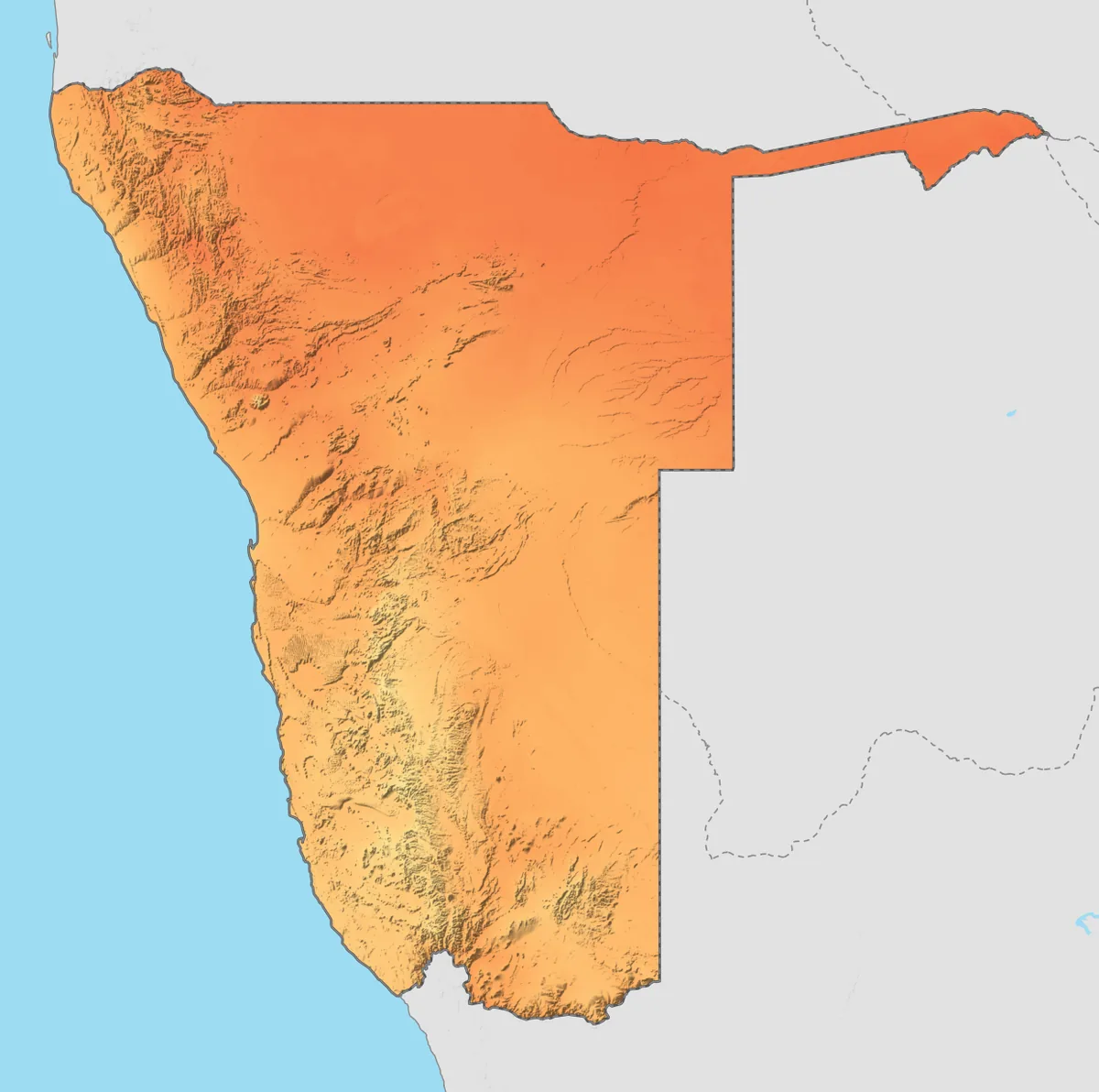
Average temperature across Namibia in September.
City Weather in September
| City | High | Low | Rain | UV | Feels |
|---|---|---|---|---|---|
| Windhoek | 28° | 11° | 2 mm | extreme | Mild |
| Rundu | 34° | 15° | 3 mm | very high | Warm |
| Walvis Bay | 21° | 11° | 1 mm | very high | Cool |
| Swakopmund | 21° | 11° | 1 mm | very high | Cool |
| Oshakati | 33° | 14° | 2 mm | very high | Mild |
| Rehoboth, Namibia | 28° | 9° | 1 mm | very high | Mild |
| Katima Mulilo | 33° | 14° | 3 mm | very high | Mild |
High / low are average daily temperatures (°C). “Feels” reflects how hot or cold it feels, allowing for humidity.
Skeleton Coast & Namib Desert (coastline to Sossusvlei)
September mornings can feel deceptively warm inland with the first hints of a heating trend; coastal fog has largely eased and beaches warm a touch, though sea swimming remains brisk. The desert begins to heat more noticeably by mid-month, meaning early starts for photographers wanting long shadows before the sun peaks. Dust can pick up with the pre-rain wind change, so filter lenses and camera bags against grit.
Central Highlands & Khomas Plateau (Windhoek, Waterberg, Brandberg)
September’s sun deepens the highland warmth and visibility is excellent-ideal for scenic flights and long hikes in Waterberg and Erongo. Afternoon breezes pick up at times, and the first isolated showers can’t be ruled out toward month-end. Travelers should time strenuous hikes for mornings and carry a hat and plenty of water; insect activity is still low.
Etosha & Northern Safari Areas (Etosha, Kunene, Omusati)
September’s heat peaks and early vegetation browns, making wildlife easier to spot across Etosha and the surrounding reserves; early starts remain essential to avoid midday heat. Water levels are lowest, sharpening viewing at known watering sites; expect pleasant evenings but very hot midday sun. Bring sun protection and a good dust filter for camera gear.
Zambezi (former Caprivi) & Kavango Riverlands (Katima Mulilo, Rundu, Divundu)
September heats up and humidity rises subtly; the rivers are low and bars of sand appear in places, changing boat routes and exposing floodplain grazing for animals. Early starts are essential for comfortable viewing and long midday rests are welcome at shaded camps. Be aware that afternoon storms may begin to reappear late in the month in an erratic pattern.
Kalahari & Southern Namibia (Fish River Canyon, Keetmanshoop, Karas)
September warms noticeably and the Kalahari begins to show real heat by midday; late-morning to late-afternoon temperatures climb and shade becomes valuable for canyon treks. Water sources are low, so carry ample supplies for long routes and avoid ambitious hikes in the hottest hours. Wildlife activity concentrates near permanent waterholes, improving chances of sightings at dawn and dusk.
Events & Festivals in September
There are no major festivals or events in Namibia during September to be aware of.