Namibia in January: Weather, Crowds & What to Expect
Climate Map for January
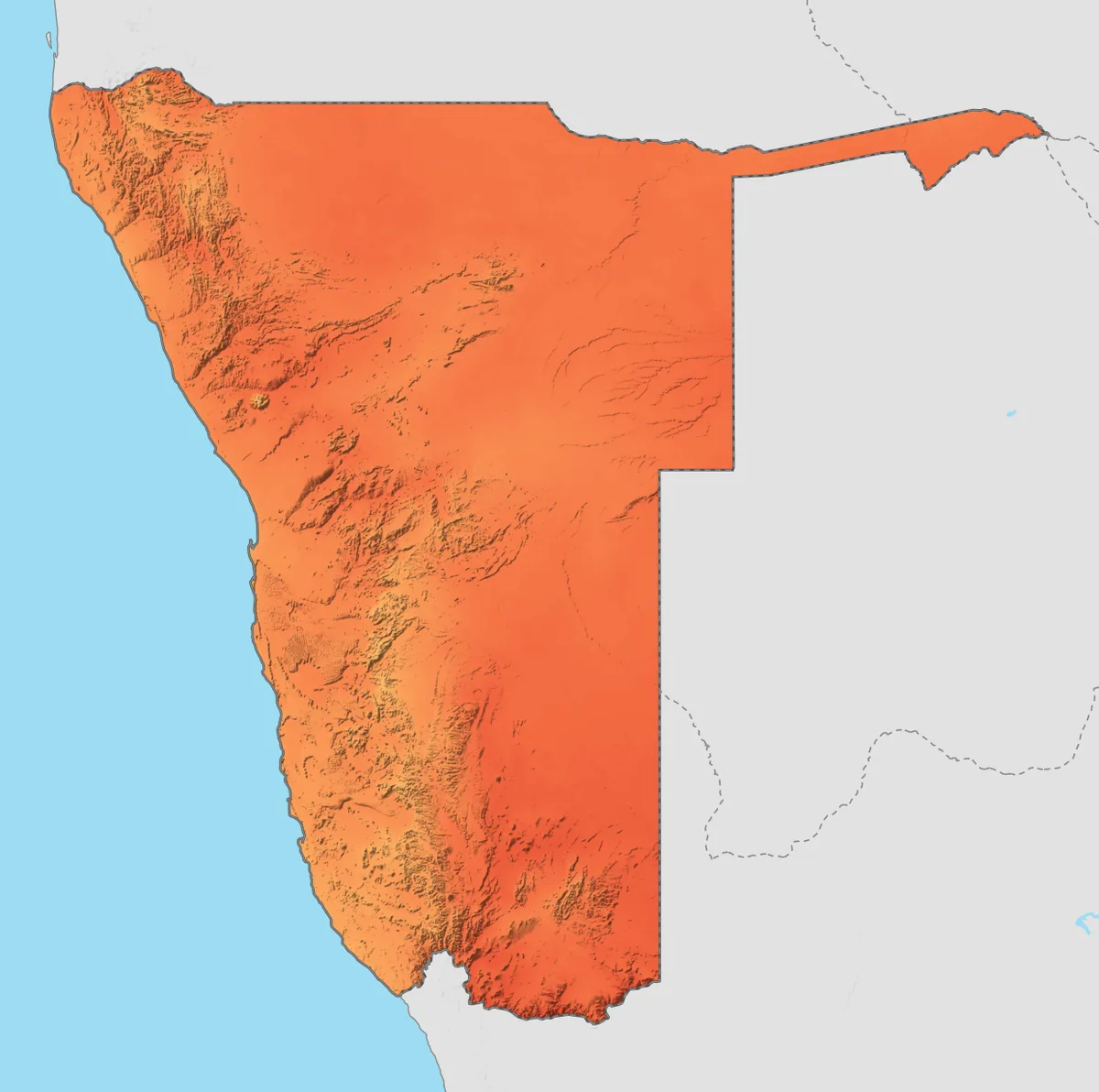
Average temperature across Namibia in January.
City Weather in January
| City | High | Low | Rain | UV | Feels |
|---|---|---|---|---|---|
| Windhoek | 30° | 16° | 97 mm | extreme | Mild |
| Rundu | 32° | 19° | 153 mm | extreme | Warm |
| Walvis Bay | 24° | 16° | 3 mm | extreme | Mild |
| Swakopmund | 25° | 17° | 4 mm | extreme | Mild |
| Oshakati | 31° | 19° | 113 mm | extreme | Warm |
| Rehoboth, Namibia | 31° | 16° | 63 mm | extreme | Mild |
| Katima Mulilo | 30° | 19° | 155 mm | extreme | Warm |
High / low are average daily temperatures (°C). “Feels” reflects how hot or cold it feels, allowing for humidity.
Skeleton Coast & Namib Desert (coastline to Sossusvlei)
A stiff, cool breeze off the Benguela Current keeps temperatures modest in January despite inland heat; mornings in Swakopmund and Walvis Bay are often foggy and damp while Sossusvlei inland feels hot by midday. Coastal fog frequently rolls in and out, making early-morning photography atmospheric but chilling, so pack a windbreaker and layers. Road dust and strong onshore winds can make dune driving more trying, but the standing dunes and clear nights still make for excellent stargazing.
Central Highlands & Khomas Plateau (Windhoek, Waterberg, Brandberg)
January’s afternoons on the Khomas Plateau are humid and warm, with frequent late-afternoon squalls that can deliver heavy rain and thunder around Windhoek and the Waterberg. Roads to Waterberg and Brandberg may become slippery; waterfalls swell for a short, dramatic season. Travelers should expect warm, sticky conditions-light rain jacket, insect repellent and flexible driving plans are sensible.
Etosha & Northern Safari Areas (Etosha, Kunene, Omusati)
A hot, muggy January often brings heavy afternoon thunderstorms that swell temporary pans in Etosha and the north; the park is lush, but many predators disperse with abundant water. Mosquitoes and biting midges are at their peak-malaria precautions are essential in the north-and some secondary roads become difficult. For photographers, the green season offers dramatic skies and newborns, but visibility for game is lower than in dry months.
Zambezi (former Caprivi) & Kavango Riverlands (Katima Mulilo, Rundu, Divundu)
January is hot, humid and in the heart of the wet season along the Zambezi and Kavango rivers, with regular heavy rains that swell channels and flood low-lying plains around Katima Mulilo. Boat travel on the Zambezi becomes more adventurous and some lodges close or move activities ashore; expect prolific birdlife and dramatic river scenery. Pack waterproofs, mosquito protection, and accept occasional itinerary changes due to high water.
Kalahari & Southern Namibia (Fish River Canyon, Keetmanshoop, Karas)
January sees hot, sometimes oppressive days across the Kalahari fringe and Karas region with heavy, occasional thunderstorms that can drench valleys and briefly make roads impassable. Fish River Canyon gets seasonal flows higher than the dry season, enhancing its might but also increasing trail hazards-riverbed hikes are not advised when flash floods occur. Pack sun protection, sturdy boots and expect temporary route changes after storms.
Events & Festivals in January
There are no major festivals or events in Namibia during January to be aware of.