Namibia in March: Weather, Crowds & What to Expect
Climate Map for March
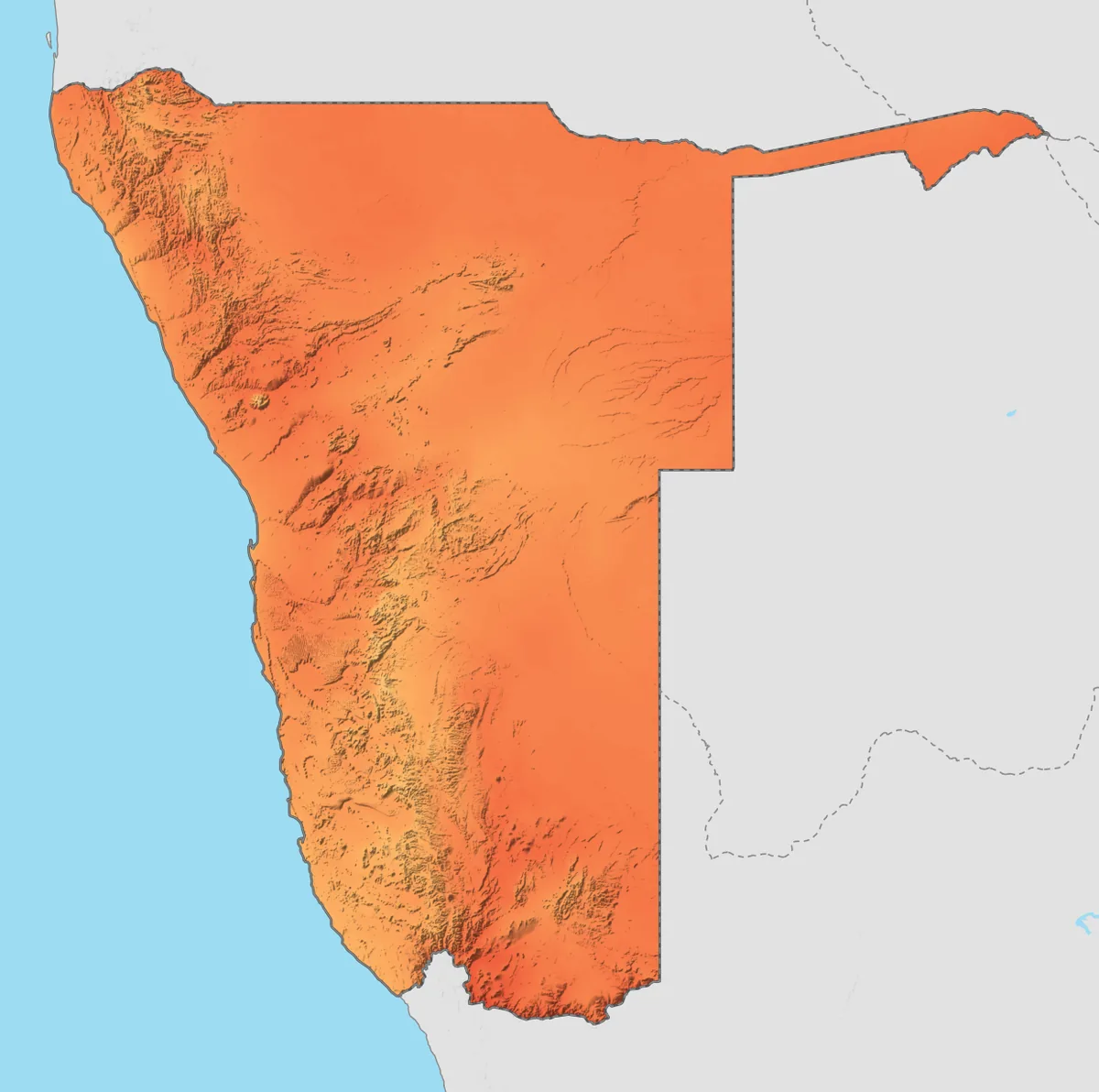
Average temperature across Namibia in March.
City Weather in March
| City | High | Low | Rain | UV | Feels |
|---|---|---|---|---|---|
| Windhoek | 28° | 15° | 69 mm | extreme | Mild |
| Rundu | 31° | 18° | 86 mm | extreme | Warm |
| Walvis Bay | 24° | 16° | 6 mm | extreme | Mild |
| Swakopmund | 25° | 16° | 6 mm | extreme | Mild |
| Oshakati | 30° | 18° | 102 mm | extreme | Warm |
| Rehoboth, Namibia | 29° | 15° | 55 mm | extreme | Mild |
| Katima Mulilo | 30° | 18° | 84 mm | extreme | Mild |
High / low are average daily temperatures (°C). “Feels” reflects how hot or cold it feels, allowing for humidity.
Skeleton Coast & Namib Desert (coastline to Sossusvlei)
Thick sea fog is common in March mornings, then burns off to crisp, sunny afternoons along the coast; wind remains a feature for kitesurfers around Walvis Bay. In the desert, daytime temperatures climb and any late rains will cause a green flush across gravel plains-photographers watch for ephemeral flowers after rare showers. The Skeleton Coast itself is unforgivingly arid and cool; fog can limit visibility for small aircraft, so plan flights with buffer time.
Central Highlands & Khomas Plateau (Windhoek, Waterberg, Brandberg)
March sees the start of the transition from wet to dry: daytime warmth persists but rain events thin out, leaving lush vegetation and fuller rivers. Brandberg and Spitzkoppe remain excellent for rock-climbing and hiking before the full heat of spring; dusty tracks begin to firm. Expect afternoon humidity and plan hikes for morning hours-bring sunhat, sturdy boots and water purification for longer walks.
Etosha & Northern Safari Areas (Etosha, Kunene, Omusati)
March still feels tropical with frequent storms and high humidity across the northern conservancies; ephemeral rivers like the Kunene tributaries swell and small camps can be cut off for short periods. Vehicle-based drives become more about avoiding muddy tracks, while guided walking safaris are fewer due to wet ground and leeches in some wetter patches. Bring waterproof gear and insect repellent.
Zambezi (former Caprivi) & Kavango Riverlands (Katima Mulilo, Rundu, Divundu)
March still feels tropical, with heavy but slightly less frequent downpours; floodwaters begin a gradual fall, revealing rich grazing patches for megafauna and attracting large congregations. Road conditions can remain soft; some community-run camps along the rivers reopen as water levels drop. Bring insect repellent, lightweight rain gear, and be ready for spectacular lightning-lit evenings.
Kalahari & Southern Namibia (Fish River Canyon, Keetmanshoop, Karas)
March brings fewer storms and a gradual drying trend, though a heavy shower can still surprise the southern region and revive spring blooms on quartz fields. Fish River Canyon trails begin to be safer as water recedes; late-season migrants and solitary desert-adapted wildlife can be rewarding to spot. Lightweight rain shellling is useful early in the month, but expect improving travel conditions.