

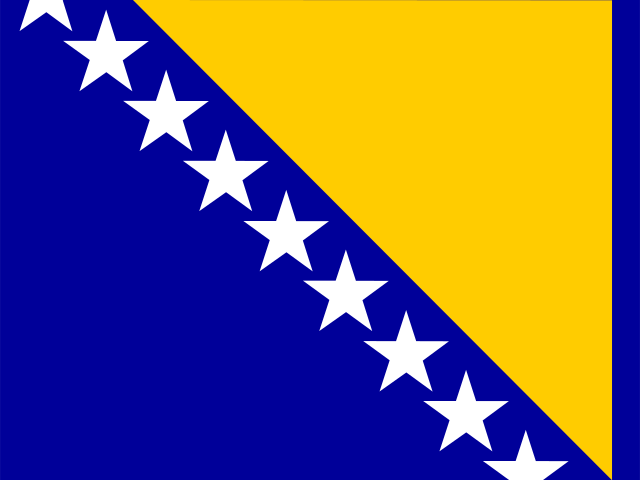
 Bosnia and Herzegovina


Regions and Cities of Bosnia and Herzegovina
- Sarajevo & the surrounding hillsThe capital’s Ottoman bazaar, museums and nearby mountain escapes.
- Sarajevo: Bosnia’s multicultural capital, Baščaršija and wartime museums.
- Trebević: Close mountain for hikes, views and Sarajevo cable-car access.
- War Childhood Museum: Personal stories and exhibits about the 1990s war.
- Sarajevo Tunnel: Exhibit about the city’s wartime lifeline, the Tunnel of Hope.
- Gazi Husrev-beg Mosque: A key Ottoman-era mosque in the old town.
- Mostar & HerzegovinaSun-baked karst country, riverside towns and Ottoman architecture.
- Mostar: Famous Old Bridge (Stari Most), riverside cafes and photo ops.
- Stari Most: Rebuilt Ottoman bridge and the symbol of Mostar.
- Kravica (waterfall): Popular swimming and picnic spot near Mostar.
- Medjugorje: Pilgrimage town that draws Catholic visitors from abroad.
- Blagaj tekke: Dervish house beside a spring at the base of a cliff.
- The rivers and northwestClear rivers, canyons and rafting in less-visited national parks.
- Una National Park: Canoeing, rafting and waterfalls on the Una river.
- Bihać: Gateway town for Una river activities and nature trips.
- Kravica (waterfall): Waterfall popular for swimming and short visits.
- Vjetrenica Cave: Karst cave with unique cave fauna and guided tours.
- The mountains and national parksDinaric Alps hiking, dramatic peaks and wartime battlefields.
- Maglić (mountain): Highest peak, alpine hiking and remote scenery.
- Sutjeska National Park: Dense wilderness, primeval forest and WWII history.
- Zelengora: Lakes, ridges and quieter trails for multi-day hikes.
- Igman: Accessible mountain near Sarajevo with winter sports options.
- North and Republika Srpska townsRegional centres with Austro-Hungarian buildings and calmer pace.
- Banja Luka: Large city with castle, riverside cafes and regional services.
- Trebinje: Southern town with Mediterranean feel and old town charm.
- Višegrad: Višegrad and its historic bridge.
- Jajce: Waterfalls, fortress and a compact medieval centre.
Top Cities in Bosnia and Herzegovina
- Known for: mosques and churches side by side, Ottoman bridges, clear rivers, mountains and low prices.
- First trip: Sarajevo, Mostar and a national-park or river rafting trip; allow 7-14 days.
- Best time: May-September (warm and best for hiking and river activities); shoulder seasons are quieter.
- Daily budget: $30-70.
- Visas: Most Western passports get 90 days visa-free.
- Getting in: fly into Sarajevo; secondary international airports at Banja Luka and Tuzla.
- Safety: Violent crime is uncommon; the main risks are landmines in remote areas, traffic and petty theft.
Currently it is the shoulder season, with temperatures ranging from 15 to 23°C (59 to 73°F).
September
September brings pleasant, mild weather and much smaller crowds than August. Days are comfortable for wandering and hikes while nights turn noticeably cooler, so layers are handy. You can enjoy quieter streets in Sarajevo and Mostar and find better prices and availability. Late September brings more frequent rain, so Neum and higher trails can get muddy - plan flexible itineraries and a light rain jacket.
Next 3 Months
October brings cool, crisp days and autumn colours in forests and valleys while many services scale back. November turns chillier and wetter with shorter days and some pass closures. By December winter arrives and ski resorts open.
Bosnia and Herzegovina in the News
Politically related unrest and a noted terrorism risk mean travellers should avoid demonstrations and large gatherings and follow instructions from local authorities and police (A1). Landmines remain a hazard outside marked areas and Sarajevo has high rates of property crime, so stick to signposted routes, avoid unknown paths and secure valuables and documents at all times (A1). Updated 19 Oct.
Active alerts: 1 travel advisory. See all Bosnia and Herzegovina alerts
Why Visit Bosnia and Herzegovina
Mostar’s Stari Most and the Old Bridge quarter are the image tourists expect - watch local divers, sip coffee by the Neretva and wander stone alleyways. It’s touristy but worth staying past the midday crowd to see the river glow in late afternoon.
Walk from Baščaršija’s Ottoman bazaars to Austro-Hungarian boulevards and the Latin Bridge where modern history shifted. Sarajevo’s blend of mosques, churches, bakeries and coffeehouses makes it one of Europe’s most layered small capitals; eat ćevapi in a side street and listen to local stories.
Kravice offers a refreshing waterfall swim surrounded by limestone cliffs - an accessible day trip from Mostar. Plan for early arrival in summer to avoid minibuses of day-trippers and bring flip-flops for the slippery rocks.
Hike in Sutjeska National Park to Perućica, one of Europe’s last primeval forests, and follow trails to the peaks of Maglić. Trails are quieter than other Balkan parks and reward hikers with old-growth trees and remote viewpoints.
Visit the Tunnel Museum in Sarajevo and the Srebrenica memorial to confront the recent past honestly; these sites are important and often emotionally intense. Take time to read, ask questions, and balance heavy visits with food and conversation in nearby towns.
Who's Bosnia and Herzegovina For?
Couples
Mostar’s iconic Stari Most bridge and cobbled lanes create a picture‑perfect romantic backdrop. Riverside cafés and historic Ottoman architecture make for intimate strolls and candlelit meals.
Families
Sarajevo offers engaging museums and gentle walks in Baščaršija for families. Outdoor adventures like rafting on the Neretva suit older kids, though winter conditions vary widely.
Backpackers
Budget hostels in Sarajevo and Mostar make Bosnia popular with backpackers exploring Balkan cohesion and war history. Scenic bus routes and inexpensive food ease low‑cost travel.
Digital Nomads
Sarajevo has cafés with decent Wi‑Fi and a comfortable cost of living, but coworking spaces are limited and connections weaken in rural valleys.
Foodies
Cevapi, burek and ćevapi grilled in Sarajevo alleys are a highlight. Traditional bakeries and roadside ćevabdžinice provide authentic, affordable eats focused on grilled meat and bread.
Adventure Seekers
Hiking in the Dinaric Alps, canyoning and rafting on the Neretva deliver solid adventure options. Winter sports in Jahorina and Bjelašnica add seasonal thrills.
Party Animals
Sarajevo and beach towns on the Adriatic fringe have lively bars and music nights. The scene is intimate and musical rather than massive clubbing-great for live performances.
Nature Buffs
Waterfalls, karst landscapes and national parks like Sutjeska offer pristine wilderness and diverse hiking. The Una and Neretva rivers create scenic spots for nature lovers.
- Sarajevo & the surrounding hills: Wander Baščaršija markets, visit the Sarajevo Tunnel museum, see Ottoman mosques like Gazi Husrev-beg Mosque, and hike or take the cable car to Trebević.
- Mostar & Herzegovina: Photograph Stari Most, watch bridge divers, visit Blagaj tekke, and swim at Kravica (waterfall).
- The rivers and northwest: Raft and canoe on the Una, explore Vjetrenica Cave, canyon-hike, and swim in clear river pools.
- The mountains and national parks: Multi-day hikes in the Dinaric Alps to Maglić (mountain), explore Sutjeska National Park, and visit WWII memorial sites.
- North and Republika Srpska towns: Visit Banja Luka’s fortress and riverside, see the bridge at Višegrad, and explore Jajce’s waterfall and old town.
Best Things to Do in Bosnia and Herzegovina
 Waterfall
Kravica (waterfall)
Waterfall in Bosnia and Herzegovina, popular for swimming
Waterfall
Kravica (waterfall)
Waterfall in Bosnia and Herzegovina, popular for swimming
 Historical Site
Mehmed Paša Sokolović Bridge in Višegrad
Ottoman-era bridge across the Drina River, UNESCO World Heritage
Historical Site
Mehmed Paša Sokolović Bridge in Višegrad
Ottoman-era bridge across the Drina River, UNESCO World Heritage
 National Park
Una National Park
National park protecting Una River and waterfalls
National Park
Una National Park
National park protecting Una River and waterfalls
 Mountains
Dinaric Alps
Major Balkan mountain range with karst landscapes
Mountains
Dinaric Alps
Major Balkan mountain range with karst landscapes
 Mountain
Maglić (mountain)
Bosnia's highest peak overlooking Sutjeska valley
Mountain
Maglić (mountain)
Bosnia's highest peak overlooking Sutjeska valley
 Hill
Bosnian pyramid claims
Controversial claimed pyramids; debated archaeological authenticity
Hill
Bosnian pyramid claims
Controversial claimed pyramids; debated archaeological authenticity
 Stadium
Asim Ferhatović Hase Stadium
Sarajevo stadium hosting FK Sarajevo football matches
Stadium
Asim Ferhatović Hase Stadium
Sarajevo stadium hosting FK Sarajevo football matches
 Park
Sutjeska National Park
Bosnia's national park with ancient forests and mountains
Park
Sutjeska National Park
Bosnia's national park with ancient forests and mountains
Bosnia and Herzegovina Bucket List
Don't Miss
Sarajevo - Baščaršija and Latin Bridge - Capital’s Ottoman-era bazaar, museums, and the Latin Bridge where the 1914 assassination occurred.
Mostar - Stari Most (Old Bridge) - Rebuilt Ottoman-era bridge arching over the Neretva River, focal point of the city’s historic quarter.
Kravica Waterfalls - Broad limestone cascades forming inviting pools near the Trebižat River, popular for swimming and picnics.
Sutjeska National Park and Perućica primeval forest - Old-growth forest and Bosnia’s highest peak, Maglić, with rugged trails and WWII history.
Blagaj Tekija and Buna river spring - Dervish monastery set beside the Buna spring beneath karst cliffs, serene riverside setting near Mostar.
Hidden Gems
Počitelj - Hillside Ottoman-era village with a medieval tower, narrow streets, and panoramic Neretva views.
Vjetrenica cave (Popovo Polje) - Karst cave system with subterranean biodiversity and guided tours inside Bosnia’s largest cave complex.
Jajce waterfall and fortress - Town where the Pliva River plunges beneath the medieval fortress, combining natural and historical attractions.
Trebinje and medieval old town - Southern Herzegovinian town with a relaxed riverfront, Ottoman stone architecture, and nearby vineyards.
Tito’s underground bunker (ARK D-0) near Konjic - Cold War underground bunker near Konjic now a museum exploring Yugoslav-era civil defense architecture.
Road Trips
Herzegovina Coast and Neretva Valley - Coastal and river valley drive linking Neum, Mostar, Počitelj, and Blagaj, roughly 200 kilometers of varied scenery.
Una River route: Bihać-Martin Brod-Bosanska Krupa - Scenic northwest route following the Una River through national park sections, waterfalls, and rafting towns, about 150 kilometers.
Mountain circuit: Sarajevo-Jahorina-Sutjeska-Pale - Mountain loop from Sarajevo to Jahorina and Sutjeska National Park, showcasing ski resorts, forests, and wartime history, about 250 kilometers.
Southern Herzegovina loop: Dubrovnik border-Neum-Trebinje-Mostar - Cross-border friendly drive exploring coastal pockets, vineyards, and historic towns across southern Herzegovina, roughly 300 kilometers.
More Bosnia and Herzegovina Guides
Best Time to Visit Bosnia and Herzegovina
High Season
Warm, dry weather predominates and outdoor activities (hiking, rafting, cultural festivals) are at their peak. This is the busiest time for tourism, so expect higher prices and fuller accommodations, especially in Sarajevo and Mostar.
Shoulder Season
Mild conditions and fewer visitors make these months ideal for sightseeing and hiking without summer crowds. Prices and traffic are generally lower, though the weather can be changeable and some higher trails may still have snow in spring.
Low Season
Cold temperatures and snowfall reduce general tourism outside ski resorts; many towns are quieter and prices fall. Ski resorts draw winter sports visitors in December-February, but most cultural and outdoor services operate at reduced capacity.
Bar height shows how good the month is; numbers are the average daytime high. Tap a month for its guide.
Northern Posavina & Bosnian Plain
Sava valley
The flat Sava valley and northern plains have a continental rhythm: hot, humid summers and cold, foggy winters with occasional snow. Spring and autumn are transitional and can be wet; the plain is also where seasonal river flooding is most likely after heavy rain or rapid thaw. Travelers should expect agricultural scenery, quieter small towns, and practical travel concerns like muddy roads in spring and icy patches in winter.
Central Bosnia & Sarajevo
Inner Highlands
Central Bosnia and Sarajevo sit higher than the plains, so winters are colder and snowier while summers are milder than the lowlands. The area is the country’s cultural heart - good for city exploration in shoulder months and reliable for winter sports on nearby slopes. Expect quick weather changes when you move from urban valley floors up to mountain roads; pack layers and waterproof footwear.
Dinaric Mountains & National Parks
Jahorina, Bjelašnica, Vlašić, Sutjeska
The Dinaric mountain spine gives Bosnia its ski resorts, deep forests and national parks; expect heavy winter snow, cool summers and rapid changes with altitude. Ski season is reliable from December through March at higher resorts, while summer is for hiking, rafting and wildflower meadows. Weather can turn fast in the high country - always plan with local guides and carry appropriate cold- and wet-weather gear.
Herzegovina & Neretva Valley
Mostar, Blagaj, Konjic
Herzegovina and the Neretva valley are the country’s warm, sun-drenched south: long, dry summers and mild, wetter winters with a distinctly Mediterranean touch in lowlands. Mostar is significantly hotter than inland Bosnia in summer, while the steep river gorges offer cooling activities. Travelers should prepare for strong summer heat and prefer mornings or evenings for sightseeing; river excursions and harvest-season food festivals are seasonal highlights.
Adriatic Coast & Neum
Coastline and Pelješac microclimate
Bosnia’s tiny Adriatic frontage around Neum has a Mediterranean maritime climate: hot, dry summers and mild, wetter winters moderated by the sea. The coastline is busiest in July-August; spring and early autumn offer milder weather and fewer crowds for coastal drives and island day trips. Watch for strong bora winds and reduced ferry services outside the summer season when planning boat excursions.
Sarajevo Winter (Zimske Igre)
February · A long-running cultural festival in Sarajevo featuring music, theatre, exhibitions and events across the city’s historic venues.
Ilidža Folk Festival
June · One of the region’s prominent folk and ethno music festivals held in Ilidža (Sarajevo suburb), showcasing traditional ensembles and dance.
Baščaršija Nights (Baščaršijske noći)
July · A summer cultural programme in Sarajevo’s old bazaar area with concerts, theatre and street events highlighting Bosnian arts and crafts.
Sarajevo Film Festival
Mid-August · The Balkans’ leading film festival drawing international filmmakers, premieres and a lively festival atmosphere around Sarajevo’s cinemas and streets.
Statehood Day and Commemorations
25 November · Official commemorations marking the 1943 establishment of the Socialist Republic of Bosnia and Herzegovina, with ceremonies and cultural events in Sarajevo and across the country.
Most Western visitors enter visa-free for short stays. Budget beds and guesthouses from about €8-35/night, mid-range hotels €30-90; book ahead in Sarajevo and Mostar for summer and festival weekends.
Bosnia and Herzegovina Itineraries
1 Week Bosnia and Herzegovina Itinerary
Begin in Sarajevo's Ottoman quarter and museums, then visit Mostar's Old Bridge, Blagaj and Počitelj, swim at Kravice Falls and return to Sarajevo for departure.
- Day 1 - Arrive Sarajevo; Baščaršija bazaar and Sebilj fountain.
- Day 2 - Tunnel of Hope Museum and Latin Bridge.
- Day 3 - Drive to Mostar; walk Stari Most and Old Bazaar.
- Day 4 - Day trip to Počitelj and Blagaj Tekke.
- Day 5 - Visit Kravice Falls; swim near waterfalls.
- Day 6 - Return to Sarajevo via Konjic.
- Day 7 - Fly out from Sarajevo.
2 Weeks Bosnia and Herzegovina Itinerary
Start in Sarajevo, then loop through Jajce, Banja Luka and Mostar, adding Kravice Falls, Blagaj and Sutjeska National Park for waterfalls, historic towns and mountain hikes.
- Day 1 - Arrive Sarajevo; evening Baščaršija dinner.
- Day 2 - Sarajevo Tunnel and city museums.
- Day 3 - Drive to Jajce; visit waterfalls and fortress.
- Day 4 - Continue to Banja Luka; Kastel fortress.
- Day 5 - Head south to Mostar; Old Bridge.
- Day 6 - Visit Blagaj and Počitelj.
- Day 7 - Day trip to Kravice Falls.
- Day 8 - Travel to Trebinje; explore old town.
- Day 9 - Southern Herzegovina villages and vineyards.
- Day 10 - Return toward Sarajevo via Konjic.
- Day 11 - Explore Sutjeska National Park wilderness.
- Day 12 - Hike in Perućica primeval forest.
- Day 13 - Return to Sarajevo for free day.
- Day 14 - Depart from Sarajevo.
3-4 Weeks Bosnia and Herzegovina Itinerary
Explore Sarajevo then traverse Jajce, Banja Luka and Travnik, spend days in Mostar, Kravice and Trebinje, and extend into Sutjeska National Park with multi-day hikes and village stays.
- Day 1 - Arrive Sarajevo; Old Town walk.
- Day 2 - Tunnel Museum and memorial sites.
- Day 3 - Drive northwest to Jajce and Pliva Lakes.
- Day 4 - Continue to Banja Luka sights and riverside.
- Day 5 - Head south to Travnik and central highlands.
- Day 6 - Explore Vlašić or nearby hikes.
- Day 7 - Travel to Mostar; Old Bridge and museum.
- Day 8 - Blagaj Tekke and Počitelj visit.
- Day 9 - Kravice Falls and swimming day.
- Day 10 - Drive to Trebinje and the Adriatic approaches.
- Day 11 - Coastal day trip to Neum or local vineyards.
- Day 12 - Sutjeska NP multi-day trek and wildlife.
- Day 13 - Perućica primeval forest and Tjentište monuments.
- Day 14-21 - Flexible regional exploration: village homestays, river rafting, or extra mountain trekking days.
Visas & Entry Requirements
- Citizens of EU/Schengen countries, the UK, the USA, Canada, Switzerland and several other European and East Asian countries can enter visa-free for short stays (commonly up to 90 days within a 180-day period). Check your embassy for confirmation as lengths vary by nationality.
- Your passport must have been issued within the last 10 years and be valid for at least 90 days after you leave; officials may ask for proof of onward travel and accommodation.
- All foreigners must be registered with the police within 72 hours of arrival. Hotels and hostels do this for you; if you stay with friends or in a private rental that doesn’t, register at the local Service for Foreigners’ Affairs office. Make sure your passport is stamped on entry, as missing stamps can lead to fines when you leave.
- Travelers from countries with infectious-disease risks may be asked for relevant vaccination certificates. Apply for a visa in advance if your nationality is not on the visa-exempt list.
Where to Stay in Bosnia and Herzegovina
Hotels & City Centres
$30-90 mid-range · $120+ luxury
Sarajevo’s Baščaršija and Bistrik quarters concentrate hotels and boutique properties; Mostar’s Old Town hosts riverside hotels. Convenient locations are best for walking to historic sites and arranging nearby excursions.
Hostels & Guesthouses
$8-35 / night
Budget hostels and family-run guesthouses are widespread in Sarajevo, Mostar and Konjic. They typically offer local tips and inexpensive transfers to outdoor activities like rafting or mountain trails.
Mountain Lodges & Eco-Lodges
$25-100 / night
Jahorina and Bjelašnica ski resorts have mountain lodges and chalets in winter; summer mountain huts suit hikers. Eco-lodges near Sutjeska National Park cater to nature and wildlife visitors.
Homestays
$18-50 / night
Rural homestays in Herzegovina and central Bosnia offer home-cooked meals and local hospitality. They’re good for cultural immersion and arranging guided visits to olive groves, vineyards and historic sites.
How to Get to Bosnia and Herzegovina
Most international travelers arrive by air into Sarajevo International Airport (SJJ); secondary international airports include Banja Luka (BNX) and Tuzla (TZL). Regional connections often go via Vienna, Istanbul or Zagreb, and overland routes from Croatia and Serbia are common for travelers coming by car or bus.
Border Crossings
Croatia is the most frequent international connection for travellers to and from Bosnia and Herzegovina, with buses linking Sarajevo and Mostar to Split, Dubrovnik and Zagreb. Since Croatia joined Schengen in 2023 this is an EU external border, so expect full passport checks, EU Entry/Exit System registration for non-EU travellers entering Croatia, and long queues in summer. Since the Pelješac Bridge opened in 2022, the Split-Dubrovnik coast road no longer has to pass through Neum. Nearby Croatian airports (Split, Dubrovnik, Zagreb) are served by carriers such as Croatia Airlines, Ryanair and easyJet, with bus or rented-car transfers across the border. Schengen/EEA citizens generally travel with a national ID or passport; citizens of the US, Canada, Australia and many other countries may enter Bosnia visa-free for short stays but should check exact permitted length and passport validity with consular sources before travel.
Crossings
- Bijača (BiH) - Metković (Croatia) -
- Gradiška (BiH) - Stara Gradiška (Croatia) -
- Klek (Croatia) - Neum (BiH) -
Land travel between Bosnia and Herzegovina and Serbia is common for family visits, commerce and overland trips to Belgrade. There are regular bus services linking Sarajevo and other Bosnian cities with Belgrade; regional carriers and international routes (for example via Belgrade Nikola Tesla) provide air options. Passport/ID requirements follow standard rules - EU/EEA citizens and many Western passport-holders travel visa-free for short stays, but visitors from other countries should verify requirements with embassies.
Crossings
- Zvornik (BiH) - Mali Zvornik (Serbia) -
- Bijeljina area crossings (BiH) - Border posts to Serbia -
Montenegro is a short overland trip from southern Bosnia-especially from the Trebinje/Foča areas-used by hikers, coastal travellers and drivers bound for Montenegrin coast towns. Regional bus lines and private cars are the norm; Podgorica and Tivat airports in Montenegro are served by regional and low-cost carriers. Visa rules mirror Bosnia’s general approach: many Western nationalities are visa-exempt for short visits, but travellers should confirm specifics in advance.
Crossings
- Foča (BiH) - Šćepan Polje (Montenegro) -
- Trebinje area crossings (BiH) - Border posts to southern Montenegro -
How to Get Around Bosnia and Herzegovina
Scheduled services to Sarajevo and Tuzla are offered by regional carriers; major airlines connect via hubs such as Vienna and Istanbul. Long-haul carriers typically route through European hubs, with onward regional services handled by airlines like Austrian Airlines and Turkish Airlines.
Domestic air options are limited; most internal travel is by road, so plan onward transfers from SJJ in advance. Prices for short regional hops are commonly €50-€150.
Intercity buses are the primary way to move between towns and across borders. Frequent routes link Sarajevo with Mostar, Banja Luka and neighboring capitals; fares typically range from €5-€30 depending on distance. Regional operators run cross-border services to Croatia and Serbia with multiple departures per day.
Rail services exist but are slower and less frequent than buses; popular for scenic or budget travel rather than speed. The best line for visitors is the scenic Sarajevo-Konjic-Mostar route through the Neretva canyon; in summer, and at weekends in winter, some trains continue to Ploče on the Croatian coast. There has been no Zagreb-Sarajevo train since 2016. Expect modest fares and few departures, so check timetables at the station.
Renting a car is a convenient way to explore rural areas and the Herzegovina region; major international brands operate at Sarajevo (SJJ). Cross-border rules vary-notify the rental company if you plan to drive into Croatia or Serbia. Daily rates typically start from about €30-€70 depending on season and vehicle class.
Urban ride-hailing and taxi options are available in larger cities; apps such as Bolt operate in Sarajevo for short trips and airport transfers. Metered taxis are common-confirm or agree a fare up front for longer journeys. Airport transfer shuttles and private transfers can be booked in advance for predictable pricing.
Expect to spend around $30-70/day; the convertible mark (BAM) is widely used, cards work in cities but carry cash for markets and rural areas, and ATMs are common in towns.
How Much Does Bosnia and Herzegovina Cost?
Typical daily spend $30-70, cheapest in small towns and villages, priciest in Sarajevo and Mostar during high season.
Daily budgets
Typical prices
- Hostel dorm bed: 20-40 BAM
- Basic guesthouse room: 35-70 BAM
- Mid-range hotel: 80-160 BAM
- Upscale hotel: from 180 BAM
- Market or street-stall meal: 6-10 BAM
- Bottle of local beer: 3-5 BAM
- Organised tour or activity: 40-100 BAM
- Local bus ride: 1.5-3 BAM
For current prices on hundreds of everyday items, see Numbeo’s Bosnia and Herzegovina cost of living, a crowd-sourced database that is updated often.
Ways to save
- Use buses and shared minibuses.: Long-distance buses are cheap and frequent; avoid private transfers unless you need speed or comfort.
- Eat local and seasonal.: Ćevapi, burek and market produce are cheap and filling compared with tourist restaurants.
- Stay in guesthouses outside peak season.: Family-run accommodation is cheaper, often includes tips and local transport help.
Full trip budgets are in Bosnia and Herzegovina Itineraries.
Cash, Cards & Tipping in Bosnia and Herzegovina
The currency is the convertible mark (BAM). Cards are widely accepted in cities and tourist areas, but cash is still commonly used for markets, small shops and rural areas; ATMs are plentiful in towns and cities.
- Tipping: Tipping is common in restaurants (around 10% if service isn't included) and small cash tips for porters and taxi drivers are appreciated.
- Cards & Cash: Visa and Mastercard are accepted at most hotels, restaurants and larger shops; cash is useful for markets, smaller vendors and some local services.
- ATMs & Mobile Payments: ATMs are commonly available in urban areas; expect your bank to charge foreign withdrawal/FX fees. Mobile wallet adoption is limited compared with Western Europe.
Be respectful when discussing the 1990s war. Follow local signs around religious sites.
Customs & Etiquette in Bosnia and Herzegovina
Politeness, respect for religion and sensitivity about the 1990s conflict matter more than rigid rules; asking before photographing people or memorials is expected. Locals are generally forgiving of honest mistakes, but avoid political arguments and follow cues at mosques and churches.
Bosnian Language Basics
Bosnian, Croatian and Serbian are mutually intelligible standard varieties used across the country; Bosnian and Croatian typically use Latin script while Serbian uses both Cyrillic and Latin. English is increasingly spoken in tourist areas.
Useful Phrases
- Hello - Zdravo ZDRAV-oh
- Good morning - Dobro jutro DOH-broh YOO-troh
- Good evening - Dobra večer DOH-brah VEH-chair
- Where is …? - Gdje je …? GDYEH yeh …
- How much does it cost? - Koliko košta? KOH-lee-koh KOH-shta
- Can you help me? - Možete li mi pomoći? MOH-zhe-teh lee mee POH-moh-chee
- Thank you - Hvala HVAH-lah
- Please / You’re welcome - Molim MOH-leem
- Cheers! - Živjeli! ZHEE-vyeh-lee
- Help! - Upomoć! oo-POH-mohch
- Police - Policija po-lee-TSI-ya
- Where is the hospital? - Gdje je bolnica? GDYEH yeh BOHL-nee-tsah?
Staying Connected in Bosnia and Herzegovina
Bosnia and Herzegovina has decent urban connectivity with reliable 4G and available fixed broadband in larger towns. Mobile speeds in cities typically support streaming and video calls, though rural areas lag behind.
Tourist SIM Cards
Prepaid SIMs are sold by BH Telecom, m:tel and HT ERONET at airports and kiosks. SIM cards typically cost $5-$10; data bundles range $5-$20 depending on volume and validity.
Carry ID for registration at purchase.
Mobile Providers
BH Telecom, m:tel and HT ERONET provide the main 4G coverage, strongest in towns and along major roads. Monthly plans usually fall in the $10-$30 range.
Fixed broadband is widely available in larger towns, with better speeds there than in rural areas.
Wi-Fi & Coworking
Hotels and cafés in Sarajevo and Banja Luka offer reliable Wi‑Fi and there are a few coworking spaces in major cities. Speeds are generally fine for conferencing and remote work in urban areas.
Expect slower or intermittent connectivity outside main population centers.
Useful Apps for Bosnia and Herzegovina
- Google Maps - Use for navigation and location-based directions in Bosnia and Herzegovina.
- WhatsApp Messenger - Commonly used for local communication and arranging transport.
Emergency Numbers & Electricity
- Electricity: 230V, 50 Hz; plug types C, F.
Landmines and unexploded ordnance remain the single unusual safety risk; avoid off-track hiking in marked danger zones, drink bottled water outside larger towns if unsure, and note that ambulance and hospital services are best in Sarajevo and Banja Luka.
Is Bosnia and Herzegovina Safe?
Yes for most visitors, but the main risks are remaining landmines in rural areas, variable road conditions and petty crime in towns.
Crime & Scams
Petty theft, pickpocketing and bag snatches occur in tourist areas, markets and on public transport. Use anti-theft bags, keep passports and cash secure, and be wary of distraction techniques and unofficial tour offers. Violent crime against tourists is uncommon but property crime and occasional robberies happen in cities.
Road Safety
Road quality varies across the country: expect potholes, narrow mountain roads and unpredictable local driving. Avoid night driving where possible, allow extra time for mountain routes, and use licensed taxis in cities. If renting a car, ensure insurance and check rental terms carefully.
Landmines & Unexploded Ordnance
Significant areas, especially rural and hilly zones, still contain marked and unmarked minefields from the 1990s conflict. Stay on clearly marked trails and roads, obey all warning signs and never enter fenced or abandoned military areas or dig in fields. Follow local guidance and maps showing cleared areas.
Beaches & Water
Rivers and waterfalls are attractive but some remote sites have limited facilities and uneven access paths. Tap water is generally safe in main towns but can upset visitors outside cities, so carry bottled water when unsure. Use care when swimming or rafting; check local conditions and licensed operators.
Laws to Know
Carry your passport at all times, as police can ask for it. After a road accident you must stay at the scene until police arrive, and traffic police issue on-the-spot fines. Drug laws are strict and penalties severe. Respect sensitivities around war sites and public displays related to the 1990s conflict.
Nightlife & Personal Safety
Nightlife in Sarajevo and Mostar is generally safe but watch for pickpockets and overly intoxicated individuals. Avoid isolated streets late at night and use registered taxis to return to accommodation. Women should exercise usual precautions and avoid walking alone in poorly lit areas.
Areas to Avoid
Exercise extra caution in rural and unmarked areas because of landmines; stick to roads and marked trails. Follow local warnings and stay away from fenced former military zones and abandoned buildings. Sarajevo has higher rates of property crime, so be vigilant in the capital.
Staying Healthy in Bosnia and Herzegovina
Generally easy to stay healthy in towns, but expect limited medical services in rural areas and take precautions with food, water and mosquitoes.
Food & Water
Tap water is safe to drink in Sarajevo, Mostar and other towns, and public fountains in Sarajevo give drinkable spring water; in remote villages ask locals or use bottled water. Eat at busy, well-reviewed restaurants and avoid raw or undercooked street food. Carry basic rehydration salts and treatment for traveler’s diarrhea.
Mosquito-Borne Illness
Mosquitoes are present in warmer months and can transmit nuisance bites; use repellents and a mosquito net if sleeping in rural accommodation. There is no major ongoing high-risk mosquito-borne outbreak, but standard precautions reduce risk and discomfort. Protect yourself at dawn and dusk in river valleys and wetlands.
Vaccinations & Rabies
Routine vaccinations (MMR, tetanus, diphtheria) should be up to date. Hepatitis A is commonly recommended for travelers. Rabies risk exists from stray animals; consider pre-exposure vaccination if you will be in remote areas or working with animals and know post-exposure treatment may be limited outside major cities.
Heat & Sun
May to September is warm and sunny, with strong midday sun in lowlands and river valleys. Use sunscreen, wear a hat and stay hydrated when hiking or rafting. Mountain weather changes quickly; layer clothing and carry rain protection.
Air Quality
Air quality is generally good outside urban centres; Sarajevo can experience winter pollution and occasional smog. If you have respiratory conditions, avoid heavy traffic areas and check local forecasts in winter. Mountain air is typically clean and good for outdoor activities.
Medical Care & Insurance
Healthcare is best in Sarajevo and Banja Luka; rural areas have limited services and some facilities may not accept foreign insurance. Carry necessary medications, basic first aid supplies and comprehensive travel insurance including emergency evacuation. Know hospital locations in your travel area and have contact numbers for assistance.
Daily life mixes Muslim and Christian traditions with Austro-Hungarian influences; hospitality and strong coffee culture are common, and people expect a degree of formality at religious sites.
History & Culture of Bosnia and Herzegovina
Bosnia and Herzegovina’s culture is defined by a meeting of Ottoman, Central European and South Slavic traditions-visible in food, music and architecture. Cities like Sarajevo and Mostar highlight layered histories where religious, linguistic and culinary strands intersect.
History of Bosnia and Herzegovina
Bosnia and Herzegovina’s past is a layered mix of medieval Bosnian statehood, centuries of Ottoman rule that introduced Islam and Ottoman urban forms, and later Austro-Hungarian influence that left European architecture and administrative structures. The region’s multi-confessional towns-Muslim, Orthodox and Catholic-reflect those overlapping histories, visible today in cityscapes and culinary life.
The 20th century brought inclusion in Yugoslavia and then traumatic fragmentation: the 1992-1995 war led to profound human suffering and to the Dayton Agreement, which created the current political structure. Travelers will find a landscape where historical streets, war memorials and renewed cultural life coexist; Sarajevo and Mostar, in particular, display this complex heritage.
Notable Figures
- Tvrtko I - Medieval king who expanded the Bosnian state and was crowned in the late 14th century.
- Gazi Husrev-beg - Ottoman governor whose endowments shaped Sarajevo’s religious and educational institutions; his mosque and quarter are central landmarks.
- Gavrilo Princip - Young Bosnian Serb whose 1914 assassination of Archduke Franz Ferdinand became a flashpoint for World War I.
- Alija Izetbegović - Bosnian political leader and first President of independent Bosnia and Herzegovina during the 1990s conflict.
Key Dates
- c. 1377Tvrtko I is crowned king and the medieval Bosnian state reaches notable influence in the region.
- 1463Ottoman conquest brings centuries of Ottoman administrative, architectural and religious influence.
- 1878Austro-Hungarian administration begins, introducing Central European styles and institutions.
- 1914Assassination of Archduke Franz Ferdinand in Sarajevo by Gavrilo Princip, a key event leading to World War I.
- 1992-1995Bosnian War causes widespread displacement and damage; ethnic divisions and international intervention follow.
- 1995Dayton Peace Agreement ends large-scale conflict and establishes the country’s current political structure.
- 2004-presentOngoing reconstruction, cultural revival and efforts at inter-ethnic reconciliation and tourism development in historic towns.
Bosnian cuisine draws from Ottoman, Mediterranean and Central European traditions-grilled meats, filled pastries and slow-cooked stews are staples. Coffee and shared small plates are central to social life.
Responsible Travel in Bosnia and Herzegovina
Bosnia and Herzegovina’s post‑war heritage and beautiful rivers require sensitive travel: honour memorials, follow safety advice in rural areas, and prioritise local guides and businesses to help communities recover.
- Respecting Memory & War Sites: When visiting memorials and sites connected to the 1990s conflict (e.g., Srebrenica, Sarajevo memorials), behave respectfully, follow on-site rules and listen to local guides who provide context.
- Historic Towns & Photography: In Mostar’s Stari Most area and Baščaršija market ask before photographing people, especially craftspeople and religious ceremonies, and avoid commercial use of images without permission.
- Landmine Awareness & Rural Travel: Some rural areas still carry historic mine risk; always follow official signage and local authority advice, and use established routes and licensed guides when exploring lesser‑visited regions.
- Support Local Businesses & Gastronomy: Eat at family-run restaurants, buy handicrafts from local cooperatives and choose local guides in river valleys and national parks to ensure tourism dollars stay in communities.
- Protect Rivers & Waterways: When visiting Una and Neretva river areas avoid leaving waste, respect angling rules, and book responsible rafting operators that minimise shoreline impact.
Expats include students, NGO staff and remote workers attracted by low costs and Balkan access; temporary residence permits are available for work, study or family stays but there is no formal digital-nomad visa.
Living in Bosnia and Herzegovina
Long-term living in Bosnia and Herzegovina suits people who want low monthly costs, rich history, and a base in the Western Balkans. Expats include students, NGO workers, and remote workers seeking affordable city life; services cluster in Sarajevo while countryside and smaller towns are quieter and cheaper.
Long-Term Visas: Temporary residence permits (work, study, family) issued locally, usually granted for up to one year and renewable.
Working There: Work permits required for most non-citizens; formal employment often concentrated in Sarajevo and larger towns.
Cost of Living: Monthly living in Sarajevo typically around €600-€900 for a modest single-person budget, lower elsewhere.
Health & Wellness: Public healthcare with compulsory insurance for employees, private clinics available in major cities for faster care.
Banking & Finance: Currency is the Convertible Mark (BAM); open a bank account with passport and local address, online banking common.
Taxes: Income tax generally a flat rate around 10% in many entities, plus social contributions and municipal levies.
Popular Places to Live in Bosnia and Herzegovina
The choice comes down to whether you want a city base, historical river towns, or somewhere quieter. For city amenities choose Sarajevo; historic Mostar is smaller and scenic; inland towns offer lower rents but fewer services.
- Sarajevo - Historic capital, busy cultural life, best services and transport, suits urban residents, winters cold
- Mostar - Famous bridge and river, tourist-friendly, cheaper than the capital, smaller international community
- Banja Luka - University city, calmer pace, lower rents and reliable local services, fewer international amenities
- Trebinje - Southern town with mild climate, quiet lifestyle, limited coworking and fewer long-term rentals
- Neum - Only coastal town, small seaside living, good for summers, very limited year-round services
Temporary residence and work permits are the main routes for long stays; processes are handled by state cantonal immigration services.
- Temporary residence - Issued for work, study or family reasons, usually initial permit up to one year, renewable locally
- Work permit - Required for most non-citizens, employer sponsorship typically needed, application through immigration authorities
- Permanent residence - Available after several years of legal residence, stricter requirements and supporting documentation
- Local immigration offices - Regional cantonal offices handle applications; processing times and document lists vary by agency
Overall cost of living is low compared with Western Europe, with big savings on rent and food outside capital Sarajevo.
- Housing - One-bedroom in Sarajevo €300-€550/month, smaller towns considerably cheaper
- Food & dining - Local restaurants inexpensive, grocery prices low for local produce, imported goods cost more
- Transport - Cheap public transport in cities, intercity buses affordable but slower than in Western Europe
- Utilities - Heating can raise winter bills, electricity and heating costs vary by canton
- Groceries - Local markets keep food costs down, supermarket chains carry more expensive imports
Public healthcare covers basics, private care recommended for quicker access; housing options range from affordable apartments to pricier serviced flats.
- Public healthcare - State-run system with mandatory insurance for employed residents, variable quality between regions
- Private clinics - Private hospitals and clinics concentrated in Sarajevo and Banja Luka, faster service for a fee
- Pharmacies - Pharmacies common in towns, most medicines available without long wait times
- Long-term rentals - Lease contracts common, landlords often ask for deposit and ID; utilities sometimes extra
- Short-term rentals - Serviced apartments and Airbnb options in tourist seasons, pricier and less regulated
Digital Nomads in Bosnia and Herzegovina
The remote-work scene is small but growing, centered on Sarajevo where internet and coworking are best. Digital nomads value low rents and Balkan access, though formal visa options for remote work are limited.
Nomad Visa: No dedicated nomad visa; typical approach is tourist stays or applying for temporary residence permits for longer stays.
Long Term Rentals: One-bedroom apartments in Sarajevo typically €300-€550/month; long-term rentals cheaper outside the capital.
Internet: Fiber and DSL available in main cities, typical urban speeds range from 30-100 Mbps where fiber is present.
Monthly Cost: A comfortable remote-worker budget in Sarajevo is about €700-€1,200/month including rent and coworking.
Coworking: A few coworking spaces in Sarajevo (HUB387), plus cafes used for day-to-day remote work.
Fitness & Wellness: Gyms and yoga studios in larger towns, hiking and outdoor options readily accessible in surrounding countryside.
Community: Small but present expat and freelancer communities centred on Sarajevo and some university towns.
Time Zone: Central European Time (UTC+1), Central European Summer Time (UTC+2) in summer months.
Popular Nomad Hubs in Bosnia and Herzegovina
Nomads often pick a city base for internet and amenities or smaller towns for lower costs and slower pace. Sarajevo is the obvious hub for services and community, Mostar offers a smaller international scene, while Banja Luka and Trebinje suit quieter, cheaper living.
- Sarajevo - Cultural and transport hub, best internet and coworking, suits urban nomads, winters can be cold
- Mostar - Historic river city, cheaper than Sarajevo, good for expats desiring smaller international community
- Banja Luka - Administrative and student city, calmer vibe, lower rents but fewer international amenities
- Trebinje - Southern town near coast, mild climate, quieter lifestyle, limited coworking and services
There is no dedicated digital-nomad visa; nomads usually rely on tourist stays for short trips or apply for temporary residence permits for longer stays.
- Tourist visa / eVisa - Used for short stays; visa requirements depend on nationality and diplomatic agreements
- Temporary residence - Longer stays require residence permits based on work, study, or family reunification
- Work permit - Needed if you take paid local employment, employer sponsorship normally required
- Local immigration offices - Cantonal offices process applications; prepare translated documents and proof of funds
Connectivity is strongest in Sarajevo and other larger towns, where fiber and solid mobile coverage make remote work feasible.
- BH Telecom - Major operator, offers DSL and fiber in Sarajevo and larger towns
- Telemach - Regional provider with cable and fiber offerings where available
- Mobile data (4G/5G) - Good 4G coverage in cities, mobile data useful as backup for remote work
- Cafés & coworking - Cafés and a few coworking spaces provide reliable Wi‑Fi in city centres
A small but growing freelance and startup community exists, concentrated in Sarajevo with sporadic coworking in other cities.
- HUB387 - One of the better-known coworking hubs in Sarajevo, mixes startups and freelancers
- Local cafés - Many cafés offer dependable Wi‑Fi and daytime work atmospheres in city centres
- Freelancer meetups - Occasional meetups and expat groups in Sarajevo foster networking and social life
- Facebook expat groups - Active online communities for housing, tips, and informal meetups
Bosnia and Herzegovina Travel News
- Scammers selling fake ETIAS waivers after Europe travel authorisation delay(thepointsguy.com)
- EU signals flexibility to ease Entry/Exit System border friction(skift.com)
- Airlines accepting new A321neos despite planned short-term groundings(simpleflying.com)
- United Airlines cancels all flights to six destinations(simpleflying.com)
- Princess Cruises launches ChatGPT app for cruise planning(ttgasia.com)
- Tour operators adapt to climate risks after deadly Himalayan disasters(skift.com)
- EASA 7,800-cycle inspection order forces Boeing 787 maintenance changes(simpleflying.com)
Travel Resources for Bosnia and Herzegovina
Official
- Ministry of Foreign Affairs of Bosnia and Herzegovina Foreign Ministry / Visas
- Federation of Bosnia and Herzegovina - Government (regional site) Government
Travel Advisories
Bosnia and Herzegovina Embassies Abroad
News & Media
Bosnia and Herzegovina FAQs
Do I need a visa for Bosnia and Herzegovina?
Many travellers do not need a visa for Bosnia and Herzegovina, including citizens of EU and Schengen countries, the UK, the USA, Canada and Switzerland, for short stays. If your nationality is not on the visa-exempt list, you need to apply for a visa in advance. Visa rules
How long can I stay in Bosnia and Herzegovina without a visa?
Up to 90 days is common for visa-free travel in Bosnia and Herzegovina for EU and Schengen citizens, the UK, the USA, Canada, Switzerland and others, usually within a 180-day period. Lengths vary by nationality, so confirm the permitted stay for your passport before travel. Length of stay
What is the best time to visit Bosnia and Herzegovina?
May to September is the best time to visit Bosnia and Herzegovina for warm weather and hiking and river activities. April to May and September to October are quieter with milder conditions, but the weather can be changeable and higher trails may still have snow in spring. Best time
How many days do you need in Bosnia and Herzegovina?
Allow 7-14 days for a first trip to Bosnia and Herzegovina. That gives enough time for Sarajevo and Mostar, plus day trips such as Blagaj and Počitelj, and a national park stop like Sutjeska National Park or a river-focused area. Itineraries
Do I need to register with the police after arriving in Bosnia and Herzegovina?
Yes, all foreigners must be registered with the police within 72 hours of arrival in Bosnia and Herzegovina. Hotels and hostels normally do this for you. If you stay with friends or in a private rental that does not, register at the local Service for Foreigners’ Affairs office. Entry rules
How much does a trip to Bosnia and Herzegovina cost per day?
$30-70 a day is a typical daily spend in Bosnia and Herzegovina, with small towns and villages cheaper and Sarajevo and Mostar pricier in high season. Budgets are often shown in BAM as well, since the local currency is the convertible mark. Daily costs
Is Bosnia and Herzegovina expensive?
Should I use cash or card in Bosnia and Herzegovina?
Yes, you should carry both in Bosnia and Herzegovina, because cards are widely accepted in cities and tourist areas but cash is still common for markets, small shops and rural areas. The currency is the convertible mark (BAM), and ATMs are plentiful in towns and cities. Cash and cards
Do you tip in Bosnia and Herzegovina?
Yes, tipping is common in Bosnia and Herzegovina, especially in restaurants at around 10% if service is not included. Small cash tips for porters and taxi drivers are also appreciated. Tipping
Is Bosnia and Herzegovina safe for tourists?
Yes, Bosnia and Herzegovina is generally safe for most visitors, and violent crime against tourists is uncommon. The main risks are landmines in some rural areas, variable road conditions, and petty crime in towns. Stay on marked trails and be vigilant in urban areas. Safety
Can you drink the tap water in Bosnia and Herzegovina?
Yes, tap water is generally safe to drink in Sarajevo, Mostar and other towns, and Sarajevo has public fountains with drinkable spring water. Outside cities and in remote villages, it can upset visitors, so ask locals or use bottled water when you are unsure. Food and water
What is the main airport in Bosnia and Herzegovina?
Sarajevo International Airport (SJJ) is the main arrival airport for most international travellers to Bosnia and Herzegovina. There are also secondary international airports at Banja Luka (BNX) and Tuzla (TZL). Regional connections often route via Vienna, Istanbul or Zagreb. Airports
How do you get around Bosnia and Herzegovina?
Buses are the primary way to get around Bosnia and Herzegovina between towns and across borders, with frequent routes linking Sarajevo, Mostar and Banja Luka. Trains exist but are slower and less frequent, while car hire helps for rural areas and Herzegovina. Transport
What plug type does Bosnia and Herzegovina use?
Bosnia and Herzegovina uses plug types C and F. Electricity supply is 230V at 50 Hz. If your devices use a different plug, bring an adapter so you can charge reliably in hotels, guesthouses and apartments across the country. Plugs
What is the best SIM card for Bosnia and Herzegovina?
BH Telecom, m:tel and HT ERONET are the main prepaid SIM options for Bosnia and Herzegovina, sold at airports and kiosks. Coverage is strongest in towns and along major roads, with rural areas lagging. Bring ID, as SIMs require registration at purchase. SIM cards
Is English widely spoken in Bosnia and Herzegovina?
Yes, English is increasingly spoken in tourist areas in Bosnia and Herzegovina. Outside the main visitor zones and in rural areas, language gaps can be more noticeable. Bosnian, Croatian and Serbian are mutually intelligible, and you will see both Latin and Cyrillic scripts. Language
Where should I go in Bosnia and Herzegovina for the first time?
Sarajevo and Mostar are the classic first stops in Bosnia and Herzegovina, then add a national park or river-focused trip. Popular options include Sutjeska National Park for hiking and Perućica, or the northwest around Bihać and Una National Park. Places
What is Bosnia and Herzegovina famous for?
Bosnia and Herzegovina is famous for mosques and churches side by side, Ottoman bridges and layered history, especially in Sarajevo and Mostar. It is also known for clear rivers, mountains like the Dinaric Alps, and low prices, plus powerful war-era museums and memorial sites. Highlights