

Mexico City is the biggest nomad hub in the Americas, and for remote workers on US hours it may be the best city in the world. It shares a time zone with Chicago for half the year, it is a short flight from most US cities, and it is one of the great food, art and culture capitals: tacos on every corner, world-class restaurants, more museums than almost anywhere, and leafy neighbourhoods like Roma Norte and Condesa that are made for walking between cafes.
It is also a megacity of more than 20 million people, at 2,240 metres, with smog, earthquakes, rainy-season floods and real safety issues in parts of the city. And the nomad boom has a cost: rents in Roma and Condesa have risen sharply, and in July 2025 residents marched against gentrification and short-term rentals. Come as a good neighbour. This guide covers what you need to set up and live here for one to twelve months. For the best neighbourhoods to rent in and named coworking spaces and laptop cafes, see the two companion pages. For sights, food and day trips as a visitor, see the Mexico City travel guide.
Mexico City for Digital Nomads at a Glance#
Why Mexico City Works for Remote Workers#
- US working hours. Mexico City is on UTC-6 all year. That is the same as Chicago in winter and one hour behind it in summer, so a normal US working day is a normal working day here.
- Easy to reach. Direct flights from dozens of US and Canadian cities, most under five hours, make trips home easy.
- Food and culture. Street tacos for a dollar or two, famous restaurants, markets, mezcal bars, galleries, the Museo Nacional de Antropología, lucha libre and concerts every night.
- Walkable, green neighbourhoods. Roma Norte and Condesa are full of tree-lined streets, parks, cafes and coworking spaces, all on foot.
- Good value for a big capital. Rent in the popular areas is no longer cheap, but food, transport, gyms, healthcare and services cost far less than in the US.
Who Mexico City Suits (and Who It Doesn't)#
Mexico City suits North Americans who need US hours, food lovers, people who like big, energetic cities, and anyone who wants culture with their remote work. Spanish helps a lot but is not essential in Roma and Condesa.
It suits you less if you are sensitive to air pollution or altitude, a light sleeper (traffic, street vendors’ calls, dogs and parties are part of daily life), or you want beaches and nature on your doorstep. If you want a quieter, cheaper Mexican base, cities like Oaxaca, Querétaro or Guanajuato are worth a look.
Visas for Remote Workers in Mexico City#
Mexico has no digital nomad visa. Most nomads use one of two routes:
- Visitor entry. Citizens of the US, Canada, the UK, the EU, Australia and many other countries can visit without a visa for up to 180 days. The immigration officer decides how many days to give you, and since 2022 many visitors have been given fewer than 180, so carry proof of where you are staying, a return or onward ticket and evidence of funds, and say how long you plan to stay. Your entry is recorded digitally; check the number of days in your passport stamp.
- Temporary Resident visa. For stays of one to four years, you apply at a Mexican consulate outside Mexico, showing either a monthly income of roughly $4,400 or savings of about $74,000 (the exact figures depend on the consulate and the minimum wage), then exchange the visa for a residence card at the INM within 30 days of arriving. After four years you can apply for permanent residence.
Remote work for foreign clients on a visitor entry is a grey area: it is widely done and rarely enforced, but it is not formally permitted. Temporary residents can work for foreign clients.
Mexico: Temporary Resident Visa not a nomad visa
- Stay
- 1 year at first, then up to 3 more
- Valid for
- Up to 4 years
- Renewal
- Renew at INM in Mexico; permanent residence after 4
- Money required
- About $4,400 a month net over 6 months, or about $74,000 in savings (varies by consulate)
- Fee
- About $50 at the consulate, then about $450 for the 1-year card
- Who qualifies
- Anyone who meets the income or savings test.
- Family
- Spouse and children can apply
- Tax
- Tax resident if Mexico becomes your home; most short-stay nomads aren't
- How to apply
- Interview at a Mexican consulate outside Mexico, then exchange for a card at INM within 30 days of arrival. Official site
Mexico has no nomad visa. Many nomads use the visa-free visitor entry, but officers now often give fewer than 180 days, so carry an onward ticket.
Mexico for digital nomads · Rules checked October 2026. Confirm with the official source before applying.
What It Costs to Live in Mexico City#
These are monthly costs for one person living in a furnished one-bed in Roma Norte or Condesa, in US dollars at about MXN 18 to the dollar. They are ballpark figures: rent is the biggest variable, and living in Narvarte or Del Valle instead of Roma can save several hundred dollars a month.
| Monthly cost | Typical range (USD) | Notes |
|---|---|---|
| Furnished 1-bed, Roma Norte or Condesa (monthly) | $850 - $1,600 | About MXN 16,000-29,000; Narvarte and Del Valle from about MXN 11,000 |
| Electricity, gas, water, building fees | $30 - $80 | Usually included in furnished monthly rentals |
| Home internet | $20 - $35 | Fibre from Totalplay, Telmex or izzi, often included |
| Mobile plan with big data | $10 - $25 | Telcel has the best coverage; AT&T and Movistar are cheaper |
| Coworking hot desk | $160 - $250 | About MXN 3,000-4,500 a month, or cafes |
| Food: street food, fondas, cafes, dinners out | $400 - $850 | Tacos MXN 20-35 each; comida corrida MXN 100-180; a nice dinner MXN 600-1,200 |
| Transport: Uber, DiDi, Metro, Metrobús, Ecobici | $50 - $150 | Metro MXN 5 a ride; most nomads use Uber or DiDi at night |
| Gym or classes | $35 - $100 | Smart Fit from about MXN 600; boutique studios more |
| Health insurance (nomad policy) | $50 - $170 | Depends heavily on age and US cover |
| Going out, culture, weekend trips | $150 - $450 | Museums are cheap; mezcal bars and rooftops are not |
These are ballpark estimates, not quotes. Real costs vary hugely with your lifestyle, which neighbourhood you live in, how often you eat out or take taxis, the season and the exchange rate. Use them to compare places, then check current prices before you commit.
Rent has climbed steeply in the nomad neighbourhoods. A furnished one-bed on a monthly rental in Roma Norte or Condesa costs about MXN 16,000 to 29,000; a room in a shared flat about MXN 8,000 to 13,000. Long leases with Mexican landlords are cheaper, but often need a guarantor (aval) or a rental insurance policy (póliza jurídica).
What stays cheap: street food and fondas (a comida corrida set lunch is about MXN 100 to 180), the Metro and Metrobús, Uber and DiDi, gyms, laundries, doctors at pharmacy clinics and most museums. Cocktail bars, rooftops, imported goods and smart restaurants in Polanco and Condesa are priced close to US levels.
Where to Live in Mexico City#
Most nomads live in a small cluster of central neighbourhoods (colonias):
- Roma Norte for the centre of the nomad scene: cafes, coworking, bars and restaurants.
- Condesa for art deco streets and Parque México and Parque España.
- Juárez for a central, design-led base close to Reforma and better value.
- Polanco for an upmarket, polished and very safe base.
- Narvarte and Del Valle for local life and lower rents just south of Roma.
- Coyoacán for colonial plazas and a calm, village-like feel.
- Centro Histórico for history and architecture on a budget.
Our where to live in Mexico City page compares seven neighbourhoods with rents and who each suits, and explains how to find a flat.
Where to Work: Coworking and Cafes#
Mexico City has dozens of coworking spaces, from local chains to WeWork, concentrated in Roma Norte, Condesa, Juárez, Polanco and along Reforma. Expect to pay about MXN 300 to 500 for a day pass and MXN 3,000 to 4,500 a month.
- PÚBLICO has two 24-hour spaces in Roma Norte and on the Condesa side of Calle Puebla.
- Impact Hub CDMX is the place to meet local founders.
- Colony Spaces runs about 20 polished flexible offices across the city.
- Co-Madre has childcare on site, rare anywhere.
- WeWork has many buildings along Reforma, in Polanco and elsewhere, handy if you already have All Access.
Cafe culture is huge, and laptops are welcome in many cafes on weekdays. The full list with prices and a map is on our Mexico City coworking spaces and laptop cafes page.
Internet, SIM Cards and Staying Online#
Most flats in the central neighbourhoods have fibre from Totalplay, Telmex (Infinitum) or izzi, typically 100 to 500 Mbps, and monthly rentals usually include it. Ask for a speed test and check whether the router is in your flat or shared with the building.
For mobile, Telcel has the best coverage and speeds; AT&T and Movistar are cheaper. Buy a SIM at an OXXO convenience store or a phone shop and top up with a monthly package; you register your SIM with your passport. An eSIM gets you online at the airport.
Power cuts are uncommon in central areas, but rainy-season storms can cause outages, so keep a hotspot as a backup.
Getting Around#
- Uber and DiDi are cheap and the safest way to travel at night or with luggage. Avoid hailing street taxis.
- Metro. One of the cheapest metros in the world at MXN 5 a ride, and fast across the city, but very crowded at rush hour. Some trains have women-and-children-only carriages.
- Metrobús. Bus rapid transit lanes on Insurgentes, Reforma and other avenues; line 1 down Insurgentes connects Roma, Condesa and the south.
- Ecobici. The city’s bike share has stations across Roma, Condesa, Juárez and Polanco, with protected lanes on Reforma and other avenues. Sunday mornings, Reforma closes to cars for cyclists.
- Walking. Roma, Condesa and Juárez are very walkable. Watch for uneven pavements and lifted tree roots.
- The airport (AICM) is 20 to 45 minutes from Roma by Uber depending on traffic. Some low-cost flights use the newer Felipe Ángeles airport (AIFA), more than an hour north.
Weather, Altitude, Air and Earthquakes#
At 2,240 metres, Mexico City has a mild climate: rarely very hot or very cold, with warm days and cool nights all year.
| Season | Months | What it’s like for working here |
|---|---|---|
| Dry, cool | November to February | Sunny days of 21-24°C and cold nights near 6-8°C. Homes have no heating, so pack layers. The best months for many. |
| Dry, warm | March to May | The warmest months, 26-28°C, and the worst air quality, when ozone alerts (contingencias) can restrict driving. Jacaranda trees bloom purple across the city. |
| Rainy season | June to October | Sunny mornings and heavy afternoon storms, with street flooding. Fresh, green and clean air. |
Altitude affects some people for the first few days: drink plenty of water, go easy on alcohol and exercise, and expect to sleep less well at first. Tap water is not drinkable; buy large refillable bottles (garrafones) or use a filter.
Earthquakes are a real risk. The city has a public earthquake early-warning siren that sounds seconds before strong shaking. Learn your building’s evacuation route, keep shoes and your phone near your bed, and install the official alert app.
Health, Insurance and Fitness#
Mexico City has excellent private hospitals: Hospital ABC (American British Cowdray), Médica Sur and Hospital Ángeles have English-speaking doctors and international standards, at a fraction of US prices. For minor problems, doctors in pharmacy clinics (such as Farmacias Similares) see you for very little, and pharmacies sell many medicines without a prescription.
Get proper health insurance before you arrive; see our health insurance guide. Stomach bugs are common in the first weeks; choose busy street stalls with high turnover.
For fitness, there are cheap chain gyms, CrossFit boxes, boxing and lucha libre classes, yoga studios, climbing gyms and running groups. Run in Parque México, Parque España and the huge Bosque de Chapultepec, and join the Sunday cyclists on Reforma.
Banking and Money#
Cards are accepted in most restaurants, shops and supermarkets in central areas, but cash is still king at street stalls, markets and small fondas. Use ATMs inside bank branches or malls (BBVA, Santander, Banorte, Citibanamex) rather than standalone machines, decline the ATM’s currency conversion, and expect a withdrawal fee of about MXN 30 to 100 or more on foreign cards. Card skimming happens, so cover the keypad.
Many landlords want rent by bank transfer to a Mexican account; Wise and similar services can send pesos cheaply. See our banking guide.
Taxes#
Mexico taxes its residents on worldwide income. You can become tax resident if you establish your home in Mexico or if Mexico becomes the centre of your vital interests (where most of your income comes from or your main professional activity is), not just by counting days. Most short-stay visitors are not considered tax resident, but temporary residents who live here full time may be. Get advice from a tax professional, and read our digital nomad tax guide.
Community and Meeting People#
Mexico City’s nomad community is one of the largest in the world:
- Coworking events at Impact Hub, PÚBLICO and WeWork.
- Meetups. Nomads.com, Meetup and InterNations list nomad drinks, startup nights, language exchanges and running clubs every week.
- Language exchanges (intercambios) in Roma and Condesa bars, and Spanish schools with group classes.
- Sport. Running clubs in Chapultepec and Parque México, cycling on Reforma on Sundays, climbing, padel and football.
- Food. Taco tours, cooking classes and market visits are an easy way to meet people.
Make an effort to meet locals as well as other foreigners. Mexico City has a huge creative and tech scene, and friendships with chilangos (locals) make the city far richer.
Safety#
Mexico City is safer than its reputation in the central neighbourhoods where most nomads live, but it is a big city with real crime. Common-sense rules:
- Use Uber or DiDi, especially at night. Don’t hail taxis on the street.
- Phone theft is the most common crime. Keep your phone away from the kerb, and don’t flash it on the Metro or in crowds.
- Know the areas. Roma, Condesa, Juárez, Polanco and Coyoacán are generally fine; parts of the Centro after dark, Tepito and some outer boroughs are not. Ask locals.
- ATMs and cards. Use bank ATMs inside branches or malls in the daytime.
- Bar safety. Watch your drink and avoid going home with people you have just met.
- Earthquakes and floods are natural risks; follow the alerts.
Weekend Escapes from Mexico City#
- Teotihuacan, with its giant pyramids, is about an hour north.
- Puebla, with colonial architecture and famous food, is about 2 hours east.
- Tepoztlán has a hilltop pyramid and weekend markets, about 1.5 hours south.
- Valle de Bravo has a lake, forests and paragliding, about 2.5 hours west.
- Taxco and Cuernavaca are easy trips south.
- Querétaro, San Miguel de Allende and Guanajuato are a few hours north by bus.
- Oaxaca and the beaches of the Pacific and Caribbean are a short flight away.
Your First Week in Mexico City#
- Land with data. Buy an eSIM before you fly or a Telcel SIM at the airport or an OXXO.
- Book a week or two in Roma or Condesa, then look at monthly flats in person.
- Install Uber and DiDi, and get a Metro card (rechargeable at stations) for the Metro and Metrobús.
- Take it easy on the altitude for the first few days.
- Try a few workspaces with day passes before buying a month.
- Learn the earthquake drill in your building, and set up the alert app.
- Go to one meetup or language exchange in your first week.
Videos: Living and Working in Mexico City#
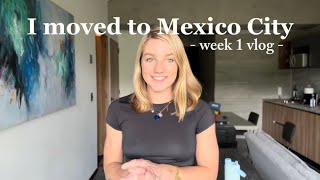
The most useful recent YouTube videos on living and working remotely in Mexico City, picked for practical detail over hype. Prices in videos age fast, so treat them as a feel for life here rather than a quote.
 17 min
A remote worker's reasons for moving, with his apartment, monthly costs and an honest take on safety.
 23 min

A long, practical walk through rents and daily costs in the main expat neighbourhoods.
 27 min
A real monthly budget close to our comfortable estimate, line by line.
 20 min

Rent, groceries, eating out and transport from someone living in the city.
 12 min

How much more Polanco costs than Roma and Condesa, and what you get for it.
 18 min

A family's first week: apartment, groceries, parks and getting around with kids.
Mexico City Digital Nomad FAQs#
Is Mexico City good for digital nomads?
Yes, especially for people who work US hours. It has a huge nomad community, excellent food and culture, good internet, plenty of coworking and walkable neighbourhoods. The downsides are air pollution, altitude, earthquakes, some safety issues and high rents in the popular areas.
How much does it cost to live in Mexico City as a digital nomad?
Plan on about $2,300 a month for a comfortable life in a furnished flat in Roma or Condesa, eating out often and using a coworking space. A lean month is about $1,500 in Narvarte or a shared flat, and $3,600 or more buys a nicer flat and plenty of fine dining. These are ballpark figures; see what it costs.
Does Mexico have a digital nomad visa?
No. Most nomads enter as visitors for up to 180 days (the officer decides how many), and longer-term remote workers apply for a Temporary Resident visa at a Mexican consulate outside Mexico. See visas for remote workers.
Is Mexico City safe for digital nomads?
The central neighbourhoods where most nomads live, such as Roma Norte, Condesa, Juárez and Polanco, are generally safe with normal big-city precautions. Use Uber or DiDi at night, watch your phone, and ask locals which areas to avoid.
What is the best area of Mexico City for digital nomads?
Roma Norte and Condesa are the most popular, with the most cafes and coworking spaces. Juárez is central and better value, and Narvarte and Del Valle are cheaper and more local. Compare them on our where to live in Mexico City page.
What time zone is Mexico City in?
UTC-6 all year, with no daylight saving since 2022. It is the same as Chicago in winter and one hour behind Chicago (two behind New York) in US summer.
Can I drink the tap water in Mexico City?
No. Use bottled water, the large refillable garrafones most flats have, or a good filter.
Last reviewed October 2026. Prices and venues change: check before you commit to a month.