Libya in July: Weather, Crowds & What to Expect
Climate Map for July
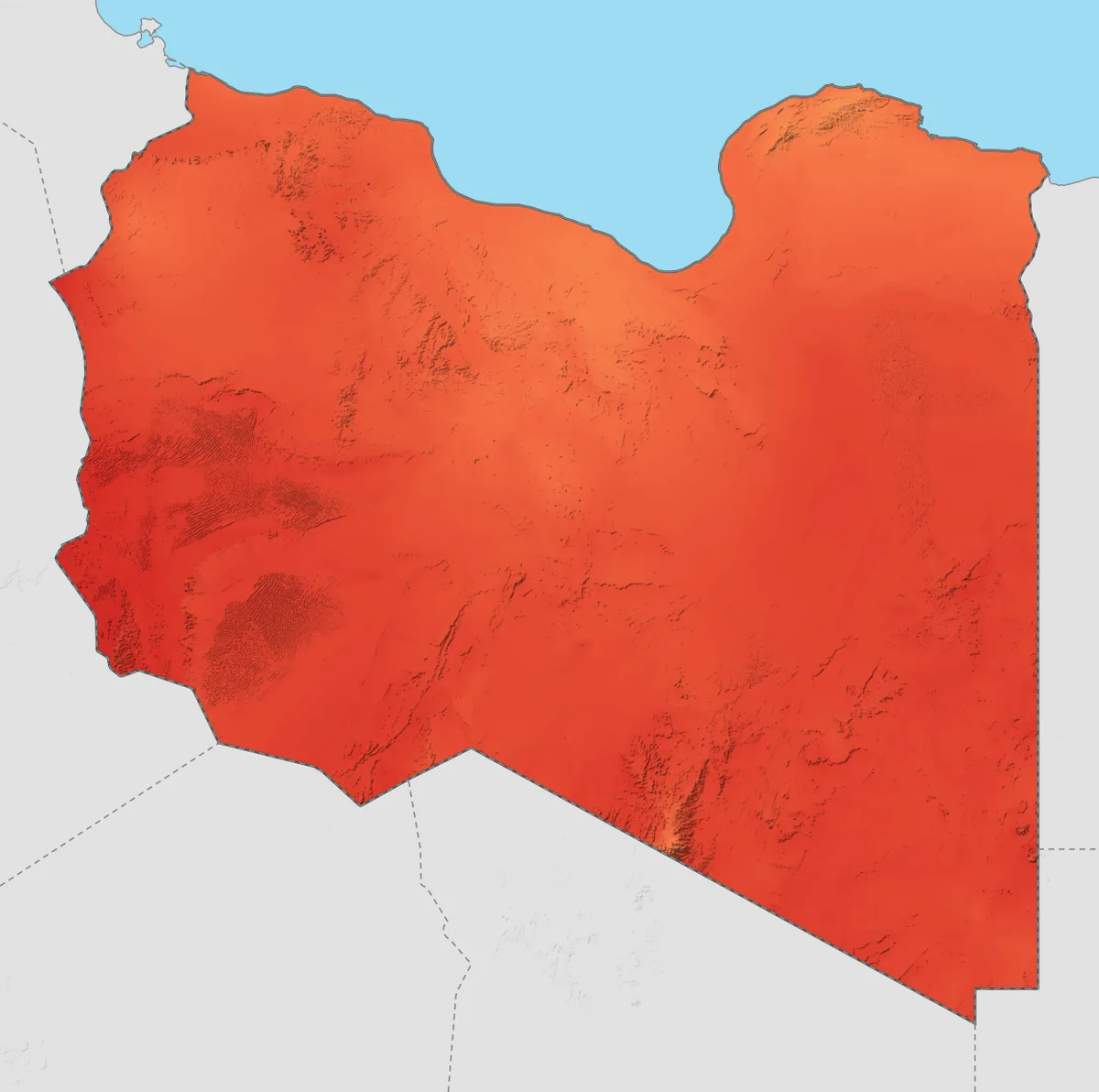
Average temperature across Libya in July.
City Weather in July
| City | High | Low | Rain | UV | Feels |
|---|---|---|---|---|---|
| Tripoli, Libya | 31° | 22° | 0 mm | extreme | Warm |
| Benghazi | 30° | 21° | 0 mm | extreme | Warm |
| Misrata | 31° | 22° | 0 mm | extreme | Warm |
| Zliten | 32° | 22° | 0 mm | extreme | Hot |
| Al-Khums | 30° | 22° | 0 mm | extreme | Warm |
| Az Zāwīyah | 31° | 22° | 0 mm | extreme | Warm |
| Zawiya, Libya | 31° | 22° | 0 mm | extreme | Warm |
High / low are average daily temperatures (°C). “Feels” reflects how hot or cold it feels, allowing for humidity.
Tripolitania / Western Coast (Tripoli to Sabratha)
Summer in July is consistently hot and dry along Tripoli’s coast, but most days are tempered by a steady northwest sea breeze that makes exploring the old town manageable. Highs often touch the low to mid-thirties Celsius; evenings cool off enough for dinner on the corniche. Peak season for Libyan families and some regional tourism means hotels can be busier; book in advance if you want a sea-facing room.
Jabal Nafusa (Nafusa Mountains and Hinterland)
July is hot in the valleys but the higher trails still offer respite from the coastal sun; mornings are the best time for extended walks before the heat builds. Dust storms originating from the desert occasionally sweep the area and visibility can drop, so monitor local advice before setting off on multi-day treks. Nights are warm rather than hot, and camps or guesthouses with simple bedding are comfortable for most visitors.
Cyrenaica / Eastern Coast & Jabal al Akhdar (Benghazi to Derna)
July is hot and dry across Cyrenaica, with coastal highs often in the low-to-mid thirties Celsius and the interior highlands warm but bearable. Early morning is the best time for visiting archaeological sites and mountain trails to avoid midday heat; afternoons are excellent for sea swimming. Bring sun protection, light breathable clothing, and be prepared for dusty gusts on exposed roads inland.
Fezzan & Central Sahara (Sabha, Ghat, Murzuq)
July is typically the hottest month in Fezzan, with daytime thermometers commonly in the high thirties and sometimes above 45°C in exposed locations like Murzuq. Overnight stays in the desert require careful planning: choose camps with shade and cooling options and avoid strenuous daytime hikes. Local travel slows and some services reduce hours; strong sun protection and hydration are non-negotiable.
Kufra & Southeastern Oases (Kufra, Jalu, Tazerbo)
July tends to be extremely hot and days are long and dry in the Kufra region; many locals reduce travel and activity to avoid midday heat. Nighttime cooling is less pronounced than in winter, so sleeping outside without ventilation can be uncomfortable; well-ventilated shelters are essential. Plan logistics carefully and consider postponing deep-desert treks until cooler months if you’re not well-equipped.
Events & Festivals in July
There are no major festivals or events in Libya during July to be aware of.