

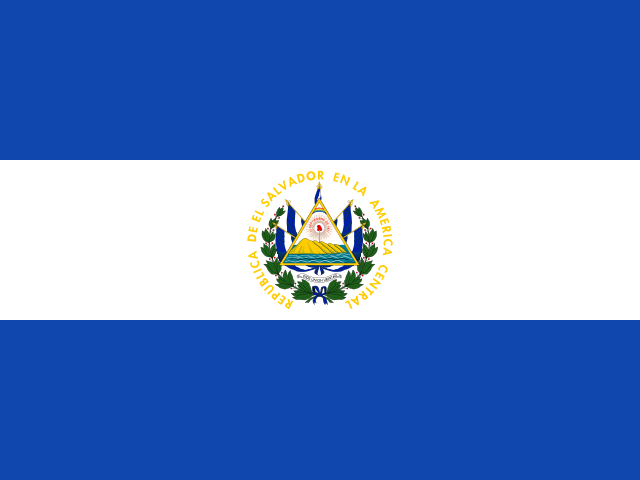
 El Salvador


Regions and Cities of El Salvador
- San Salvador metroThe capital region, practical base for day trips, museums and nightlife.
- San Salvador: National capital, museums, markets and a compact historic centre.
- Suchitoto: Colonial town with cobbled streets, art galleries and lake access.
- Joya de Cerén: Well-preserved Maya village and UNESCO archaeological site.
- Lake Ilopango: Large crater lake popular for boating and nearby viewpoints.
- Western surf coastPacific beaches and surf towns with hostels, camps and lively evenings.
- El Tunco: Surf culture, beach bars and the easiest place to learn to surf.
- El Zonte: Longer breaks for surfers and a relaxed hostel scene.
- La Libertad: Fishing port and the main departure point for many surf spots.
- Acajutla: Working port with nearby beaches and access to coastal roads.
- Ruta de las FloresHighland corridor of coffee fincas, colourful markets and weekend festivals.
- Concepción de Ataco: Mural-lined town, cafes, handicrafts and weekend food stalls.
- Apaneca: Coffee tours, zip-lining and access to hiking trails.
- Juayúa: Popular food market and gateway to local waterfalls.
- Atiquizaya: Quieter town on the ruta with coffee estates nearby.
- Volcanoes and lakesA compact chain of volcanoes, crater lakes and highland hikes.
- Santa Ana Volcano: Iconic hike with crater views over Lake Coatepeque.
- Coatepeque Caldera: Scenic crater lake for swimming, viewpoints and lakeside restaurants.
- Izalco (volcano): Historic volcano once nicknamed the lighthouse of the Pacific.
- San Miguel (volcano): Popular active volcano in the east with panoramic views.
- Eastern lowlands & townsLess-visited region with colonial towns, ranching and quiet beaches.
- San Miguel: Major eastern city with markets and regional services.
- La Unión: Port town and gateway to eastern coastal areas.
- San Francisco Gotera, Morazán: Regional centre with access to eastern attractions and history.
- San Vicente: Town beneath a conical volcano, used as a base for hikes.
Top Cities in El Salvador
- Known for: world-class Pacific surf, volcano hikes, pupusas, compact travel distances and a low-cost USD economy.
- First trip: San Salvador, the Ruta de las Flores and one Pacific surf coast like El Tunco. Allow 7-14 days.
- Best time: November-February (cooler and dry, busiest). Hot March-May, rainy June-October.
- Daily budget: $20-60.
- Visas: Most Western passports get 90 days visa-free under the CA-4 zone.
- Getting in: Fly into San Salvador (SAL).
- Safety: gang violence has fallen sharply under the long-running state of exception; carry ID, expect police and army checkpoints, and take normal care with valuables and night travel.
Currently it is the low season, with temperatures ranging from 23-30°C (73-86°F).
September
September is the wettest month with the smallest crowds and lively local Independence Day celebrations. Expect hot, humid days and heavy, persistent downpours that can soak you and disrupt buses and surf plans. Prices and international crowds are lower, so you can grab bargains. Stay near San Salvador for services and festival atmosphere; coastal spots like La Libertad remain visitable but are wetter and more changeable.
Next 3 Months
October brings tapering rains and steadier weather. November marks the start of the dry season with clearer skies and easier beach and surf plans. December becomes noticeably busier for holiday travel, so book accommodation earlier.
Why Visit El Salvador
El Salvador is one of Central America’s best surf secrets: Punta Roca and El Sunzal near La Libertad offer long, hollow right-handers for experienced surfers, while El Tunco has more forgiving breaks for beginners. Surf schools cluster along the coast, and evening beach bars make post-surf socializing easy. Travel with a local guide if you want the best lineups.
Eat pupusas-the stuffed corn tortillas with curtido and salsa-at family-run pupuserías across towns like San Salvador and Santa Ana. Skip touristy spots and find the local lunchtime joints where recipes are handed down through generations. Try loroco or pork-and-cheese fillings and ask for a fresh batch straight off the griddle.
Drive the Ruta de las Flores through Ataco, Juayúa and Apaneca for coffee farms, weekend food festivals and colorful murals. Small cafés and artisanal stalls sell chocolate and roasted beans, and the route pairs short hikes with pleasant mountain air. Visit on a weekend for the best market atmosphere, but arrive early to avoid crowds.
See Joya de Cerén, often called the ‘Pompeii of the Americas,’ where volcanic ash preserved a farming village and daily objects. Its excavation gives unusually clear insights into pre-Columbian rural life-more intimate than the larger Maya sites. Combine it with a stop at nearby San Andrés for a fuller archaeological day.
Explore coffee haciendas in the Apaneca and Santa Ana zones for plantation tours, cuppings and stays at renovated fincas. Producers in the region focus on small-batch beans and often offer guided walks explaining processing from cherry to cup. If you care about origin, these visits add flavor to every morning brew.
Who's El Salvador For?
Couples
Lake Coatepeque sunsets and the charming towns along the Ruta de las Flores are perfect for romantic getaways; surf sunsets in El Tunco add casual seaside intimacy for relaxed couples.
Families
Family-friendly beaches near La Libertad and cultural sites like Joya de Cerén offer accessible day trips. Safety varies by neighborhood, so stick to well-known resorts and guided excursions with kids.
Backpackers
El Salvador is a tight, surfer-friendly backpacker loop: El Tunco, La Libertad and Izalco. Cheap hostels, local buses and volcano boarding at Cerro Negro make it adventurous and affordable.
Digital Nomads
San Salvador and a few coastal towns have coworking spaces and decent internet, but outages and safety concerns mean nomads prefer established neighborhoods; cost of living remains attractively low.
Foodies
Pupusas are the must-eat street specialty; sample them in market stalls and roadside comedores. Fresh seafood at La Libertad and coffee from nearby highlands round out a bright coastal cuisine.
Adventure Seekers
Volcano boarding on Cerro Negro is a one-of-a-kind rush; world-class surf at Punta Roca and hikes up Santa Ana volcano or Ilamatepec provide nonstop adrenaline for active travelers.
Party Animals
El Tunco’s beach bars host lively weekend parties and bonfires, while San Salvador’s clubs serve up late-night scenes. The vibe skews informal and surf-driven rather than ultra-glamorous.
Nature Buffs
Compact but volcanic: crater lakes like Coatepeque, cloud-forest pockets and El Imposible National Park offer biodiversity and hiking options, though national parks are small and sometimes underfunded.
- San Salvador metro: museums and markets in San Salvador, day trips to Joya de Cerén and colonial Suchitoto, lake activities at Lake Ilopango
- Western surf coast: surfing El Tunco and El Zonte, beach bars, surf lessons and seafood evenings
- Ruta de las Flores: coffee finca tours, weekend food and craft markets in Juayúa and Concepción de Ataco, hiking between villages
- Volcanoes and lakes: hike Santa Ana Volcano, swim or boat on Coatepeque Caldera, visit Izalco (volcano), crater views and photography
- Eastern lowlands & towns: regional markets and city life in San Miguel, quiet coastal drives from La Unión and volcano treks
Best Things to Do in El Salvador
 Ruins
Joya de Cerén
Pre-Columbian Maya village preserved under volcanic ash
Ruins
Joya de Cerén
Pre-Columbian Maya village preserved under volcanic ash
 Ruins
Tazumal
Archaeological Maya site with pyramidal ceremonial structures
Ruins
Tazumal
Archaeological Maya site with pyramidal ceremonial structures
 Volcano
Santa Ana Volcano
Active stratovolcano with crater lake in El Salvador
Volcano
Santa Ana Volcano
Active stratovolcano with crater lake in El Salvador
 Wildlife Reserve
El Imposible National Park
Dry forest national park with biodiversity and cliffs
Wildlife Reserve
El Imposible National Park
Dry forest national park with biodiversity and cliffs
 Volcano
Izalco (volcano)
Small, historically active volcano once called lighthouse
Volcano
Izalco (volcano)
Small, historically active volcano once called lighthouse
 Volcano
San Miguel (volcano)
Stratovolcano dominating eastern El Salvador's skyline
Volcano
San Miguel (volcano)
Stratovolcano dominating eastern El Salvador's skyline
 Lake
Lake Ilopango
Crater lake east of San Salvador; volcanic caldera
Lake
Lake Ilopango
Crater lake east of San Salvador; volcanic caldera
 Lake
Coatepeque Caldera
Volcanic caldera enclosing a large crater lake
Lake
Coatepeque Caldera
Volcanic caldera enclosing a large crater lake
El Salvador Bucket List
Don't Miss
Joya de Cerén Archaeological Site - Pre-Columbian village preserved under volcanic ash, UNESCO-listed, revealing daily Mayan life.
Santa Ana (Ilamatepec) Volcano - Active stratovolcano offering crater hikes and panoramic views over Lake Coatepeque and western highlands.
Ruta de las Flores - Scenic mountain route of coffee farms, colorful towns, artisanal markets and seasonal flower festivals.
Suchitoto - Colonial town with cobblestone streets, art galleries, and a peaceful Lake Suchitlán waterfront.
El Tunco - Surf-focused Pacific beach village famous for consistent breaks, nightlife and relaxed backpacker atmosphere.
Lake Coatepeque - Crater lake ideal for swimming, kayaking, and lakeside dining beneath towering volcanic rims.
Hidden Gems
Tazumal - Less-visited Maya ruins near Chalchuapa with reconstructed pyramids and small on-site museum.
Perquín and the Museum of the Revolution - Mountain town on the Ruta de la Paz showcasing civil war history at interactive museums.
El Imposible National Park - Dry forest reserve with steep trails and wildlife, rewarding hikers who brave rugged trails.
Jiquilisco Bay Biosphere Reserve - Expansive mangrove estuary protecting nesting sea turtles, birdlife and traditional fishing communities.
Isla Carmen (Jiquilisco) - Small mangrove island community reachable by boat, offering rustic beaches and local fishing culture.
Road Trips
Ruta de las Flores (route) - Short coffee-and-flower drive linking Ataco, Apaneca and Juayúa, roughly 36 kilometers; allow a day.
Pacific Coast CA-2 drive - Coastal highway from La Libertad to El Cuco runs along beaches and surf towns, several-hour trip.
Volcano-Lake loop (Santa Ana-Coatepeque-Cerro Verde) - Half-day loop combining Santa Ana volcano, Coatepeque crater lake and Cerro Verde viewpoints, great photo opportunities.
(Note) Short country size - El Salvador’s compact size makes most drives short; plan multiple stops to sample local towns and viewpoints.
Best Time to Visit El Salvador
High Season
The dry season brings clear skies, lower humidity and the best beach and surf conditions; this period is also popular with international visitors. Prices and demand for accommodation rise, particularly around December and Easter. Inland highland areas are more comfortable at night than the lowlands.
Shoulder Season
These transition months see rising humidity and the first or last rains of the wet season; crowds are lighter and prices moderate. Expect occasional showers and the possibility of afternoon storms. Good deals and fewer tourists can be found outside major holidays.
Low Season
The rainy season brings frequent, sometimes heavy downpours and higher humidity, especially July through September. Many travelers avoid this period, so prices and crowds are generally lower, but transport and outdoor plans can be disrupted by storms. Coastal areas remain accessible, though conditions may be wetter.
Bar height shows how good the month is; numbers are the average daytime high. Tap a month for its guide.
Pacific Coast & Surf Beaches
La Libertad, El Tunco, El Zonte, Costa del Sol
Hot, humid beaches and world-class point breaks run along the Pacific coast from La Libertad to Costa del Sol. The coast has a clear dry season (November-April) good for sun and surfing, and a wet season (May-October) with heavy afternoon storms and increased risk of river flooding and boat cancellations; the biggest travel impacts occur August-October during peak tropical-storm risk.
Central Valley & Greater San Salvador
San Salvador, Santa Tecla, Antiguo Cuscatlán, Suchitoto
The Central Valley around San Salvador is El Salvador’s population and transport hub with a marked dry season (Nov-Apr) and a green, wet season (May-Oct). Expect warm, dry days in winter and heavy afternoon thunderstorms in summer; the valley is good for museums and short volcano trips in the dry months, while rains make mountain roads and rural travel slower in the wet months.
Western Highlands & Volcanic Range
Santa Ana, Cerro Verde, Izalco, Coatepeque, Apaneca/Ataco coffee towns
Higher, cooler terrain and the volcanic ridge running west to east host coffee country, crater lakes and summit hikes. Dry-season hiking and coffee-farm visits are best November-April; May-October brings heavy afternoon rains that make trails muddy and summit views unreliable, with the most travel disruption during August-September.
Northern Highlands & Interior Valleys
Chalatenango, Cabañas, Suchitoto hinterlands
Interior valleys and northern highlands are cooler and less humid than the coast but still follow a strong wet (May-Oct) and dry (Nov-Apr) cycle. This region is quieter year-round, with the best trekking and cultural visits in the dry months and dramatic waterfalls, green hills and birding in the wet months-road access can be the main limiting factor during heavy rains.
Eastern Gulf & Jiquilisco Bay
La Unión, La Palma, Usulután, Jiquilisco Biosphere
The eastern Gulf and Jiquilisco Bay region is dominated by mangroves, tidal wetlands and the ports near La Unión; it is warm year-round with a stark wet season (May-Oct) that affects boat access and increases mosquito activity. Dry months (Nov-Apr) are best for boating, birding and turtle-sighting tours, while wet months make navigation and land access more unpredictable; tropical storms mostly pose a risk Aug-Oct.
Semana Santa (Holy Week)
March-April (Movable, week before Easter) · Religious processions and local traditions are visible across the country, with notable observances in towns and Salvadoran churches.
Fiestas Agostinas (Virgin of the Peace celebrations)
Early August (principal events 1-6 August) · San Salvador’s largest religious and civic festival includes pilgrimages to the Basilica, fairs, concerts and fireworks.
Independence Day
15 September · Central American independence is celebrated nationwide with flag parades, school events and public ceremonies.
Christmas and New Year
25 December and 1 January · Religious services, family gatherings and municipal festivities are widely observed; many businesses close for the holidays.
Most Western visitors get 90 days visa-free under CA-4. Budget travel ranges from shared hostel dorms to boutique hotels; book surf-season and holiday dates well ahead, otherwise a few days’ notice is usually fine.
El Salvador Itineraries
1 Week El Salvador Itinerary
Spend a week in El Salvador: San Salvador museums, Suchitoto colonial streets, Joya de Cerén ruins, Coatepeque lake, Ruta de las Flores towns and surf at El Tunco.
- Day 1 - Arrive San Salvador; visit Museo de la Palabra y la Imagen.
- Day 2 - Morning trip to Joya de Cerén archaeological site and museum.
- Day 3 - Explore Suchitoto colonial center and Church of Santa Lucia.
- Day 4 - Relax at Coatepeque Lake; swim or boat.
- Day 5 - Drive Ruta de las Flores: Apaneca and Ataco artisan towns.
- Day 6 - Hike Santa Ana (Ilamatepec) volcano and crater views.
- Day 7 - Surf or relax at El Tunco, return to San Salvador and depart.
2 Weeks El Salvador Itinerary
Two-week loop across El Salvador: San Salvador, Ruta de las Flores villages, Santa Ana volcano, El Imposible hiking, eastern San Miguel, coastal surf towns and cultural museums.
- Day 1-2 - San Salvador: markets, anthropology museum and Plaza Futura.
- Day 3 - Joya de Cerén and nearby Tazumal ruins in Chalchuapa.
- Day 4-5 - Ruta de las Flores: Apaneca, Ataco, coffee tour and murals.
- Day 6 - Hike Santa Ana volcano; visit Lake Coatepeque viewpoint.
- Day 7-8 - El Imposible National Park hikes and wildlife spotting.
- Day 9-10 - Eastern San Miguel and Chaparrastique area exploration.
- Day 11-14 - Coastal surf towns: El Tunco and El Zonte, lessons and relaxation.
3-4 Weeks El Salvador Itinerary
Spend three to four weeks exploring El Salvador: coffee farm stays, Ruta de las Flores, Joya de Cerén, El Imposible, Jiquilisco Bay mangroves, Gulf of Fonseca islands and Pacific surf towns.
- Day 1-3 - San Salvador and Suchitoto: markets, galleries and colonial streets.
- Day 4-7 - Longer coffee farm stay in Apaneca and cultural workshops.
- Day 8-10 - Joya de Cerén, Tazumal and archaeological day trips.
- Day 11-13 - Hike and birdwatch in El Imposible National Park.
- Day 14-17 - Explore Jiquilisco Bay mangroves and boat wildlife tours.
- Day 18-20 - La Unión and Gulf of Fonseca islands, Meanguera day trips.
- Day 21-24 - Pacific coast surf towns El Tunco, El Zonte; lessons and rest.
- Day 25-28 - Return to San Salvador for final museums and departure.
Where to Stay in El Salvador
Hotels & Resorts
$50-140 mid-range · $160+ luxury
San Salvador’s Zona Rosa and Colonia Escalón host mid-range and international hotels ideal for city sightseeing. Coastal resorts are concentrated around La Libertad and El Tunco, convenient for surf and beach days.
Hostels & Guesthouses
$8-35 / night
El Tunco, El Zonte and surf towns near La Libertad have lively hostels and surf camps geared to surfers and backpackers. Expect communal dinners, board storage and easy access to popular breaks.
Homestays & Fincas
$20-60 / night
Follow the Ruta de las Flores for small homestays and coffee fincas in towns like Juayúa and Ataco. These are great for cultural exchange, local food and easy day trips to waterfalls and markets.
Long-Stay Rentals
$500-1,500 / month
Remote workers and expats commonly rent apartments in San Salvador (Escalón, Colonia San Benito) or long-term beach rentals near La Libertad - look for furnished units with reliable internet and gated security.
Eco-Lodges
$40-120 / night
Eco-lodges and small nature retreats near El Impossible, Lake Coatepeque and cloud-forest reserves offer guided hikes and birding. These lodges focus on nature activities rather than luxury amenities.
- Citizens of the United States, United Kingdom, Canada and most EU countries do not require a tourist visa for stays (commonly up to 90 days); always confirm with your consulate before travel.
- Passport should be valid for the duration of the stay; immigration officers commonly ask for proof of onward travel and sufficient funds.
- Health: yellow fever vaccination may be required if arriving from a yellow‑fever‑endemic country. Check current entry and health advisories before travel.
How to Get to El Salvador
Most international visitors fly into Monseñor Óscar Arnulfo Romero International Airport (SAL), near the coast about 45 minutes south of San Salvador and close to the La Libertad surf beaches, which handles the majority of long‑haul and regional services. Overland travel from Guatemala and Honduras is common for regional travellers, with frequent bus services linking capitals.
How to Get Around El Salvador
International and regional carriers such as Avianca and American carriers serve SAL with direct and one‑stop flights. There are very few domestic scheduled flights; most air traffic is international.
For cross‑border travel around Central America, look at regional operators and scheduled shuttles between capitals.
Long‑distance travel is dominated by coach companies and the well‑known regional operator Tica Bus, which links El Salvador with Guatemala, Honduras, Nicaragua and Costa Rica. Fares vary by distance but are often affordable - from roughly $10-60 USD for most international legs.
Local buses and “chicken buses” (repainted North American school buses) serve nearly every town; they’re cheap but can be crowded and run on flexible schedules.
Ride‑hailing like Uber operates in San Salvador and is widely used for airport transfers and inner‑city trips. Private shuttle companies offer door‑to‑door transfers between the airport and popular hotels, useful for late arrivals or groups.
Shuttles are pricier than local buses but add security and luggage handling for a fixed fee.
Metered taxis and informal colectivos operate inside cities; agree a price in advance if a meter isn’t used. Local buses are the cheapest way to get around urban areas, but pickpocketing can be a concern on busy routes.
For comfort and safety, many travellers prefer app‑based rides or hotel‑arranged taxis for night travel.
Daily spend commonly $20-60; El Salvador uses the US dollar so cash is convenient, cards work in tourist centres and ATMs are common in cities.
How Much Does El Salvador Cost?
Typical daily spend is $20-60; San Salvador and popular surf towns are the priciest, rural and inland towns are cheapest.
Daily budgets
Typical prices
- Hostel dorm bed: $8-18
- Basic guesthouse room: $20-45
- Mid-range hotel: $50-100
- Upscale hotel: $120-200
- Market or street-stall meal: $1-3
- Bottle of local beer: $1.50-3
- Organised tour or activity: $15-35
- Local bus ride: $0.20-0.50
For current prices on hundreds of everyday items, see Numbeo’s El Salvador cost of living, a crowd-sourced database that is updated often.
Ways to save
- Use local buses: Local buses and shared shuttles are much cheaper than taxis and cover the main tourist routes.
- Eat local: Street pupusas and market meals are inexpensive, filling and part of the cultural experience.
- Share transport: Split car hire or shuttle costs with other travellers for surf or volcano trips.
Full trip budgets are in El Salvador Itineraries.
Cash, Cards & Tipping in El Salvador
El Salvador uses the US dollar (USD) as its primary currency; Bitcoin keeps a nominal legal status, but since a 2025 reform no business has to accept it, so treat it as a novelty rather than a way to pay. Cards are accepted in many tourist areas and banks/ATMs are common in cities, though cash remains useful for small vendors.
Approximate mid-market rates · Charts & history
- Tipping: Many sit-down restaurants add a 10% propina to the bill automatically, so check before leaving more; where it isn’t included, around 10% is normal in tourist areas; small tips or rounding up for hotel staff and drivers are typical.
- Cards & Cash: Visa and Mastercard are widely accepted in hotels, restaurants and larger shops in tourist centers; many local businesses and markets prefer cash. A handful of shops, mostly in El Zonte and other surf towns, still take bitcoin, but acceptance has been voluntary since 2025.
- ATMs & Mobile Payments: ATMs are readily available in cities and tourist areas though banks may charge withdrawal fees. The government is winding down its Chivo bitcoin wallet, so don’t rely on it; carry dollars in small notes, as $50 and $100 bills are often refused.
- Banknotes: $1, $2, $5, $10, $20, $50, $100
- Coins: $0.01, $0.05, $0.10, $0.25, $0.50, $1
Spanish is essential for smoother interactions and buying local goods.
Customs & Etiquette in El Salvador
Salvadorans are friendly and family-focused; greetings are warm and brief handshakes or a kiss on the cheek among acquaintances are common. Dress modestly outside beach towns, and be respectful at religious sites and memorials.
Spanish Language Basics
Spanish is the dominant language across El Salvador; indigenous Nahuatl (Pipil) survives in place names and some communities, but Spanish is used for almost all public communication.
Useful Phrases
- Hello - Hola OH-lah
- Good morning - Buenos días BWEH-nos DEE-as
- Good afternoon - Buenas tardes BWEH-nahs TAR-des
- Where is the bus? - ¿Dónde está el autobús? DON-deh es-TAH el ow-toh-BOOS
- A taxi, please - Una taxi, por favor OO-nah TAK-see por fah-VOR
- How much does it cost? - ¿Cuánto cuesta? KWAN-toh KWEH-stah
- Thank you - Gracias GRAH-syahs
- Enjoy your meal - Buen provecho bwen proh-VEH-cho
- The bill, please - La cuenta, por favor lah KWEN-tah por fah-VOR
- I need help - Necesito ayuda neh-seh-SEE-toh ah-YOO-dah
- Call the police - Llame a la policía YAH-meh ah lah poh-lee-SEE-ah
- I’m lost - Estoy perdido/a es-TOY per-DEE-doh / per-DEE-dah
Staying Connected in El Salvador
El Salvador offers solid mobile coverage in cities with competitive prepaid options from major operators. Urban broadband and public Wi‑Fi are adequate for remote work, while rural and mountainous zones are more variable.
Tourist SIM Cards
Buy prepaid SIMs at San Salvador airport or city shops from Tigo El Salvador or Claro El Salvador. Starter SIMs commonly cost $3-15 and data bundles range from small daily packs to monthly plans around $10-30 depending on allowance.
Mobile Providers
Tigo El Salvador and Claro El Salvador are the main operators, offering widespread 3G/4G in urban areas. Tigo often promotes competitive data bundles while Claro has extensive rural coverage through partner infrastructure and roaming arrangements.
Wi‑Fi & Coworking
San Salvador and major tourist towns have cafés and coworking spaces with reliable Wi‑Fi suitable for work. Hotels usually provide decent connections, but speeds and stability vary outside urban centers, so plan for mobile backup for remote locations.
Useful Apps for El Salvador
- Google Maps - Maps and directions across El Salvador.
- Google Translate - Useful for translating Spanish signage and conversation.
Emergency Numbers & Electricity
- Electricity: 120V, 60 Hz; plug types A, B.
Violent crime and gangs are the biggest safety concern in certain neighbourhoods; tap water is unsafe so use bottled or boiled water, watch for pickpockets and follow local laws and travel advisories.
Is El Salvador Safe?
Cautious yes: many visits are safe, but violent crime and gang activity remain the main risks and require avoiding known gang areas and taking common-sense precautions.
Crime & Scams
Murder rates have dropped dramatically since the government’s gang crackdown began in 2022, and the main tourist areas now feel calm, but some poorer urban districts are still best avoided. Petty theft, pickpockets and bag‑snatching are common at markets, on buses and around tourist sites. Do not display valuables, use hotel or official taxis and follow local security advice.
Road Safety
Roads can be poorly lit, uneven and have unpredictable driving behaviour; avoid driving at night where possible. Be alert for pedestrians, livestock and informal crossings and expect sporadic roadblocks. Use reputable shuttle services or well‑reviewed rental companies and keep GPS/maps handy.
Natural Hazards & Weather
El Salvador is prone to earthquakes, volcanic eruptions and tropical storms during the rainy season. Have an emergency plan, keep documents backed up and follow evacuation orders and local guidance during heavy rain and seismic events. Avoid riverbeds and low‑lying areas in storms.
Beaches & Water
Tap water is often unsafe for visitors; stick to bottled, boiled or treated water. Strong Pacific surf and rip currents are common - swim only where lifeguards or locals indicate it is safe. Take care around rocky coastlines and be cautious after heavy rains which can change currents and water quality.
Laws to Know
Carry ID and respect local policing; alcohol and public order laws are enforced in tourist areas. Avoid any involvement with gangs or illegal activity; penalties are severe. A state of exception has been in force since March 2022 and was extended again in 2026: police and soldiers can detain people without a warrant, and some foreigners have been held for long periods without trial. Keep your passport or a good copy plus a second ID on you, stay calm and cooperative at checkpoints, and don’t photograph police, soldiers or prisons. Drug laws are applied strictly, and abortion is illegal in all circumstances. Cash dollars are what everyone uses; bitcoin acceptance has been optional since 2025.
Nightlife & Personal Safety
Use trusted taxis or hotel transport at night and avoid walking alone in poorly lit or unfamiliar areas. Keep drinks attended and travel with companions when possible. Stay in well‑secured accommodation in cities.
Staying Healthy in El Salvador
Generally straightforward to stay healthy by taking basic precautions; main issues are mosquito‑borne disease, food/water safety and limited emergency resources outside major centers.
Food & Water
Tap water is unreliable for visitors - use bottled or boiled water and avoid ice from uncertain sources. Eat at busy, well‑prepared stalls or restaurants and avoid raw produce unless it has been washed in safe water. Seek medical help for severe or persistent diarrhoea.
Mosquito-Borne Illness
Dengue, chikungunya and Zika circulate, especially in the rainy season and lowland areas. Use EPA‑approved repellent, wear long sleeves at dawn and dusk and sleep with screens or nets where mosquitoes are present. Pregnant travellers should consult a clinician about Zika risk.
Vaccinations & Rabies
Routine vaccines (MMR, tetanus, diphtheria) should be up to date; hepatitis A and typhoid are recommended for many travellers. Rabies is present - avoid contact with animals and consider pre‑exposure rabies vaccination for extended rural travel. Check travel clinic advice before travel.
Heat & Sun
The climate is tropical; Nov-Apr is drier and cooler, June-Oct is hot and rainy. Hydrate, use sun protection and avoid strenuous activity in the hottest midday hours. Watch for rapid weather changes during the rainy season.
Air Quality
Air quality is generally acceptable for most visitors but can worsen near volcanic activity or during heavy local smoke. Those with respiratory conditions should monitor local forecasts and avoid active volcanic ash.
Medical Care & Insurance
Medical facilities in San Salvador and larger towns are adequate, but rural areas have limited emergency services. Carry travel insurance that covers medical evacuation and check hospital payment requirements. Know where your embassy or consulate can assist in emergencies.
Everyday life is shaped by family networks, Catholic traditions and Salvadoran cuisine, with pupusas central to social eating and markets at the heart of towns.
History & Culture of El Salvador
El Salvador is a compact Central American country whose identity mixes indigenous Pipil roots, Spanish colonial history and a modern culture shaped by coffee, migration and civil-war memory. Pupusas, lively street markets and strong family networks are among the most visible aspects for visitors.
History of El Salvador
El Salvador’s culture blends indigenous Pipil heritage with Spanish colonial influence and a 20th-century history marked by social inequality and civil conflict. Visitors will notice colonial architecture, indigenous-rooted crafts and a strong contemporary memory of the civil war era in museums and public commemorations.
Key historical touchstones include pre-Columbian Pipil settlement, Spanish conquest and colonization, coffee-driven economic structures, the 1932 peasant massacre (La Matanza), and the 1980-1992 civil war whose aftermath shapes politics, migration and social programs today.
Notable Figures
- Óscar Arnulfo Romero - Archbishop of San Salvador and vocal critic of human-rights abuses, assassinated in 1980 and later beatified.
- Farabundo Martí - Early 20th-century activist and leader whose name became associated with leftist movements and the FMLN guerrillas.
- Francisco Flores - Late-20th/early-21st-century political figure (former president) associated with post-war economic and political changes.
Key Dates
- Pre-16th centuryPipil (Nahua) peoples inhabit the region, bringing Nahuatl-derived culture and language to parts of present-day El Salvador.
- 1524Spanish conquest begins under Pedro de Alvarado, leading to colonial rule and the imposition of encomienda systems.
- 1821El Salvador declares independence from Spain as part of the Central American Provinces.
- 1932La Matanza: a brutal suppression of an indigenous and peasant uprising leaves deep scars and shapes 20th-century politics.
- 1980-1992A civil war involving the government and leftist guerrilla groups causes widespread displacement and loss of life; it ends with the 1992 Chapultepec Peace Accords.
- 1992Peace accords signed in Mexico City, leading to political reforms and the reincorporation of former combatants into civilian life.
Salvadoran food centers on corn-based dishes, modest street food culture and coastal seafood; pupusas are the nation’s best-known dish and widely available from street stalls to restaurants.
Responsible Travel in El Salvador
El Salvador’s volcanoes, surf and mangrove coasts support fragile ecosystems and close-knit communities, so low-impact outdoor practices and community support keep tourism sustainable.
- Responsible Surf & Beach Use: At popular breaks like El Tunco and Punta Roca follow local surf etiquette, use reef-safe sunscreen, take your rubbish with you and avoid disturbing nesting turtles on quieter beaches.
- Volcano & Trail Safety: When hiking Santa Ana (Ilamatepec) or Cerro Verde hire local guides, carry sufficient water, respect trail closures and avoid solo night hikes on unstable slopes.
- Support Coffee & Small Businesses: Visit coffee farms on the Ruta de las Flores or buy from family-run cafés and cooperatives to ensure income stays in rural communities rather than large exporters.
- Protect Mangroves & Marine Areas: Respect mangrove systems such as those in Bahía de Jiquilisco - avoid trampling roots, take part in community cleanups if offered, and choose operators that protect nesting and foraging habitats.
- Community Safety & Respect: Be mindful of local security advisories, follow guidance from hosts and local tourism offices, and respect Salvadoran social norms when visiting markets or community events.
Expats are mainly surfers and US/regional arrivals; temporary residency is possible through work, investment or family ties, while many remote workers stay on tourist stamps.
Living in El Salvador
Long-term living in El Salvador suits people seeking low-cost urban life or a surf-oriented coastal lifestyle; US and regional expats are common. Many move for beaches, affordable USD-based living, and proximity to Central America, while infrastructure and services concentrate in the capital.
Long-Term Visas: Temporary and permanent residency available via work permits, investment, marriage; many nationals get 90-day tourist entry.
Working There: Formal employment requires a work permit; many remote workers begin on tourist stamps or seek temporary residency.
Cost of Living: Currency is the US dollar; expect roughly $800-1,500/month for comfortable living in San Salvador, cheaper elsewhere.
Health & Wellness: Public healthcare exists but is limited; expats commonly use private clinics in San Salvador and private insurance.
Banking & Finance: Banking in USD, major local banks include Banco Agrícola and regional banks, nonresident account opening often requires residency.
Taxes: Tax residents face local tax obligations; consult a Salvadoran accountant for residency rules and declaration requirements.
Popular Places to Live in El Salvador
The choice comes down to whether you want the capital’s services, surf towns with beach life, or quieter colonial towns. For city amenities and healthcare choose San Salvador; for surf and laid-back living head to La Libertad or El Tunco; for cultural calm pick Suchitoto.
- San Salvador - Capital city, best for services and nightlife, suits professionals and families, higher cost of living tradeoff.
- El Tunco - Surf and nightlife hub, attracts young nomads and surfers, tradeoff is seasonal crowds and limited services.
- La Libertad - Coastal town with surf access, good compromise between San Salvador proximity and beach lifestyle.
- Suchitoto - Quiet colonial town, ideal for retirees and artists, tradeoff is fewer modern conveniences and limited nightlife.
- Santa Ana - Regional city with quieter pace, lower rents, good for those wanting calmer city life and local culture.
Residency is possible via work permits, investment, family ties, or permanent-resident applications handled by immigration offices.
- Temporary residency - Available for work, students, or family reunification, application through Dirección General de Migración y Extranjería.
- Permanent residency - Options after years of legal stay or via marriage, specific documentation and background checks required.
- Work permit - Required for formal employment, employer-sponsored process through Ministry of Labor.
- Investor routes - Residence possible with qualifying investment or business, proof of funds needed.
El Salvador uses the US dollar, city living costs more than coastal or rural areas, rentals vary by season.
- San Salvador - Higher rents and restaurants, easy access to private healthcare and international services.
- El Tunco / La Libertad - Surf-town prices rise seasonally, short-term rentals common, beach lifestyle tradeoffs apply.
- Santa Ana - Lower rents than capital, quieter city life with colonial architecture and regional services.
- Suchitoto - Colonial town living, smaller rental market, attracts retirees and artists.
Private healthcare concentrates in San Salvador; housing ranges from city apartments to seasonal beach rentals, insurance recommended.
- Private hospitals (San Salvador) - Modern clinics and specialist care, English sometimes available, higher fees than public option.
- Public clinics - Free or low-cost, limited resources outside major urban centers, longer waits common.
- Apartments & rentals - Short- and long-term apartments common in cities, gated communities available for families.
- Beach housing - Vacation rentals dominate market, seasonal pricing and fewer year-round amenities.
Digital Nomads in El Salvador
The remote-work scene is small but growing, focused on San Salvador for infrastructure and El Tunco/La Libertad for surf-and-work lifestyles. Expect informal communities rather than an established nomad ecosystem, with meetups and Facebook groups as primary connectors.
Nomad Visa: none exists and the usual workaround is tourist visa (90 days) or applying for temporary residency through immigration.
Long Term Rentals: 3-6 month rentals common in cities and surf towns, short-term vacation rentals dominate coastal markets.
Internet: Good in major cities with fiber and 4G LTE, beach towns have decent Wi‑Fi but occasional instability.
Monthly Cost: Approximately $1,000-1,800/month for comfortable living in San Salvador, lower costs in smaller towns and rural areas.
Coworking: A few coworking spaces and business centers in San Salvador, cafes fill gaps in beach towns.
Fitness & Wellness: Gyms, yoga studios, and private clinics available in cities and tourist hubs, private insurance recommended.
Community: Small expat and nomad networks around San Salvador and El Tunco, active on social media and WhatsApp.
Time Zone: Central Time (UTC−6), no daylight saving, aligns with US Central time year-round.
Popular Nomad Hubs in El Salvador
Nomads split between city infrastructure and beach surf towns: San Salvador for services, La Libertad and El Tunco for surf and slower pace. Choice depends on whether you prioritise reliable internet and clinics or a beach lifestyle with smaller communities.
- San Salvador - Central hub for banking, hospitals, coworking, suits professionals who need reliable services, more expensive rents.
- El Tunco - Surf-town vibe, young nomads and surfers, tradeoff is fewer formal services and seasonal prices.
- La Libertad - Closer to San Salvador than El Tunco, surf access, growing tourist infrastructure, quieter at night.
- Suchitoto - Colonial charm, arts community, suits slower pace and remote work, limited coworking and fewer expat services.
- Santa Ana - Regional city with lower rents, quieter lifestyle, decent local amenities but fewer international services.
There is no dedicated digital-nomad visa; remote workers typically use tourist entry or apply for temporary residency when staying longer.
- Tourist entry - Common route, 90-day stays for many nationalities, may require border renewals or residency application.
- Temporary residency - Longer-term legal option for remote workers who meet financial or familial criteria.
- Work permits - Required for formal local employment, not usually for remote foreign employers.
- Immigration offices - Handle residency applications, muster original documents, and local translations often required.
Internet is solid in urban centers with fiber and 4G LTE; beach towns have usable connections but more variability.
- San Salvador fiber - Fiber and reliable 4G LTE in many neighborhoods, suitable for most remote work needs.
- El Tunco / La Libertad mobile - 4G widely available, fiber less common, cafes and rentals often provide decent Wi‑Fi.
- Rural areas - Spotty connectivity, backups like local SIM data recommended for reliability.
- Coworking-adjacent cafes - Popular in surf towns, offer decent internet but can be noisy during high season.
A small but growing nomad community centered on San Salvador and surf towns, with informal meetups and limited formal coworking.
- San Salvador coworking areas - Main concentration of coworking and business meetups, suits professionals needing networks.
- El Tunco cafes - Informal remote-work scene, surf-and-work crowd, tradeoff is fewer formal office amenities.
- Local Facebook groups - Primary way nomads find housing, meetups, and advice; active and fast-moving.
- Meetups and events - Occasional tech and entrepreneur events in the capital, community smaller than regional hubs.
El Salvador Travel News
- Scammers selling fake ETIAS waivers after Europe travel authorisation delay(thepointsguy.com)
- EU signals flexibility to ease Entry/Exit System border friction(skift.com)
- Airlines accepting new A321neos despite planned short-term groundings(simpleflying.com)
- United Airlines cancels all flights to six destinations(simpleflying.com)
- Princess Cruises launches ChatGPT app for cruise planning(ttgasia.com)
- Tour operators adapt to climate risks after deadly Himalayan disasters(skift.com)
- EASA 7,800-cycle inspection order forces Boeing 787 maintenance changes(simpleflying.com)
- Flight cancellations rise to four-year high, increasing disruption risk(thepointsguy.com)
Travel Resources for El Salvador
Official
- Visit El Salvador (official tourism) Official Tourism
- Presidency of El Salvador (government portal) Government
Travel Advisories
News & Media
- El Diario de Hoy Spanish
- La Prensa Gráfica Spanish
- Reuters - El Salvador coverage English
El Salvador FAQs
Do I need a visa for El Salvador?
Citizens of the United States, United Kingdom, Canada and most EU countries do not require a tourist visa for El Salvador for typical short stays. Entry checks can include questions about onward travel and sufficient funds, so have those details ready at immigration. Entry basics
How long can I stay in El Salvador without a visa?
90 days, most Western passport holders can stay visa-free in El Salvador under the CA-4 zone. Time in neighbouring CA-4 countries can count toward that allowance, so plan overland travel carefully if you are combining El Salvador with the region. Entry basics
What is the best time to visit El Salvador?
November to April, this is El Salvador’s dry season with clearer skies, lower humidity and the best beach and surf conditions, but it is also the busiest and priciest period. May to October is the wet season, with the biggest travel disruption risk around August to October. Best time
How many days do you need in El Salvador?
7 to 14 days, that is enough time for a first trip combining the capital, highlands and a surf beach. A one-week plan typically links San Salvador, Suchitoto, Joya de Cerén, the Ruta de las Flores and La Libertad coast. Itineraries
How much does a trip to El Salvador cost per day?
$20 to $60 a day is a common daily spend in El Salvador, depending on style. San Salvador and popular surf towns tend to be the priciest, while rural and inland towns are usually cheaper for food, rooms and local transport. Daily costs
Is El Salvador expensive?
No, El Salvador is generally low-cost, with typical daily budgets commonly in the $20 to $60 range. Costs rise in San Salvador and busy surf hubs, while inland towns and smaller places on routes like the Ruta de las Flores are usually better value. Costs
Should I use cash or card in El Salvador?
Cash is convenient in El Salvador because the country uses the US dollar, and small vendors and markets often prefer it. Cards are widely accepted in tourist centres, including hotels and larger restaurants, and ATMs are common in cities, so it is easy to mix both. Cash and cards
Do you tip in El Salvador?
Yes, tipping is common in El Salvador, but check the bill first. Many sit-down restaurants add a 10% propina automatically, so you may not need to add more. Where it is not included, around 10% is normal in tourist areas, with small tips for staff and drivers. Tipping
Is El Salvador safe for tourists?
Mostly, with caution: many visits in El Salvador are safe, but violent crime and gang activity remain the main risks. A state of exception has been in force since March 2022 and extended again in 2026, so carry ID and expect police and army checkpoints. Safety
Can you drink the tap water in El Salvador?
No, tap water is often unsafe for visitors in El Salvador. Use bottled, boiled or treated water, and be careful with ice from uncertain sources. This matters on the coast too, especially after heavy rains when water quality and currents can change. Water safety
What natural hazards should I plan for in El Salvador?
Earthquakes, volcanic activity and heavy-rain flooding are real risks in El Salvador, especially during the rainy season. Follow local guidance during storms and seismic events, and avoid riverbeds and low-lying areas in heavy rain. Strong surf and rip currents are also common on the Pacific. Hazards
What is the main airport in El Salvador?
Monseñor Óscar Arnulfo Romero International Airport, SAL, is El Salvador’s main airport and handles most long-haul and regional services. It is near the coast about 45 minutes south of San Salvador and close to the La Libertad surf beaches. Main airport
How do you get around El Salvador?
Buses and shuttles cover most travel in El Salvador. Local buses and chicken buses reach almost every town and are cheap but can be crowded and run on flexible schedules, while private shuttles cost more but add security and luggage handling for set transfers. Getting around
What plug type does El Salvador use?
Types A and B, El Salvador uses 120V and 60 Hz. If you are coming from a country that uses different plugs, bring an adapter so you can charge in hotels and hostels without hunting for a compatible socket. Electricity
What is the best SIM card for El Salvador?
Tigo El Salvador and Claro El Salvador are the main mobile operators for El Salvador, with solid coverage in cities and competitive prepaid options. You can buy prepaid SIMs at San Salvador airport or in city shops, with rural and mountainous coverage more variable. SIM cards
Is English widely spoken in El Salvador?
No, English is not widely spoken across El Salvador and Spanish is the dominant language for almost all public communication. Spanish is essential for smoother interactions and buying local goods, especially outside tourist hubs and in smaller towns on inland routes. Language
What should I wear in El Salvador?
Dress modestly in El Salvador outside beach towns, and be respectful at religious sites and memorials. Surf areas have a casual feel, but in churches and during processions a more covered style is expected. This small shift in dress helps you blend in and avoid unwanted attention. Dress and etiquette
Where should I go in El Salvador for the first time?
Start with San Salvador, the Ruta de las Flores, and one Pacific surf base such as La Libertad and Suchitoto as an easy add-on. A classic loop also includes Joya de Cerén and a lake and volcano day around Coatepeque Caldera and Santa Ana Volcano. First-trip route
What is El Salvador famous for?
El Salvador is famous for Pacific surf, volcano hikes and pupusas. The country is also known for the Ruta de las Flores coffee towns and Joya de Cerén, the UNESCO-listed Maya village sometimes called the Pompeii of the Americas. Top highlights