

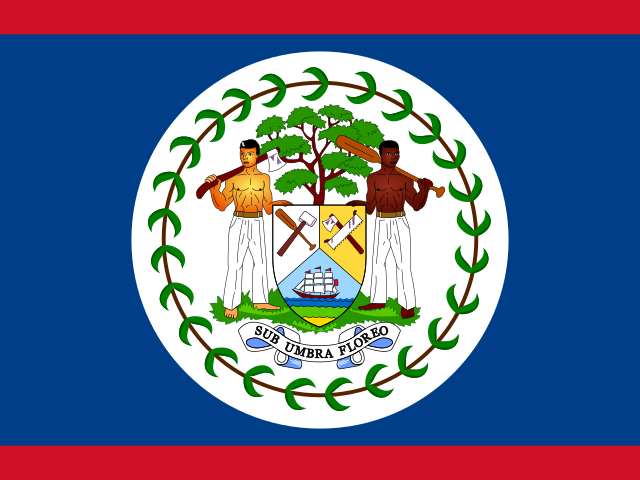
 Belize


 Explore
Caye Caulker
A tiny, car-free island of ‘go slow’ vibes and reef diving.
Explore
Caye Caulker
A tiny, car-free island of ‘go slow’ vibes and reef diving.
 Explore
San Pedro
Ambergris Caye’s beach town - diving and the Blue Hole nearby.
Explore
San Pedro
Ambergris Caye’s beach town - diving and the Blue Hole nearby.
 Explore
Placencia
A laid-back peninsula of long Caribbean beaches.
Explore
Placencia
A laid-back peninsula of long Caribbean beaches.
 Explore
Belize City
The country’s largest city and coastal gateway.
Explore
Belize City
The country’s largest city and coastal gateway.
 Explore
Caracol
Belize’s grandest Maya ruins deep in the jungle.
Explore
Caracol
Belize’s grandest Maya ruins deep in the jungle.
Regions and Cities of Belize
- Barrier Reef & CayesCaribbean cayes, world-class snorkelling and diving on the Belize Barrier Reef.
- Ambergris Caye: Island hub for diving, bars and beachside resorts around San Pedro.
- Caye Caulker: Laid-back sand streets, cheap guesthouses and easy reef access.
- Great Blue Hole: Iconic sinkhole for advanced divers and photo ops from the sky.
- Turneffe Atoll: Offshore atoll with coral walls and large marine life, for liveaboards.
- Half Moon Caye: Remote sand cay and seabird sanctuary, often part of dive trips.
- Cayo & Western LowlandsJungle, cave systems and Maya ruins around small adventure towns.
- San Ignacio: Adventure base for caves, river trips and nearby Maya sites.
- Xunantunich: Riverside Maya ruin with a climbable pyramid and wide views.
- Actun Tunichil Muknal: Famous archaeological cave tour with pottery and skeletal remains.
- Caracol: Large inland Maya site reached via jungle roads and guided tours.
- Cahal Pech: Small ruin within easy reach of San Ignacio, good for short visits.
- Placencia & Southern CoastBeaches, Garífuna culture and rainforest reserves on the southern coast.
- Placencia: Long sandy beaches, fishing and a gateway to southern cayes.
- Hopkins: Garífuna village known for music, food and cultural tours.
- Punta Gorda: Southern port town with access to jungle lodges and Mayan areas.
- Northern Towns & ArchaeologyLowland towns, river-lifted ruins and off-the-beaten-track Maya sites.
- Orange Walk Town: Base for Lamanai excursions reached by river canoe.
- Lamanai: Riverside Maya complex with monumental temples and wildlife.
- Corozal Town: Quiet northern town near archaeological sites and Mexican border.
- Progreso: Small town serving northern rural and archaeological visitors.
- Belize City & GatewayMain transport hub, historic sites and departure point for cayes.
- Belize City: Primary arrival hub with ferry and flight links to the cayes.
- Belmopan: Capital with government buildings and the national museum.
- St. George’s Caye: Small historic caye near Belize City with day-trip appeal.
- Known for: temples, reef diving, laid-back cayes and easy English-speaking travel.
- First trip: Belize City, the Cayo area around San Ignacio, and a caye such as Caye Caulker. Allow 2-3 weeks.
- Best time: November-April (dry, calm seas and peak season). May-October brings rain and hurricane risk.
- Daily budget: $50-100.
- Visas: Most Western passports get 30 days visa-free on arrival, extendable.
- Getting in: fly into Belize City or San Pedro.
- Safety: Violent crime is concentrated in parts of Belize City; on the cayes and tourist routes petty theft, traffic and ocean hazards are the main risks.
Currently it is the low season, with temperatures ranging from 24-30°C (75-86°F).
September
September is one of the wettest months and sits in the peak storm period. Expect warm, humid days with frequent heavy downpours and a real chance of tropical storms, so plans can change at short notice. Crowds and prices are low and many resorts offer discounts, but boat services to San Pedro, Caye Caulker and Placencia can be unreliable; consider inland bases like San Ignacio or Belmopan.
Next 3 Months
October stays wet but storm risk eases late on; visitor numbers remain low. November brings drier, more stable weather and growing crowds. December is dry and warm, with a holiday surge that raises prices and occupancy.
Belize in the News
Isolated violent incidents, including in tourist areas, occur even during the day in Belize. The south side of Belize City has the highest concentration of violent crime and police are reported to lack resources, so travellers should avoid that area and be vigilant. Updated 19 Oct.
Active alerts: 1 travel advisory. See all Belize alerts
Why Visit Belize
Snorkel or dive the Belize Barrier Reef and the Great Blue Hole from Ambergris Caye or Caye Caulker. Hol Chan Marine Reserve and Shark Ray Alley put you close to turtles, rays and nurse sharks; trips are easy to organize and the underwater visibility is often excellent.
Explore Caracol’s vast plazas and Xunantunich’s riverside pyramids in the Cayo District, then compare them with Lamanai reached by river from Orange Walk. These sites feel less crowded than Mexico’s big ruins and give a real sense of Classic Maya scale and local interpretation.
Float through limestone caverns in the Cayo region-Nohoch Che’en (Caves Branch) runs guided tube trips that mix easy paddling with bat-filled passages. Combine a tubing trip with ziplining or a hike to colonial San Ignacio for a full jungle-day that’s surprisingly accessible from Belize City.
Choose Ambergris Caye for lively restaurants and diving logistics, or Caye Caulker for a laid-back, barefoot vibe and cheap seafood. Both islands are excellent jumping-off points for day trips to reef sites and the Blue Hole; book early during peak season.
Head inland for jaguar conservation efforts, howler monkeys and jaguarundi sightings in Toledo or the Cayo districts. Guided night walks and river excursions around the Monkey River or the Toledo rainforest reveal amphibians, macaws and a very different side of Belize than its beaches.
Who's Belize For?
Couples
Ambergris Caye and secluded Placencia villas make Belize a romantic choice; snorkel together at Hol Chan Marine Reserve and watch Caribbean sunsets from a hammock on a private beach.
Families
Placencia and South Water Caye offer calm snorkeling and family-friendly resorts; kids love cave tubing and the small, relaxed beaches on Caye Caulker with shallow swimming areas.
Backpackers
Caye Caulker’s budget guesthouses and bus routes into San Ignacio provide classic low-cost routes, though transport can be slow and camping options are limited compared with larger backpacker hubs.
Digital Nomads
Ambergris Caye and San Ignacio have pockets of decent Wi‑Fi and cafes, but reliable high-speed internet and long-term infrastructure are patchy outside main towns.
Foodies
Seafood reigns: try Belizean stewed fish, fry jacks and rice & beans in coastal shacks; San Ignacio markets showcase Maya-influenced snacks and fresh tropical fruit.
Adventure Seekers
World-class activities: dive the Great Blue Hole, cave-tube the Caves Branch, and explore Actun Tunichil Muknal for archaeological caving and adrenaline-packed jungle treks.
Party Animals
Low-key islands like Caye Caulker have chilled beach bars and occasional boat parties, but Belize isn’t a wild nightlife capital-expect relaxed evenings, not all-night clubs.
Nature Buffs
Dense rainforest reserves, jaguar conservation projects and the barrier reef offer superb wildlife watching; Lamanai and the Mountain Pine Ridge are standout ecological highlights.
- Barrier Reef & Cayes: Snorkel Hol Chan and Shark Ray Alley, dive the Great Blue Hole, island-hop to Caye Caulker and Ambergris Caye, sport-fish and relax on sand cays.
- Cayo & Western Lowlands: Explore Xunantunich and Cahal Pech, cave-tube and visit Actun Tunichil Muknal, hike Mountain Pine Ridge and jungle-watch wildlife.
- Placencia & Southern Coast: Beach time in Placencia, Garífuna cultural tours in Hopkins, rainforest lodges and day trips to nearby cayes.
- Northern Towns & Archaeology: River canoe trips to Lamanai, visit regional ruins, birdwatch and explore rural Maya communities.
- Belize City & Gateway: Catch water taxis to the cayes, visit the museum and historic sites, and arrange domestic flights and tours.
Best Things to Do in Belize
 Ruins
Actun Tunichil Muknal
Cave archaeological site with Maya ceremonial remains and artifacts
Ruins
Actun Tunichil Muknal
Cave archaeological site with Maya ceremonial remains and artifacts
 Archaeological Site
Altun Ha
Ancient Maya city with ceremonial plazas and pyramids
Archaeological Site
Altun Ha
Ancient Maya city with ceremonial plazas and pyramids
 Archaeological Site
Lamanai
Riverside Maya ruins occupied from Preclassic through Colonial
Island
Caye Caulker
Small Caribbean island with relaxed vibe and snorkeling
Archaeological Site
Lamanai
Riverside Maya ruins occupied from Preclassic through Colonial
Island
Caye Caulker
Small Caribbean island with relaxed vibe and snorkeling
 Archaeological Site
Xunantunich
Maya archaeological site crowned by a large ceremonial plaza
Archaeological Site
Xunantunich
Maya archaeological site crowned by a large ceremonial plaza
 Archaeological Site
Cahal Pech
Hilltop Maya site overlooking the Belize River valley
Archaeological Site
Cahal Pech
Hilltop Maya site overlooking the Belize River valley
 Archaeological Site
Nim Li Punit
Ancient Maya site noted for stelae and ballcourt
Archaeological Site
Caracol
Ancient Maya city with monumental pyramids
Archaeological Site
Nim Li Punit
Ancient Maya site noted for stelae and ballcourt
Archaeological Site
Caracol
Ancient Maya city with monumental pyramids
Belize Bucket List
Don't Miss
Great Blue Hole (Lighthouse Reef) - World-famous underwater sinkhole, accessible by liveaboard dive trips around Belize Barrier Reef.
Belize Barrier Reef / Hol Chan Marine Reserve - Second-largest barrier reef with snorkeling at Hol Chan and Shark Ray Alley.
Caracol and Xunantunich Maya sites - Two major Maya sites: cliff-top Xunantunich and rainforest powerhouse Caracol with massive pyramids.
Actun Tunichil Muknal (ATM) cave - Sacred Maya cave with ceramic and skeletal remains reached by river and cave trek.
Ambergris Caye (San Pedro) - Island hub for diving, beach bars, and easy access to Hol Chan and Blue Hole trips.
Hidden Gems
Hopkins (Garifuna town) - Coastal village rich in Garifuna culture, drumming, and authentic local cuisine.
Cockscomb Basin Wildlife Sanctuary - Jaguar preserve with rainforest trails, waterfalls, and excellent birdwatching opportunities.
Mountain Pine Ridge Forest Reserve (Rio Frio Cave, Big Rock Falls) - Pine-clad highlands with caves, swimming holes, and Big Rock Falls picnic sites.
Blue Hole National Park (Belmopan) - Inland park near Belmopan with a deep sinkhole, trails, and small caves for exploration.
Glover’s Reef Atoll - Remote UNESCO biosphere atoll offering excellent snorkeling, fishing, and low-key island stays.
Road Trips
Hummingbird Highway and Mountain Pine Ridge loop - Hummingbird Highway into Mountain Pine Ridge from Belmopan to Dangriga, about 80-100 km of scenic rainforest road.
George Price Highway to Xunantunich and Caracol - George Price Highway west from Belize City through Belmopan to Xunantunich and onward to Caracol; day or multi-day.
Coastal island-hopping reef route - Marine itinerary hopping Ambergris Caye, Caye Caulker and nearby atolls by boat; ideal for divers.
Best Time to Visit Belize
High Season
The dry season offers sunny days, lower humidity and calm seas ideal for beaches, snorkeling and Maya sites. Tourist numbers and prices are highest during these months, especially around Christmas and Easter.
Shoulder Season
These transitional months bring occasional heavy showers but still plenty of dry spells; crowds thin and rates often drop. Good balance between weather and value, though travelers should monitor tropical weather.
Low Season
The wet season brings frequent afternoon storms and the highest risk of tropical systems. Visitor numbers are lowest and many operators offer discounts, but travel plans should remain flexible.
Bar height shows how good the month is; numbers are the average daytime high. Tap a month for its guide.
Northern Cayes & Belize Barrier Reef
Ambergris Caye, Caye Caulker, Hol Chan, Great Blue Hole
The long string of cayes off Belize’s north coast and the adjacent barrier reef have tropical marine weather dominated by northeast trades. Dry, breezy conditions from late November through April give the best visibility for diving at Hol Chan and the Blue Hole; the wet, humid season runs May-October with increased risk of tropical storms and hurricanes. Travelers choosing this region should plan around boat schedules and the August-October peak of storm activity.
Coastal Lowlands & Belize City District
Belize City, Corozal, Orange Walk, coastal villages
The coastal lowlands and Belize City district are flat, humid and influenced by sea breezes and occasional northerly cold fronts. The dry season runs roughly November-April with the most comfortable travel conditions and fewer mosquitoes; rainy season from May-October brings heavy afternoon storms and potential short-lived urban flooding. Hurricane season (June-November) can affect ferry and river travel, so flexible plans are recommended.
Cayo & Western Interior
San Ignacio, Xunantunich, Caracol, Mountain Pine Ridge
The Cayo and western interior are Belize’s adventure heartland: broader daily temperature swings, cooler uplands in Mountain Pine Ridge, and a more dramatic wet season that turns trails into mud. The zone is best visited in the dry months (roughly November-April) for hiking, cave tubing and Maya sites; May-October brings lush jungle, swollen rivers, and harder access to remote ruins. Road conditions and river fords can be the primary travel constraints during the rains.
Southern Coast & Placencia Peninsula
Placencia, Hopkins, Seine Bight, Silk Cayes
The southern coast and Placencia peninsula combine sandy beaches with access to nearby cayes and a laxer, village-style atmosphere. Dry, breezy weather from November-April is ideal for snorkeling, kayaking and beach time; May-October brings humidity, frequent afternoon showers and a higher chance of tropical systems. Accessibility to offshore snorkeling sites depends on sea state, so travelers should allow flexible schedules during the wet season.
Toledo District & Maya Mountains
Punta Gorda, Toledo villages, highland rainforest
Toledo and the Maya Mountains are Belize’s wettest, most remote corner, with dense rainforest, steep hills and the highest annual rainfall in the country. The dry, cool window from November-April offers the easiest access to trails and cultural tours; May-October delivers heavy rains, swollen rivers and limited road reliability. Travelers here should prepare for rustic conditions during the wet season and expect road and river travel to dictate itineraries.
La Ruta Maya Belize River Challenge
Early March · A four-day canoe race along the Belize River with strong local and regional participation, finishing in San Ignacio/Belmopan area and drawing crowds along the route.
Palo de Mayo (Creole May Day) - Caribbean coast
May · A month-long Afro-Caribbean celebration culminating in lively street dancing, music and parades in towns like Bluefields and Punta Gorda (Garifuna communities).
Costa Maya Festival - San Pedro/Ambergris Caye
Late August · A multi-day cultural and music festival on Ambergris Caye featuring regional music, parades, food and a beauty pageant, popular with tourists and locals.
September Celebrations (Independence & Carnival)
Mid-late September (Independence Day 21 September) · Nationwide patriotic events including parades, cultural shows and the Belize City carnival-type street festivities tied to Independence Day.
Garifuna Settlement Day
19 November · A public holiday celebrating Garifuna culture with drumming, dance, parades and food in Garifuna towns such as Dangriga and Punta Gorda.
Most visitors get 30 days visa-free on arrival and can extend. Budget options include hostels and guesthouses from basic dorms to $90-250 mid-range hotels; book island transfers and accommodation early for December-April.
Belize Itineraries
1 Week Belize Itinerary
Spend a week snorkeling the Belize Barrier Reef, island-hopping to Ambergris Caye, diving Hol Chan, and visiting Mayan ruins such as Lamanai and Xunantunich for cultural and beach balance.
- Day 1 - Arrive Belize City; boat or flight to San Pedro, Ambergris Caye.
- Day 2 - Snorkel Hol Chan Marine Reserve and Shark Ray Alley.
- Day 3 - Relax on beaches around San Pedro; try local seafood.
- Day 4 - Ferry to Caye Caulker; explore Split and lazy beach day.
- Day 5 - Return to mainland; transfer to Orange Walk for Lamanai ruins.
- Day 6 - Guided tour of Lamanai archaeological site and jungle canoe trip.
- Day 7 - Return to Belize City; museum visit and depart.
2 Weeks Belize Itinerary
Combine reef dives, Blue Hole excursions, and mainland Maya archaeology: Ambergris Caye, Caye Caulker, San Ignacio, Lamanai, and optional cave tubing for a varied coastal and jungle experience.
- Day 1 - Arrive Belize City; overnight and local market stroll.
- Day 2 - Fly or boat to San Pedro, Ambergris Caye.
- Day 3 - Full-day dive or snorkel at Blue Hole (liveaboard or day trip).
- Day 4 - Visit Caye Caulker; biking and snorkeling.
- Day 5 - Travel to mainland; head to San Ignacio, settle in.
- Day 6 - Explore Xunantunich Maya site and Actun Tunichil Muknal cave options.
- Day 7 - ATM cave or local Belizean village visit.
- Day 8 - Day trip to Caracol ruins (optional) or cave tubing.
- Day 9 - Travel toward Orange Walk; optional birdwatching or river tours.
- Day 10 - Lamanai visit with canoe approach and ruins tour.
- Day 11 - Return to Belize City; museum and coastal walk.
- Day 12 - Free day for markets or reef trip.
- Day 13 - Relax on Ambergris Caye beaches or optional fishing charter.
- Day 14 - Depart from Belize City.
3-4 Weeks Belize Itinerary
Spend three to four weeks combining reef liveaboards, Ambergris Caye and Caye Caulker relaxation, inland Maya ruins, Toledo cultural tours, and southern rainforest exploration for full-country depth.
- Day 1 - Arrive Belize City; overnight and market visit.
- Day 2 - Boat to Ambergris Caye; settle into San Pedro.
- Day 3 - Day trip to Great Blue Hole or multi-day liveaboard.
- Day 4 - Island-hop to Caye Caulker; relax and snorkel.
- Day 5 - Return to mainland; travel to San Ignacio.
- Day 6 - Explore Xunantunich and local cacao farms.
- Day 7 - Cave tubing and jungle village visit.
- Day 8 - Travel to Orange Walk; birdwatching tours.
- Day 9 - Guided canoe to Lamanai ruins.
- Day 10 - Fly to Placencia; beach time and local seafood.
- Day 11 - Boat trip to Silk Cayes for snorkeling.
- Day 12 - Travel to Punta Gorda; gateway to southern Belize.
- Day 13 - Day trip to Toledo cacao and Garifuna villages.
- Day 14 - Return north toward Belize City; overnight.
- Day 15 - Relax or explore Belize City museums.
- Day 16 - Optional scuba certification days or fishing charter.
- Day 17 - Return to preferred cayes for final beach days.
- Day 18 - Depart Belize City.
- Day 19-21 - Extra days: extend liveaboard diving or inland rainforests.
Visas & Entry Requirements
- Citizens of the United States, Canada, the United Kingdom and most EU countries can enter Belize visa-free for short tourist stays (typically up to 30 or 90 days depending on nationality). Many other nationalities may also enter without a prior visa; check Belize Immigration for your nationality before travel.
- Passport should generally be valid for the length of stay; many travelers are advised to have at least 6 months remaining. Immigration officers commonly ask for proof of onward/return travel and sufficient funds. Yellow fever vaccination is required if arriving from an infected country; check current health advisories before travel.
Where to Stay in Belize
Hotels & Resorts
$90-250 mid-range · $200+ resorts
Most visitors use hotels and resorts on Ambergris Caye (San Pedro), Placencia and near the Barrier Reef. Expect full-service resorts and beachfront hotels; book transfers in advance during high season (Dec-Apr) to avoid sold-out water taxis and flights.
Hostels & Guesthouses
$15-45 / night
Caye Caulker, San Pedro and Granada have affordable guesthouses and hostels popular with backpackers. Good budget options near dive shops and bus routes; many include boat tours or shared kitchens - ideal for short stays and meeting other travelers.
Eco-Lodges
$90-250 / night
Eco-lodges are concentrated in the Cayo district and inland rainforest reserves, offering guided cave and wildlife tours. Choose lodges near San Ignacio for Maya sites and jungle excursions; they often include meals and park transfers.
Homestays
$30-70 / night
Rural homestays around Cayo and community-run stays in villages near Belize City give cultural insight and local meals. Expect simple accommodations and hosts who arrange river and archaeological tours - best for immersive short stays.
Long-Stay Rentals
$800+ / month
San Pedro, Belize City and Placencia have apartments and condos for monthly rentals, used by remote workers and seasonal visitors. Look for listings with stable internet in San Pedro or Placencia; utilities and water taxi costs can add up.
How to Get to Belize
Most international visitors fly into Philip S. W. Goldson International Airport (BZE) near Belize City; smaller domestic airports include Belize City Municipal (TZA) and Punta Gorda (PND). Regional hubs for connections include Miami, Houston and Mexico City; water taxis and small domestic airlines link coastal cayes. Overland access is possible from Mexico and Guatemala at official border crossings.
Border Crossings
Overland travel between northern Belize and Mexico is common: bus and private-vehicle routes link Belize’s Corozal and Orange Walk districts with Chetumal and the Riviera Maya. Corozal town is the main Belize-side access for arrivals from Chetumal; local buses and colectivos run the short route across the border. Belize requires a valid passport for entry; Mexico allows visa-free entry for many nationalities but some travellers must obtain a Mexican visa in advance. Expect immigration formalities at the checkpoint and occasional customs vehicle searches - carry proof of onward travel and enough local currency for small fees and transport. Foreign visitors leaving Belize by land or sea pay an exit fee plus a small conservation (PACT) fee in cash at the border; flight tickets include it. Water taxis also run between Chetumal and San Pedro or Caye Caulker, with immigration handled at the piers.
Crossings
- Corozal (Belize) - Chetumal (Mexico) -
Land crossings between western Belize and Guatemala are popular for tourists heading to Tikal and Flores and for regional trade. The Benque Viejo/San Ignacio area is the typical overland route used by travelers transferring into Guatemala; organized shuttles and local buses operate the route. Passport control is conducted on both sides; many nationalities can enter Guatemala visa-free for short stays but check requirements for your nationality. In the far south, scheduled boats link Punta Gorda with Puerto Barrios and Livingston in Guatemala, with immigration at the Punta Gorda pier. The Sarstoon river area is disputed between the two countries, so avoid informal river crossings. The Belize exit fee applies on these routes too.
Crossings
- Benque Viejo del Carmen (Belize) - Melchor de Mencos (Guatemala) -
- Punta Gorda (Belize) - Puerto Barrios / Livingston (Guatemala), by boat -
How to Get Around Belize
Domestic and island hops are served by small regional carriers. Book flights with Tropic Air or Maya Island Air for routes between Belize City, San Pedro, Caye Caulker, Punta Gorda and northern airfields; expect domestic fares roughly US$60-150 one-way.
These carriers run multiple daily flights to the popular cayes and to inland airstrips, making them the fastest way to reach remote lodges and islands.
Sea links are essential for travel to Ambergris Caye and Caye Caulker. Operators such as San Pedro Belize Express Water Taxi run regular services from Belize City to San Pedro; fares are usually in the US$15-50 range depending on route and class.
Water taxis serve as a stable, frequent alternative to flights, but schedules can vary with weather-book in advance in high season.
Intercity travel on the mainland relies on regular public buses and private coach services. Colorful local buses serve short routes within towns, while longer-distance coaches connect Belize City with towns like Belmopan, Orange Walk and Punta Gorda for roughly US$2-15 per trip.
Expect informal schedules on some routes; ask at bus terminals about overnight or express services for longer journeys.
On the cayes and in smaller towns, golf carts, bicycles and taxis are the main local transport modes. In San Pedro and Caye Caulker, golf cart rentals and taxi water shuttles are common; short trips typically cost a few US dollars.
In Belize City and larger towns, metered taxis and shared taxis operate-agree fare or use posted tariffs before boarding.
There is limited presence of international ride‑hailing apps; instead, local taxi operators and hotel shuttles handle most pre-arranged transfers. Many accommodations offer airport pick-ups-confirm prices when booking.
For island hopping, check operator websites and book directly, especially during holidays and cruise-ship season.
Expect to spend roughly $50-100/day; US dollars are widely accepted and BZD is pegged 2:1 to the USD, cash rules in small towns while cards work in tourist centres and dive shops.
How Much Does Belize Cost?
Typical daily spend runs about $50-100, with the cayes and reef tours the priciest parts and inland towns generally cheaper.
Daily budgets
Typical prices
- Dorm bed: 30-60 BZD
- Budget private room: 60-120 BZD
- Mid-range hotel: 180-360 BZD
- Resort room: 300-600 BZD
- Market or street-stall meal: 6-12 BZD
- Bottle of local beer: 5-8 BZD
- Organised tour or activity: 40-120 BZD
- Local bus ride: 1-5 BZD
For current prices on hundreds of everyday items, see Numbeo’s Belize cost of living, a crowd-sourced database that is updated often.
Ways to save
- Use public water taxis: Shared ferries are far cheaper than private transfers between cayes and mainland.
- Eat local: Street stalls and small villages offer cheaper meals than tourist restaurants, especially inland.
- Book reef trips from town: Booking dive and snorkel trips in San Pedro or Caye Caulker can be cheaper than hotel-arranged excursions.
Full trip budgets are in Belize Itineraries.
Cash, Cards & Tipping in Belize
Cards are common in larger tourist centres and many vendors also accept US dollars; smaller towns are cash-oriented. ATMs are available in major towns and tourist islands but carry local-cash limits and variable fees; note the BZD is pegged to the USD (2 BZD = 1 USD).
- Tipping: Tipping is customary in tourist areas: ~10-15% in restaurants, US$1-2 for porters and housekeeping, and small tips for drivers/guides.
- Cards & Cash: Credit/debit cards (Visa, Mastercard) are widely accepted at hotels, dive shops and restaurants in tourist areas; smaller businesses and remote areas prefer cash. Carry some BZD or USD for markets, taxis and rural services.
- ATMs & Mobile Payments: ATMs are available in Belize City, San Pedro and other main centres; expect bank and ATM operator fees and notify your bank before travel. Mobile payment options are limited outside urban/tourist areas.
The slow, friendly pace - expect relaxed timings and polite, casual interactions.
Customs & Etiquette in Belize
Belize is relaxed and English-speaking; social interactions are polite and unhurried, with friendly greetings and respect for elders. Locals are generally forgiving of minor mistakes, but show courtesy, remove hats in some religious spaces and accept the laid-back pace.
English Language Basics
English is the official language of Belize, but Belizean Kriol, Spanish, Garifuna and several Maya languages are widely spoken; many people are multilingual and code-switch in everyday speech.
Useful Phrases
- Hello - Hello HEL-lo
- How’s it going? (Kriol informal) - Wah gwaan? wah GWAAN
- Where is the market? (Spanish) - ¿Dónde está el mercado? DON-deh ess-TAH el mar-KAH-doh
- Turn left/right - Turn left/right turn LEFT / turn RIGHT
- Can I have the menu? - Can I have the menu? can I have the MEN-you
- The bill, please (Spanish) - La cuenta, por favor la KWEN-ta por fa-VOR
- Help! / Police! - Help! / Police! help / puh-LEES
- Help! (Spanish) - ¡Auxilio! / ¡Ayuda! ow-KSEE-yo / ah-YOO-dah
Staying Connected in Belize
Internet and mobile connectivity in Belize is strongest in urban and tourist areas; outside towns, coverage thins and speeds drop. Mobile data (3G/4G) is the most reliable option for visitors; fixed broadband is available in larger towns but can be pricier than in neighboring countries.
Tourist SIM Cards
Buy a prepaid SIM at the airport or city shops from DigiCell (run by Belize Telemedia, BTL) or Smart. Expect starter SIMs from about $5-20 with data bundles sold in small top-ups and daily/weekly packages.
Bring ID; registration is required and pay-as-you-go bundles are the easiest choice for short stays.
Mobile Providers
The two networks are DigiCell, run by the national telecom company BTL, and Smart. Coverage is strongest in Belize City and tourist areas, with decent 3G/4G in towns but patchy rural reach.
Prepaid plans dominate; monthly home broadband via the incumbent is available in larger towns, with higher prices than in mainland Central America.
Wi-Fi & Coworking
Hotels and many cafés in popular spots offer paid Wi‑Fi; speeds are variable and often slower than mobile data. Coworking options are limited outside Belize City, where a few shared spaces and hotels cater to remote workers.
If you rely on steady bandwidth, buy local data bundles as a backup.
Useful Apps for Belize
- Google Maps - Navigation, offline maps, and local business info useful across Belize.
- WhatsApp Messenger - Widely used for local communication, arranging transport and tours.
- Google Translate - Quickly translate Spanish signs, menus, and conversations.
Emergency Numbers & Electricity
- Electricity: 110V, 60 Hz; plug types A, B.
Mosquito-borne illnesses (dengue, chikungunya, Zika) are the main health risk - use repellent and cover up at dawn and dusk; avoid tap water in many areas, take precautions against sun and sea, and remember medical facilities are limited outside main towns.
Is Belize Safe?
Partly - most visits are trouble-free, but urban violent crime and petty theft are real risks, and the coast has weather and sea hazards.
Crime & Scams
Petty theft, bag snatches and occasional violent robberies concentrate in Belize City (especially the south side) and can occur in tourist areas after dark. Use hotel safes, avoid poorly lit streets, travel to/from ports and bus stations in groups, and use registered taxis or hotel-arranged transfers.
Road Safety
Many mainland roads are narrow, potholed and poorly lit; driving at night is hazardous outside major towns. Drive defensively, secure rental vehicles, watch for pedestrians and livestock, and allow extra time for island water taxis or small-plane transfers.
Natural Hazards & Weather
Hurricane season (June-November) brings heavy rain, flooding and storm surge; rip currents and reef hazards affect swimming/snorkelling. Monitor forecasts in season, follow local evacuation orders, swim at lifeguarded beaches and heed local dive/snorkel briefings.
Beaches & Water
Strong rip currents and occasional reef-related injuries are possible; some cayes have limited lifeguards and medical response. Swim where advised, avoid isolated beaches after dark and carry anti-sea-sickness measures for boat transfers.
Laws to Know
Belize enforces local laws; drug offences carry heavy penalties and public nudity is illegal on some beaches. Carry ID and respect local rules around alcohol and protected marine areas.
Nightlife & Personal Safety
Bars and restaurants on the cayes and in tourist towns are generally safe but theft and occasional fights occur. Keep drinks in sight, travel in pairs after dark and use trusted transport to return to your accommodation.
Areas to Avoid
Exercise increased caution in Belize City, particularly the south side; tourist cayes (Caye Caulker, Ambergris Caye) and resort towns are much safer but remain susceptible to petty theft.
Staying Healthy in Belize
Relatively easy to stay healthy with precautions - main issues are mosquito‑borne diseases, food and waterborne diarrhoea, and limited medical facilities outside Belize City.
Food & Water
Tap water is unsafe in many areas; stick to bottled or properly filtered water and peeled or well-cooked foods. Avoid street food that has been sitting out to reduce risk of diarrhoea.
Mosquito-Borne Illness
Dengue, chikungunya and Zika circulate year‑round. Use EPA‑approved repellent, wear long sleeves at dawn and dusk, and ensure accommodations have screens or AC.
Vaccinations & Rabies
Stay up to date with routine vaccines; consider hepatitis A and typhoid for some travellers. Rabies risk exists from bats and dogs; seek prompt post‑exposure care if bitten.
Medical Care & Insurance
Medical facilities are limited outside Belize City; serious cases often require evacuation to regional centres. Carry travel insurance with medevac coverage and know the location of the nearest clinic or hospital.
Heat & Sun
Tropical heat and strong sun are year‑round issues; use sunscreen, hydrate, and avoid peak midday sun to prevent heat illness and sunburn.
Air Quality
Air quality is generally good; occasional smoke from agricultural burning can reduce visibility in rural areas. Those with respiratory conditions should monitor local conditions in the dry season.
Belizean daily life blends Maya, Garífuna, Creole and Mestizo traditions; English is the official language and music, food and community festivals shape local rhythms.
History & Culture of Belize
Belizean culture is distinctly multicultural, shaped by Maya heritage, Garifuna coastal culture, Creole traditions and Spanish-speaking communities. English-language administration coexists with vibrant local languages, music, and foodways tied to reef and rainforest environments.
History of Belize
Belize sits on the eastern edge of the Maya world, with prehistoric cities, carved monuments and long-standing Maya communities in the interior. Spanish colonial interest in the region was limited; British settlers later established a timber-focused presence on the coast and cayes.
Known as British Honduras in the colonial era, Belize developed a creolized coastal culture alongside inland Maya and Mestizo communities; nationalist organizing in the 20th century led by figures such as George Price culminated in full independence in 1981. Today Belize combines English-speaking governance with a strong multilingual, multicultural popular life.
Notable Figures
- George Price - Leader of Belize’s independence movement and the country’s first prime minister after independence.
- Phillip Goldson - Longtime political activist and parliamentarian who campaigned for civil rights and Belizean sovereignty.
- Baron Bliss - A British philanthropist whose endowment and legacy are remembered in Belize City, where his tomb is a local landmark.
Key Dates
- c. 250-900 CEClassic Maya civilization flourishes in the region now known as Belize, leaving major archaeological sites such as Caracol and Xunantunich.
- 16th-17th centuriesSpanish ships visit and claim the area, but sustained Spanish settlement is limited; coastal logwood and mahogany cutters establish a presence.
- 1798Battle of St. George’s Caye (Sept 10) becomes a foundational event in Belizean local memory, marking resistance to Spanish attempts to dislodge British settlers.
- 1862The colony of British Honduras is formally established under British rule.
- 1973The colony’s name officially changes from British Honduras to Belize as part of a move toward sovereignty.
- 1981Belize gains independence from Britain on September 21, led by nationalists such as George Price.
Belizean food reflects Maya, Garifuna, Creole and Mestizo heritages; coastal communities favor seafood and coconut-based dishes while inland towns highlight corn, beans and stews.
Responsible Travel in Belize
Belize’s reefs, Maya ruins and small coastal communities are environmentally sensitive and economically dependent on tourism, so mindful choices help protect ecosystems and local livelihoods.
- Protect the Barrier Reef: The Belize Barrier Reef Reserve System (UNESCO) is fragile - snorkel and dive with operators approved by local marine reserves like Hol Chan and Glover’s Reef, avoid touching coral, and use reef‑safe sunscreen to help protect sites such as the Great Blue Hole.
- Respect Mayan Sites & Communities: When visiting archaeological sites like Xunantunich or Caracol and community‑run tours in Cayo, dress and behave respectfully, ask before photographing people, and hire local guides so tourism revenue stays in communities.
- Support Local Fisheries & Businesses: Buy seafood and crafts from village cooperatives in Placencia, Hopkins, and San Pedro rather than imported chains, and choose tour operators that pay fair wages and use local boats and crews.
- Reduce Plastic & Water Use: Freshwater is limited on islands and coastal communities - carry a refillable bottle, avoid single‑use plastics, and dispose of waste at designated bins rather than on beaches or mangroves.
- Choose Responsible Wildlife Activities: For activities such as sea turtle nesting walks, book with licensed groups and avoid programs that allow handling animals; report harmful practices to the Belize Audubon Society or local reserve managers.
Expats and retirees often base themselves on Ambergris Caye, Caye Caulker or Placencia for island life and diving; the Qualified Retired Persons (QRP) programme and standard residency or work-permit routes are the main long-stay options.
Living in Belize
Belize attracts English-speaking expats, retirees and scuba-diving enthusiasts seeking Caribbean island life and easy access to Central America. Many move for the relaxed culture, outdoor lifestyle and proximity to reefs, basing on Ambergris Caye, Caye Caulker or coastal villages. Life is slower than in big cities, with island logistics and imports shaping daily costs.
Long-Term Visas: Qualified Retired Persons (QRP) program for retirees, plus work permits and standard residency routes through immigration.
Working There: Work permits required for local employment; many remote workers use tourist stays or residency options.
Cost of Living: Island towns are pricier due to imports and transport; inland areas and villages tend to be cheaper.
Health & Wellness: Private clinics in San Pedro and Belize City; serious care often referred to nearby countries.
Banking & Finance: Belize dollar (BZD) pegged to USD (2:1); commercial banks and ATMs in main towns, limited offshore services.
Taxes: Residents taxed on Belize-sourced income; consult local advisors for residency tax implications.
Popular Places to Live in Belize
Choosing where to live in Belize usually comes down to island life versus mainland convenience. For beach and dive access choose the cays; for lower costs and stronger mainland services pick Placencia or San Ignacio. Each choice trades transport and import costs for lifestyle and community.
- Ambergris Caye - San Pedro hub, strong expat scene and services, tradeoff higher prices and busy high season crowds
- Caye Caulker - Laid-back island, more affordable than Ambergris, limited services but active social nomad community
- Placencia - Peninsula village with beaches, good amenities, quieter than the cays, good balance for families
- San Ignacio - Inland town near Maya sites, bilingual community and lower costs, tradeoff absence of beaches
- Corozal - Northern town close to Mexico, quieter retiree community, easy access to Chetumal services and shopping
Belize offers standard residency and work-permit routes plus the Qualified Retired Persons program for eligible retirees; long-term stays often through residency or QRP enrollment.
- Belize Immigration Department - Handles applications for residency, work permits and the QRP program
- QRP (Qualified Retired Persons) Program - Special program for retirees meeting age and income requirements
- Belize embassies/consulates - Visa issuance and consular support abroad
- Local immigration lawyers - Assist with permanent residency and QRP paperwork
Costs vary widely - island living and tourist hubs cost more due to imports and transport, inland towns and smaller villages are more affordable.
- Ambergris Caye and Caye Caulker - Island life commands higher prices for housing and imports
- Placencia and inland towns - Generally cheaper, better value for longer-term rentals
- Groceries and imports - Imported food and goods increase monthly expenses on the cays
- Utilities & transport - Boat transport and fuel add to island living costs
Basic and private healthcare available in main centers; many expats maintain insurance and plan for cross-border specialist care; housing ranges from island cottages to inland houses.
- Private clinics (Belize City, San Pedro) - Primary centers for routine care and minor emergencies
- Regional hospitals - Belize City offers the most comprehensive in-country care
- Medical referrals - Serious cases often transferred to Mexico or Guatemala
- Local real estate agents - Handle long-term rentals and property purchases across islands and mainland
Digital Nomads in Belize
Belize hosts a growing nomad scene focused on Ambergris Caye, Caye Caulker and Placencia. English language, island lifestyle and decent connectivity make it attractive for remote workers. Nomads balance higher island costs and seasonal tourist crowds against reef access, community and relaxed pace of life.
Nomad Visa: None - no formal digital-nomad visa; visitors typically use tourist visas (usually 30 days on arrival, extendable) or residency/QRP paths.
Long Term Rentals: Long-term rentals available on Ambergris Caye, Caye Caulker and Placencia; furnished options common for expatriates.
Internet: 4G widely available on main cays, fiber in parts of mainland towns, speeds suitable for most remote work.
Monthly Cost: Monthly costs vary widely: higher on islands, more affordable inland; expect premium on imported goods and services.
Coworking: A few formal coworking spaces on San Pedro and growing informal hubs on Caye Caulker and Placencia.
Fitness & Wellness: Yoga studios and small gyms on major cays; wellness services limited in smaller villages.
Community: Active expat and nomad communities on Ambergris Caye, Caye Caulker and Placencia, strong social networks.
Time Zone: UTC-06:00 (Central Standard Time).
Belize Digital Nomad Program (Work Where You Vacation)
- Stay Duration: Up to 6 months, renewable once.
- Validity: Up to 1 year.
- Eligibility: Remote workers for foreign employers earning ~US$75,000/year (individuals), with insurance.
- Application: Apply online through the Belize Tourism Board program.
Popular Nomad Hubs in Belize
Nomads choose islands for ocean access and community, or mainland towns for lower cost and easier logistics. Ambergris Caye and Caye Caulker provide the best mix of services, internet and social life, while Placencia offers a quieter beach village vibe with safer long-term rentals.
- Ambergris Caye - San Pedro hub, strong expat scene and services, tradeoff higher prices and busy high season crowds
- Caye Caulker - Laid-back island, more affordable than Ambergris, limited services but active social nomad community
- Placencia - Peninsula village with beaches, good amenities, quieter than the cays, good balance for families
- San Ignacio - Inland town near Maya sites, bilingual community and lower costs, tradeoff absence of beaches
- Corozal - Northern town close to Mexico, quieter retiree community, easy access to Chetumal services and shopping
No dedicated national digital-nomad visa; remote workers commonly use tourist stays (extendable) or longer-term residency and QRP options for extended stays.
- Belize Immigration Department - Authority on tourist stays, residency and work permits
- QRP office (Belize Immigration) - Program information and application guidance for retirees
- Belize consulates abroad - Consular services and visa assistance
- Local immigration attorneys - Helpful for residency and long-term stay paperwork
Internet is generally reliable on main cays and towns with 4G and growing fiber; expect variable speeds and occasional outages on smaller islands.
- BTC (Belize Telemedia) - Largest ISP, offers fiber in parts of mainland and select islands
- SMART Belize - Major mobile operator with widespread 4G coverage on main cays
- Local ISPs and hotspot providers - Supplementary options on islands and tourist hubs
- Cafés and hotels - Often dependable for short-term work and meetings
Coworking options exist but are limited to main tourist hubs; most nomads mix coworking spaces with cafés and community meetups for networking and work.
- San Pedro coworking spaces - Small dedicated spaces and many cafés used by remote workers
- Caye Caulker community spots - Informal coworking in cafés and guesthouses
- Placencia cafés and guesthouses - Quiet options for longer-term focus, social expat network
- Local meetup and expat groups - Facebook groups and community events help build connections
Belize Travel News
- Scammers selling fake ETIAS waivers after Europe travel authorisation delay(thepointsguy.com)
- EU signals flexibility to ease Entry/Exit System border friction(skift.com)
- Airlines accepting new A321neos despite planned short-term groundings(simpleflying.com)
- United Airlines cancels all flights to six destinations(simpleflying.com)
- Princess Cruises launches ChatGPT app for cruise planning(ttgasia.com)
- Tour operators adapt to climate risks after deadly Himalayan disasters(skift.com)
- EASA 7,800-cycle inspection order forces Boeing 787 maintenance changes(simpleflying.com)
- Flight cancellations rise to four-year high, increasing disruption risk(thepointsguy.com)
Travel Resources for Belize
Official
- CIA World Factbook - Belize CIA World Factbook
- World Bank - Belize country page World Bank
Travel Advisories
News & Media
Belize FAQs
Do I need a visa for Belize?
Citizens of the United States, Canada, the United Kingdom and most EU countries can enter Belize visa-free for short tourist stays. Many other nationalities can also enter without a prior visa, but you should check Belize Immigration rules for your nationality before travel. Visa rules
How long can I stay in Belize without a visa?
It depends on your nationality, but many travellers get up to 30 or 90 days visa-free on arrival. Most visitors get 30 days visa-free on arrival and can extend. Immigration officers commonly ask for proof of onward or return travel and sufficient funds. Stay length
What is the best time to visit Belize?
November to April is the best time to visit Belize, with dry weather, lower humidity and calm seas. May to October is wetter and more humid, with increased risk of tropical storms and hurricanes. June to September has the highest risk of tropical systems. Best time
How many days do you need in Belize?
Allow 2 to 3 weeks for a first trip to Belize if you want reef time plus inland jungle and ruins. A classic first route combines Belize City, the Cayo area around San Ignacio, and a caye such as Caye Caulker. Itineraries
How much does a trip to Belize cost per day?
About $50 to $100 a day is a typical daily spend in Belize. The cayes and reef tours are usually the priciest parts, while inland towns are generally cheaper. Budgets vary widely if you add domestic flights, resorts, or guided multi-day tours. Daily costs
Is Belize expensive?
It can be, especially on the cayes and if you are booking reef tours. Typical daily spend runs about $50 to $100, and inland towns are generally cheaper than the islands. Tourist prices are common on islands, and high season raises costs further. Cost breakdown
Should I use cash or card in Belize?
Yes, you can use both, but you will need cash in many places in Belize. Cards are widely accepted at hotels, dive shops and restaurants in tourist areas, while smaller towns and remote areas are cash-oriented. US dollars are widely accepted, and the BZD is pegged 2 BZD to 1 USD. Cash and cards
Do you tip in Belize?
Yes, tipping is customary in Belize tourist areas. Restaurants typically expect about 10 to 15 percent, and small tips are common for drivers and guides. Porters and housekeeping are often tipped around US$1 to 2. Tipping
Is Belize safe for tourists?
Partly: most visits are trouble-free, but Belize City has higher risks of violent crime and petty theft. Violent crime is concentrated in parts of Belize City, especially the south side. On the cayes and main tourist routes, the main risks are petty theft, traffic issues, and ocean hazards. Safety
Can you drink the tap water in Belize?
No, tap water is unsafe in many areas of Belize. Stick to bottled or properly filtered water to reduce the risk of diarrhoea. Medical facilities are limited outside major towns, so avoiding preventable illness matters more when you are travelling in rural areas. Water safety
What is the main airport in Belize?
Philip S. W. Goldson International Airport (BZE) near Belize City is the main international airport for Belize. Smaller domestic airports include Belize City Municipal (TZA) and Punta Gorda (PND). Water taxis and small domestic airlines connect Belize City with the coastal cayes. Airports
How do you get around Belize?
You get around Belize by a mix of small domestic flights, water taxis, and mainland buses. Tropic Air and Maya Island Air link Belize City with places like San Pedro and Caye Caulker. Water taxis run regular services to the cayes, while intercity buses connect towns such as Belmopan and Punta Gorda. Getting around
What plug type does Belize use?
Belize uses plug types A and B. Electricity is 110V, 60 Hz. Electricity
What is the best SIM card for Belize?
DigiCell (run by Belize Telemedia, BTL) and Smart are the two main mobile networks in Belize. You can buy prepaid tourist SIMs at the airport or in city shops, and registration requires ID. Coverage is strongest in Belize City and tourist areas, with patchier rural reach. SIM cards
Is English widely spoken in Belize?
Yes, English is the official language of Belize and is widely used for travel. Belizean Kriol, Spanish, Garifuna and several Maya languages are also widely spoken, and many people are multilingual. Using English as a default works well, especially in tourist areas. Language
What should I wear in Belize?
Swimwear is fine on beaches and cayes in Belize, but you should cover up in towns, villages, and religious spaces. Lightweight modest clothing is recommended for inland villages and archaeological sites. Remove hats in some religious spaces and follow local rules at sacred sites and Maya ruins. Dress and etiquette
Where should I go in Belize for the first time?
For a first trip to Belize, start with Belize City as the gateway, add the Cayo area around San Ignacio for caves and Maya sites, and finish on a caye such as Caye Caulker. This gives an easy mix of reef time, jungle, and ruins. Where to go
What is Belize famous for?
Belize is famous for the Belize Barrier Reef, world-class snorkelling and diving, and major Maya sites. Highlights include the Great Blue Hole for divers, Hol Chan and Shark Ray Alley for reef life, and inland ruins such as Caracol and Xunantunich. Garifuna culture is also a big part of the experience. Top highlights