

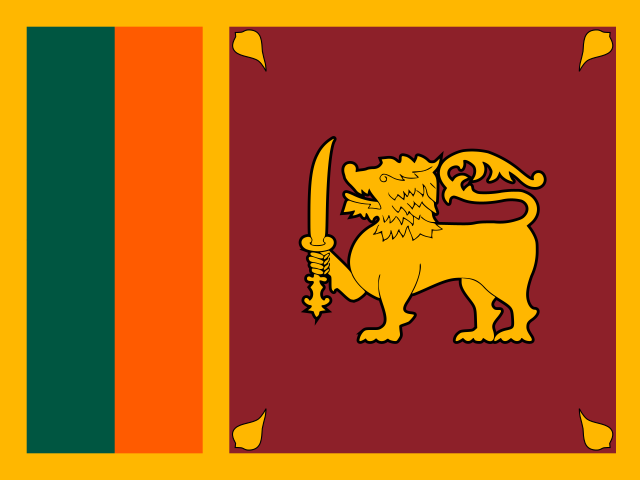
 Sri Lanka


 Explore
Kandy
A hill-country city around a lake and the Temple of the Tooth.
Explore
Kandy
A hill-country city around a lake and the Temple of the Tooth.
 Explore
Sigiriya
A dramatic ancient rock fortress rising above the jungle.
Explore
Sigiriya
A dramatic ancient rock fortress rising above the jungle.
 Explore
Nuwara Eliya
A misty hill town of tea plantations, waterfalls and cool colonial air.
Explore
Nuwara Eliya
A misty hill town of tea plantations, waterfalls and cool colonial air.
 Explore
Galle
A charming Dutch-colonial fort town on the south coast.
Explore
Galle
A charming Dutch-colonial fort town on the south coast.
 Explore
Colombo
The seaside commercial capital of colonial arcades and buzz.
Explore
Colombo
The seaside commercial capital of colonial arcades and buzz.
 Explore
Anuradhapura
A vast ancient capital of dagobas and sacred ruins.
Explore
Anuradhapura
A vast ancient capital of dagobas and sacred ruins.
Regions and Cities of Sri Lanka
- Southwest coastBeaches, surf towns and colonial Galle along the sunny southwest shore.
- Galle: UNESCO-listed fort, cafes, galleries and nearby surf beaches.
- Mirissa: Whale-watching base and relaxed surf-friendly beach town.
- Weligama: Popular surf lessons, long sandy bay and beachside guesthouses.
- Unawatuna: Sheltered bay for swimming, restaurants and easy beach time.
- Tangalle: Quieter beaches and small-scale resorts away from the main crowds.
- Hill countryTea terraces, cool nights and some of the island’s most scenic train rides.
- Nuwara Eliya: Tea estates, colonial-era town and cool mountain air.
- Ella: Iconic railway views, short hikes and waterfall viewpoints.
- Badulla: Gateway town for hikes and the central highlands.
- Pidurutalagala: Sri Lanka’s highest peak and hill-country panoramas.
- Cultural TriangleCompact belt of ancient cities, rock citadels and temple complexes.
- Sigiriya: Dramatic rock fortress with panoramic sunrise climbs.
- Polonnaruwa: Ruined medieval capital with large archaeological park.
- Dambulla: Cave temple complex with ancient Buddha statues and frescoes.
- Anuradhapura: Sacred city of stupas and ancient irrigation works.
- Wildlife and national parksSafari country for elephants, leopards and dense rainforest.
- Yala National Park: Best-known park for leopard sightings and coastal plains safari.
- Udawalawe National Park: Reliable elephant sightings and accessible day safaris.
- Wilpattu National Park: Large dry-forest park with diverse wildlife and fewer crowds.
- Sinharaja Forest Reserve: Biodiverse rainforest, endemic birds and guided trekking.
- East coast and northDry-season beaches, Tamil culture and quieter coastal towns May-September.
- Trincomalee: Natural deep-water harbour, beaches and diving spots.
- Arugam Bay: World-class surfing (note: not a linked token; listed as plain name).
- Jaffna: Distinct Tamil culture, temples and island excursions.
- Batticaloa: Lagoons, local fish markets and east-coast rhythms.
Top Cities in Sri Lanka
- Known for: ancient Buddhist cities, tea-country hills and train rides, leopard and elephant safaris, surf beaches and fiery rice and curry, at prices well below most of Asia’s beach destinations.
- First trip: the Cultural Triangle around Sigiriya, Kandy and the tea hills around Ella, then the south coast near Galle. Allow 2-3 weeks.
- Best time: December-March for the west and south coasts and hill country; May-September for the east coast.
- Daily budget: $40-90.
- Visas: Most Western passports get 30 days with an ETA; passport valid 6 months.
- Getting in: fly into Colombo (Bandaranaike International).
- Safety: violent crime is rare; motorbikes, traffic, strong currents and scams are the real risks.
Currently it is the low season, with temperatures ranging from 25 to 31°C (77 to 88°F).
September
September brings wet and changeable weather, and the quietest beaches of the year. Showers and sudden heavy downpours - driven by inter-monsoon conditions and lingering southwest monsoon influence - make travel in the southwest more likely to be disrupted, so crowds and prices drop there. The east coast around Trincomalee and Batticaloa is a better bet for drier spells. Pack rain gear, keep plans flexible and favour cultural sites when it rains.
Next 3 Months
October brings the monsoon transition as the southwest eases and weather becomes more changeable; the northeast monsoon can start in parts. November dries out in the southwest, and December turns reliably dry and busy on southern and western coasts.
Sri Lanka in the News
The national travel advisory warns that protests can occur at any time and may turn violent; travellers should avoid demonstrations and expect sudden security operations. Clashes between protesting Buddhist monks and police at Viharamahadevi Park on 18 October disrupted central Colombo and could affect visitor safety and transport near the park. (The Island) An earthslip caused a commuter train to derail between Gangoda and Kadigamuwa on 5 October; expect delays or cancellations on the Colombo-Kandy line and check rail service updates before travel. (The Island) Updated 19 Oct.
Active alerts: 1 travel advisory. See all Sri Lanka alerts
Why Visit Sri Lanka
Sigiriya’s rock fortress, Polonnaruwa’s ruined city and the monasteries of Anuradhapura form Sri Lanka’s Cultural Triangle and work well as a combined multi‑day circuit. Climb Sigiriya early to avoid heat, and hire a local guide to explain the frescoes, irrigation systems and Buddhist heritage. The route shows how ancient engineering shaped island life.
The train from Kandy to Ella is one of the country’s most scenic journeys through tea terraces and misty hills (see the rail note under Getting Around: the line is still being repaired after Cyclone Ditwah); stop at Nuwara Eliya for colonial teahouses and plantation tours. Smaller estates let you taste single‑estate Ceylon teas and learn plucking techniques. Bring warm layers - elevations can be cool, especially on the train.
Arugam Bay on the east coast is a global surf hotspot with consistent breaks in season, while Mirissa and Hikkaduwa on the south coast combine surfing with whale watching and reef snorkeling. Peak surf seasons differ by coast - check local conditions and book surf lessons or board rentals ahead during peak months.
Yala and Udawalawe national parks offer reliable elephant and leopard sightings; hire experienced guides who know where to find big cats and birdlife. Early‑morning safaris increase chances of sightings and cooler temperatures. Balance wildlife watching with responsible practices: avoid feeding animals and follow park regulations.
Kandy’s Esala Perahera (held in July/August) is a spectacular festival of processions, drummers and decorated elephants centered on the Temple of the Tooth. If you can time a visit, the atmosphere and pageantry are unforgettable. Outside festival dates, Kandy still offers lakeside strolls, museums and hilltop viewpoints.
Who's Sri Lanka For?
Couples
The scenic train to Ella and tea-plantation bungalows near Nuwara Eliya make for intimate, slow-paced escapes; Mirissa beaches are ideal for sunset strolls.
Families
Yala safaris, Galle Fort visits and gentle beaches like Bentota provide family-friendly activities, though heat and travel times require sensible pacing with children.
Backpackers
A classic coastal-and-hill loop from Colombo to Ella and Arugam Bay is well-worn and social, with cheap guesthouses, trains and surf camps for budget travelers.
Digital Nomads
Coworking hubs in Colombo, Galle and some beach towns help nomads, but stable broadband outside cities can be patchy and visa policies are evolving.
Foodies
Hoppers, kottu roti and seafood curries showcase bold, spicy Sri Lankan flavors; tea-estate tastings are essential for caffeine lovers.
Adventure Seekers
Surf Arugam Bay, whale-watch in Mirissa and climb Adam’s Peak at dawn-Sri Lanka packs varied outdoor challenges into a compact island.
Party Animals
Beach bars in Hikkaduwa and Mirissa host friendly parties and bonfires; it’s more relaxed beach-party culture than nonstop clubbing scenes.
Nature Buffs
Sinharaja rainforest, Horton Plains’ World’s End and coastal biodiversity make Sri Lanka a compact hotspot for endemic wildlife and dramatic landscapes.
- Southwest coast: surfing and lessons, whale-watching from Mirissa, strolling Galle Fort, snorkeling and beachside dining.
- Hill country: scenic Kandy-Nuwara Eliya-Ella train rides, tea-estate tours, hikes to viewpoints and visiting colonial Nuwara Eliya.
- Cultural Triangle: climbing Sigiriya at sunrise, exploring Polonnaruwa and Anuradhapura ruins, visiting Dambulla cave temples.
- Wildlife and national parks: jeep safaris for leopards in Yala National Park, elephant spotting in Udawalawe, birdwatching in Sinharaja and Wilpattu treks.
- East coast and north: surfing at Arugam Bay, diving around Trincomalee, exploring Jaffna’s temples and coastal island trips.
Best Things to Do in Sri Lanka
 Trail
Adam's Peak
Trail
Adam's Peak
 Temple
 of the Tooth
Buddhist temple in Kandy housing a sacred tooth relic
Temple
Temple of the Tooth
Buddhist temple in Kandy housing a sacred tooth relic
 Historical Site
Old Town of Galle and its Fortifications
Colonial-era fortified town with Dutch-era ramparts
Historical Site
Old Town of Galle and its Fortifications
Colonial-era fortified town with Dutch-era ramparts
 Historical Site
Rangiri Dambulla Cave Temple
Complex of cave temples with ancient Buddhist murals
Historical Site
Rangiri Dambulla Cave Temple
Complex of cave temples with ancient Buddhist murals
 Park
Yala National Park
Sri Lankan national park known for leopards
Mountain
Adam's Peak
Pilgrimage mountain with distinctive summit footprint shrine
Park
Yala National Park
Sri Lankan national park known for leopards
Mountain
Adam's Peak
Pilgrimage mountain with distinctive summit footprint shrine
 Zoo
Pinnawala Elephant Orphanage
Elephant care centre with daily feeding and bathing
Zoo
Pinnawala Elephant Orphanage
Elephant care centre with daily feeding and bathing
 Park
Udawalawe National Park
National park famous for wild Asian elephants
Park
Udawalawe National Park
National park famous for wild Asian elephants
Sri Lanka Bucket List
Don't Miss
Sigiriya Rock Fortress - Ancient rock citadel with frescoes, mirror wall inscriptions, and panoramic views across the Cultural Triangle.
Kandy and Temple of the Tooth - Hill-city center of Kandyan culture, hosting the sacred Temple of the Tooth relic and botanical gardens.
Ella and its train journey - Mountain town reached via one of the world’s most scenic train rides, with tea plantations and hikes.
Galle Fort - Dutch-era fortified port with narrow lanes, colonial buildings, galleries, and coastal ramparts for sunset walks.
Yala National Park - Wildlife reserve known for leopard sightings, dry-zone habitats, and jeep safaris across mixed terrain.
Colombo - Commercial capital blending colonial heritage, street food markets, museums, and busy waterfront promenades.
Hidden Gems
Knuckles Mountain Range - Remote upland area with cloud forests, tea terraces, and multi-day trekking routes away from crowds.
Jaffna Peninsula - Distinct Tamil cultural region with temples, fort ruins, and seafood markets in Sri Lanka’s far north.
Wilpattu National Park - Less-visited park with natural lakes (willus), leopard and sloth bear habitats, and quiet safari tracks.
Ritigala Forest Monastery - Hillside forest monastery ruins with moss-covered stones, meditation trails, and cooler microclimate.
Trincomalee and Pigeon Island - Eastern harbor town offering deep-water beaches, historic forts, and snorkeling at Pigeon Island Reef.
Mannar and Delft Island - Arid northwestern region with baobabs, colonial forts, and ferry-accessible Dutch-built Delft Island.
Road Trips
Kandy-Ella train journey - Scenic rail line across central highlands, about six to eight hours, passing tea estates and vistas. Cyclone damage has kept parts of the line closed; as of October 2026 trains run between Nanu Oya and Ella, so check before you plan around it.
Southern Coastal Drive (Galle-Tangalle) - Coastal route linking colonial Galle to southern beaches, roughly 150-200 kilometres with coastal viewpoints.
Cultural Triangle Loop (Sigiriya-Polonnaruwa-Anuradhapura) - Historic circuit covering ancient capitals, temples, and archaeological parks across roughly 300 kilometres.
Northern Highlands and Jaffna route - Multi-day northern itinerary from Anuradhapura to Jaffna showcasing ancient sites, coastal scenery, and local culture.
Best Time to Visit Sri Lanka
High Season
Dry, sunny conditions across the south and west coasts and comfortable weather in the central highlands; peak tourism and higher prices. Ideal for beach holidays, cultural tours and wildlife viewing in the southwest.
Shoulder Season
Transitional months: April is hot before monsoon onset; November marks the end of the southwest monsoon and improving conditions in many areas. Crowds are lighter than peak months but conditions vary regionally.
Low Season
Southwest monsoon brings heavy rain to the west and south, while the east tends to be drier and is the better choice for beach travel in this period. Expect lower prices in rain-affected regions and variable conditions across the island.
Bar height shows how good the month is; numbers are the average daytime high. Tap a month for its guide.
Southwest Coast & Lowlands
Colombo, Galle, Bentota
Coastal lowlands on Sri Lanka’s southwest receive the heaviest rainfall during the May-September southwest monsoon; December-March is the island’s main dry, high‑season window for beaches and Colombo. The sea is calm and diving/snorkeling best in the dry months, while the monsoon brings frequent heavy afternoon rain, rough seas and lower prices. Travelers should watch ferry schedules during May-September and carry waterproofs and insect repellent year‑round.
Central Highlands
Kandy, Nuwara Eliya, Ella, Horton Plains
The central highlands are cooler and wetter than the lowlands: nights can be cold and mist common, with heavy rain during the southwest monsoon (May-September) and frequent inter‑monsoonal storms. This region is excellent for tea‑garden walks, mountain treks and the Kandy festivities, but visitors should expect muddy trails in the wet season, chilly dawns year‑round at altitude, and pack warm, waterproof clothing.
North Central & Cultural Triangle
Anuradhapura, Sigiriya, Polonnaruwa, Minneriya
The North Central dry zone is hot year‑round with low rainfall compared with the south; its best windows are December-April for archaeological visits and elephant‑spotting in the dry months (July-October). Afternoon inter‑monsoonal storms can appear in April and October-November; travelers should prioritize early morning starts, bring sun protection and plenty of water when exploring ruins and reservoirs.
East Coast & Trincomalee / Arugam Bay
Trincomalee, Batticaloa, Arugam Bay
The east coast has an almost opposite season to the southwest: its dry, calm season runs roughly May-September with excellent diving, snorkeling and surfing in Arugam Bay, while the northeast monsoon (December-February) brings rough seas and heavier rain. Inter‑monsoonal months can be changeable; book popular surf and dive trips in advance for May-August and carry flexible plans during transition months.
Northern Peninsula
Jaffna, Mannar, Delft Island
The far north is the island’s driest, sunniest area for much of the year, with pronounced heat and low rainfall outside the northeast monsoon (December-February). It’s excellent for cultural visits, birdwatching and quiet beaches during the dry months (March-September), but ferry services and small‑island access are most vulnerable during monsoon and inter‑monsoonal storms. Carry sun protection, water and flexible transport plans.

Most nationalities need an ETA for short stays; budget options range from backpacker dorms to boutique tea bungalows, and you should book popular trains, safaris and Galle Fort stays a few weeks ahead in high season.
Sri Lanka Itineraries
1 Week Sri Lanka Itinerary
Seven days cover Colombo arrival, Sigiriya rock fortress, Dambulla cave temples, Kandy Temple of the Tooth, and a scenic train to Nuwara Eliya tea country.
- Day 1 - Arrive Colombo, Galle Face Green evening and local seafood
- Day 2 - Drive to Cultural Triangle, visit Dambulla cave temples
- Day 3 - Climb Sigiriya rock fortress sunrise visit
- Day 4 - Head to Kandy, Temple of the Tooth visit and cultural show
- Day 5 - Train to Nuwara Eliya through tea plantations
- Day 6 - Explore Nuwara Eliya tea estates and Horton Plains short hike
- Day 7 - Galle Fort afternoon and southern coast beaches, depart from Colombo
2 Weeks Sri Lanka Itinerary
Two weeks traverse Colombo, Cultural Triangle, Kandy cultural shows, Nuwara Eliya/Ella train and hikes, Yala safari, Mirissa whale watching, and Galle Fort on the south coast.
- Day 1-2 - Colombo arrival, city markets and coastal drive to Negombo option
- Day 3-4 - Cultural Triangle: Sigiriya and Dambulla exploration
- Day 5 - Kandy Temple of the Tooth and city gardens
- Day 6-7 - Train to Ella via Nuwara Eliya, tea factory visit
- Day 8-9 - Ella hikes: Little Adam's Peak and Nine Arch Bridge
- Day 10-11 - Yala National Park safari for leopards and wildlife
- Day 12-14 - Mirissa whale watching, Galle Fort, and southern beaches, depart
3-4 Weeks Sri Lanka Itinerary
Three to four weeks include Colombo, Jaffna, Anuradhapura, Polonnaruwa, Sigiriya, Kandy, Hill Country, east coast Trincomalee, Yala, and southern beaches with cultural and wildlife focus.
- Day 1-3 - Colombo, Negombo and Anuradhapura or Polonnaruwa ancient cities
- Day 4-7 - Sigiriya, Dambulla and cultural village experiences
- Day 8-11 - Kandy, tea-country train to Nuwara Eliya and Ella hikes
- Day 12-15 - East coast Trincomalee beaches and Pigeon Island snorkeling
- Day 16-19 - Yala or Wilpattu safaris and southern wildlife exploration
- Day 20-24 - Galle Fort, southern surf towns and Weligama or Mirissa leisure
- Day 25-28 - Jaffna in the north optional, cultural visits, return to Colombo and depart
Where to Stay in Sri Lanka
Guesthouses & Homestays
$15-60 / night
Family-run guesthouses are widespread in Kandy, Ella and Galle Fort; many include breakfast and local guidance. Homestays in rural areas provide tea-estate experiences and home-cooked meals - ideal for cultural immersion and shorter travel days.
Eco-lodges & Rainforest Stays
$40-150 / night
Eco-lodges in Sinharaja, Knuckles Range and the south-western rainforests offer guided hikes and birdwatching. These properties focus on conservation and provide comfortable, often remote, stays - expect limited connectivity.
Beach Hostels & Surf Camps
$8-45 / night
Arugam Bay, Mirissa and Weligama host surf camps and laid-back hostels catering to surfers and budget travellers. Many offer lessons, board storage and communal spaces - book in high season for best spots.
Tea Bungalows & Colonial Hotels
$40-160 / night
For hill-country charm, stay in colonial-era tea bungalows around Nuwara Eliya and Hatton or boutique hotels near Ella for scenic views. These properties often include garden grounds and easy access to tea-plantation walks.
Long-Stay Rentals & Villas
$500-2,000 / month
Monthly villa and apartment rentals are common around Colombo, Negombo and southern beaches for remote workers and families. Verify internet reliability, power backup and water supply before longer commitments.
- Most visitors to Sri Lanka need an Electronic Travel Authorization (ETA) prior to arrival; some nationalities are visa‑exempt or eligible for visa on arrival - check the official ETA portal for specifics.
- ETAs cover short tourist stays; longer stays or other visit purposes require a different visa obtained from consulates.
- Passport should be valid for the duration of the intended stay; carry proof of onward travel and accommodation details for immigration checks.
- Health and entry formalities can change; check the Sri Lankan Department of Immigration & Emigration or your airline for the latest requirements before you travel.
How to Get to Sri Lanka
Most international travellers arrive at Bandaranaike International Airport (CMB) north of Colombo; Ratmalana (RML) near Colombo handles some regional and private flights. SriLankan Airlines links Colombo with major hubs, and there are numerous connections via Middle Eastern and Asian transfer points.
By sea from India: a passenger ferry crosses between Nagapattinam in Tamil Nadu and Kankesanthurai near Jaffna in roughly 3 to 4 hours. Sailings are irregular and have been suspended at times, so confirm the current schedule before relying on it. You need a valid ETA as for air arrivals.
How to Get Around Sri Lanka
Domestic services connect Colombo with regional airports such as Jaffna and Mattala; small carriers and charter operators supplement ground travel for distant regions. Flights save time for long island distances like the northern and eastern provinces.
Expect moderate domestic fares that are typically higher than bus or train alternatives but useful when time is limited.
Sri Lanka has an extensive and scenic rail network operated by Sri Lanka Railways. Trains are a popular choice for routes such as Colombo to Kandy and the tea‑country line to Ella - advance booking is recommended for reserved classes.
Line status: Cyclone Ditwah in late 2025 badly damaged the hill-country (Upcountry) line. Sections have reopened in stages: Nanu Oya-Ella-Badulla runs again, and Colombo-Peradeniya services restarted in October 2026, but there is no through train between Kandy and Nanu Oya yet. Check Sri Lanka Railways before planning, and use a bus or car for the missing stretch.
Reserved seats open about 30 days ahead and sell out fast on the scenic routes. Book only on the official seat reservation site or at a station; the railway has warned that look-alike sites target foreigners. Unreserved second- and third-class tickets are sold on the day.
Ticket prices are inexpensive (a few hundred LKR for basic seating up to higher fares for reserved/observation seats); journey times vary but offer memorable scenery.
A dense network of state and private buses covers almost every town; express and luxury coach services connect major cities and tourist hubs. Buses are the most economical intercity option, though comfort varies.
Local fares are very low for short trips (tens to a few hundred LKR); AC coaches between major centres cost more but remain affordable by international standards.
Tuk‑tuks are ubiquitous for short urban trips; negotiate fares in advance or use apps for metered quotes. For city travel, tuk‑tuks are often the quickest way to get around congested streets.
Typical short rides in cities are modest in cost (a couple of hundred LKR), while longer hires for day tours are charged per hour or per trip.
Driving yourself is legal but needs paperwork: your home licence plus a Sri Lankan permit, either a temporary licence from the Department of Motor Traffic (now issued at Colombo airport, cars and motorbikes only) or an Automobile Association of Ceylon permit, which is the one needed for a self-drive tuk-tuk and requires an International Driving Permit. Traffic drives on the left. Most visitors hire a car with a driver instead.
App‑based services such as PickMe provide car and tuk‑tuk bookings in Colombo and other urban centres, offering cashless payments and fare estimates. Traditional taxis and private drivers are also widely available.
App fares are generally competitive; expect higher rates for airport transfers and long‑distance hires compared with local buses and trains.
Ferry and boat services operate for specific coastal and island connections, and coastal excursions are available from certain towns. Services are often seasonal and aimed at tourists visiting smaller islands and beaches.
Prices vary by operator and route; short ferry trips are typically inexpensive while private charters cost significantly more.
Expect about $25-70/day; cash LKR is king outside major hotels, use cards in Colombo and Galle, and withdraw at city ATMs; small tips are appreciated.
How Much Does Sri Lanka Cost?
Typical daily spend ranges $25-70 depending on area, with Colombo and tourist hotspots priciest and rural guesthouses much cheaper.
Daily budgets
Typical prices
- Dorm bed: 1,000-2,500 LKR
- Budget private room: 3,000-6,000 LKR
- Mid-range hotel: 8,000-18,000 LKR
- Upscale hotel: 24,000-45,000 LKR
- Street-stall meal: 150-400 LKR
- Bottle of local beer: 400-900 LKR
- Organised tour or activity: 6,000-18,000 LKR
- Tuk-tuk short ride: 300-1,200 LKR
For current prices on hundreds of everyday items, see Numbeo’s Sri Lanka cost of living, a crowd-sourced database that is updated often.
Ways to save
- Use local transport: Buses and non-AC trains are very cheap and cover most routes; reserve scenic trains in advance only for high season.
- Eat local: Rice-and-curry and seaside fish stalls are both cheap and filling compared with tourist restaurants.
- Bundle tours: Hire a driver for a multi-day itinerary with stated prices to avoid repeated negotiation and save time.
Full trip budgets are in Sri Lanka Itineraries.
Cash, Cards & Tipping in Sri Lanka
Sri Lanka uses the Sri Lankan rupee (LKR). Cash is useful outside major hotels and tourist centers; cards are accepted at larger hotels, restaurants and shops but less so in rural areas. ATMs are common in cities and tourist hubs but sparse in remote regions.
- Tipping: Restaurants and hotels usually add a 10% service charge to the bill, so extra tips are optional. Small tips are customary for drivers, safari trackers, guides and hotel staff, and temple shoe-minders expect a few rupees.
- Foreigner prices: Major sites and national parks charge foreigners much more than locals, often quoted in US dollars, and a day at Sigiriya, a safari and the Temple of the Tooth can cost more than your room. Budget for these separately.
- Cards & Cash: Visa and Mastercard are widely accepted in urban and tourist areas; American Express is less commonly accepted. Carry cash for small purchases, markets and transport in rural areas.
- ATMs & Mobile Payments: ATMs are readily available in Colombo and major towns; machines may charge local operator fees and your bank will likely charge international withdrawal fees. Domestic mobile payment services exist and usage is growing, but they typically require a local bank account or phone number.
- Banknotes: Rs20, Rs50, Rs100, Rs500, Rs1000, Rs5000
- Coins: Rs0.25, Rs0.50, Rs1, Rs2, Rs5, Rs10
Respect Buddhist temple rules - cover shoulders and knees and remove shoes and hats when required.
Customs & Etiquette in Sri Lanka
Respect for Buddhism and temple etiquette matters most: cover shoulders and knees, remove shoes and hats inside shrines, and avoid posing with your back to Buddha images. Locals are generally forgiving of honest mistakes if you apologise and follow guidance at sacred sites.
Sinhala Language Basics
Sinhala and Tamil are the island’s official languages; English functions widely in business, tourism and administration, so travelers will often be able to get by in English as well.
Useful Phrases
- Hello (Sinhala, formal) - ආයුබෝවන් ā-yu-bo-van
- Hello (Tamil) - வணக்கம் va-ṇak-kam
- Thank you (Sinhala) - Thank you / ස්තුතියි stu-thi-yi
- Where is the restroom? (Sinhala) - වැසිකිළිය කොහෙද? væ-siki-liya ko-he-da?
- Where is the bus station? (Tamil) - பேருந்து நிலையம் எங்கே? pērundhu nilaiyam en-ge?
- How much? (Tamil) - How much? / எவ்வளவு? ev-va-la-vu?
- Please (Sinhala) - කරුණාකර ka-ru-ṇā-kara
- Please (Tamil) - தயவு செய்து tha-ya-vu sey-thu
- Can I have the menu? (Sinhala) - මෙනු එක දෙන්න පුළුවන්ද? menu eka denna pu-lu-wan-da?
- Help! (Tamil) - உதவி! u-tha-vi!
- I need a doctor (Sinhala) - මට දොස්තර කෙනෙක් ඕනේ ma-ta dos-ta-ra ke-nek o-ne
- Police! - Police! po-lis!
Staying Connected in Sri Lanka
Sri Lanka has generally good mobile coverage in cities and along major routes with widely available 4G. Average mobile speeds are moderate and support typical remote work tasks in urban centres, but bandwidth and reliability drop in some rural and hill areas.
Tourist SIM Cards
Mobile Providers
Wi-Fi & Coworking
Hotels and cafes in Colombo and major towns usually offer Wi‑Fi suitable for video calls. Coworking spaces are available in Colombo with decent broadband; expect slower connections in rural and tea-country regions.
Useful Apps for Sri Lanka
- Google Maps - Navigation and directions across Sri Lanka.
- Google Translate - Translate Sinhala/Tamil <> English and use offline packs.
Emergency Numbers & Electricity
- Which number: 1990 is the free Suwa Seriya ambulance service; 119 is police and 110 fire. The Tourism Development Authority runs a 24-hour tourist hotline on 1912, and tourist police posts operate in the main resorts.
- Electricity: 230V, 50 Hz; plug types D, M.
Dengue and other mosquito-borne diseases are the main health risk; also take usual water and food precautions, be careful with strong ocean currents and seek medical care for persistent fevers.
Is Sri Lanka Safe?
Yes for most visitors: violent crime is uncommon, but the main risks are road accidents, seasonal flooding/landslides, petty theft and occasional unrest or terrorist incidents.
Crime & Scams
Petty theft, bag‑snatching and scams target tourists in cities and at beaches. Negotiate tuk‑tuk fares up front, use hotel safes, and avoid isolated ATMs at night. Touts are persistent around Colombo Fort, Kandy and Ella stations: classic lines are that your guesthouse is full or closed, that today is a special elephant festival, or a friendly stranger steering you to a gem or spice shop where they earn commission. Book rooms yourself, use the PickMe app or metered tuk-tuks, and never buy gems as an investment.
Road Safety
Roads can be narrow and drivers often drive aggressively; motorcycle accidents are common. Avoid night driving on rural routes, always wear helmets, and use reputable buses or private drivers for long journeys.
Natural Hazards & Weather
Two monsoons bring heavy rain, flooding and landslides in different parts of the island at different times. Check forecasts before travel, avoid river crossings and steep slopes after storms, and follow local warnings.
Beaches & Water Safety
Strong currents and rip tides cause many incidents on Sri Lanka beaches. Swim only where lifeguards are present, obey beach flags and avoid swimming after heavy rain.
Laws to Know
Respect strict local customs around Buddhism and temples; cover any Buddha tattoo, which has led to foreigners being refused entry or deported, and dress modestly in religious sites. Every full-moon (Poya) day is a public holiday when bars and liquor shops close and alcohol is not sold, apart from in-house guests at larger registered hotels; the same applies on a few other national days, so plan ahead. Drug offences carry severe penalties and can include long prison terms. Same-sex relations are illegal, with up to 10 years in prison, though prosecutions are rare. Enforcement against visitors is rare, but attitudes are conservative, so keep a low profile.
Nightlife & Personal Safety
Nightlife is generally safe in tourist towns but petty theft and drink‑related problems occur. Stay in groups, watch drinks, and use trusted taxis or app services late at night.
Areas to Avoid
Protests can occur anywhere and sometimes turn violent; follow local news and avoid demonstrations. The government advisories also note risks from terrorism and unexploded ordnance in former conflict zones - heed official guidance and avoid restricted areas.
Staying Healthy in Sri Lanka
Generally easy to stay healthy with basic precautions; mosquito‑borne dengue and food/water hygiene are the main concerns.
Food & Water
Street food is delicious but practise usual hygiene caution: eat at busy stalls, avoid raw salads if unsure, and drink bottled or filtered water. Use hotel safes for medication and carry oral rehydration salts for diarrhea.
Mosquito‑Borne Illness
Dengue is endemic and seasonal outbreaks occur in urban and coastal areas. Sri Lanka was certified malaria-free by the WHO in 2016, so antimalarials are not needed. Leeches are common on rainforest and hill trails such as Sinharaja in wet weather; leech socks help. Use DEET or picaridin repellent, wear long sleeves at dawn and dusk, and sleep under nets or in screened rooms when needed.
Vaccinations & Rabies
Up‑to‑date routine vaccinations are recommended; hepatitis A and typhoid are commonly advised. Rabies is present - avoid animal contact and seek immediate post‑exposure treatment for bites.
Heat & Sun
Tropical heat and strong sun make heat exhaustion and sunburn risks, especially March-May. Stay hydrated, seek shade mid‑day and use high‑SPF sunscreen.
Air Quality
Air quality is generally acceptable in most tourist areas but can worsen during local fires or pollution events. Those with respiratory conditions should check local indices.
Medical Care & Insurance
Good private hospitals and clinics in major cities; facilities are limited in rural areas. Carry travel insurance that covers evacuation and check hospital availability for serious conditions before remote trips.
Daily life is shaped by Buddhism, regional Tamil culture and agrarian rhythms; polite dress at religious sites and modest behaviour matter more than in many Western countries.
History & Culture of Sri Lanka
Sri Lanka is an island nation whose cultural identity centers on Buddhism, layered ethnic communities (Sinhalese and Tamil), and long-standing agricultural and maritime traditions. Travelers will notice ancient religious sites, tea estates, distinct regional cuisines and a history of colonial contact and recent conflict that shapes contemporary life.
History of Sri Lanka
Sri Lanka’s recorded history includes ancient irrigated kingdoms centered at Anuradhapura and Polonnaruwa, where Buddhist institutions and sophisticated hydraulic works shaped society for over a millennium. Travelers encounter ruins, stupas and monasteries from these eras as well as continuing religious practices tied to Buddhism.
Notable Figures
- Dutugemunu - A 2nd-century BCE Sinhalese king famed in chronicles for unifying the island and patronizing Buddhism.
- Anagarika Dharmapala - A late 19th-early 20th century Buddhist revivalist who promoted Buddhism internationally and influenced modern Sri Lankan identity.
- S. W. R. D. Bandaranaike - Prime Minister in the 1950s known for promoting Sinhala language policies and a distinct post-colonial path.
- Velupillai Prabhakaran - Founder and leader of the LTTE, central to the island’s late-20th-century conflict (mentioned here for historical context travelers may encounter).
Key Dates
- 3rd century BCEIntroduction of Buddhism to the island, traditionally linked to the mission of Mahinda during King Devanampiya Tissa’s reign.
- c. 4th century BCE - 1215 CEAnuradhapura and then Polonnaruwa serve as major Sinhalese capitals with advanced irrigation and monumental Buddhist architecture.
- 1505Portuguese arrive and begin coastal settlements and trade, initiating nearly three centuries of European competition.
- 1658Dutch control replaces the Portuguese along much of the coast, later followed by the British in the late 18th century.
- 1948Independence from Britain; Ceylon becomes a sovereign dominion (later renamed Sri Lanka).
- 1983Ethnic tensions escalate into civil war between the government and the LTTE, a conflict that lasts until 2009 and affects many regions of the country.
- 2009End of the civil war; the post-war period includes reconstruction, resettlement and renewed focus on tourism.
Sri Lankan cuisine blends South Asian, Southeast Asian and colonial-era influences; staples are rice and coconut, and meals highlight spicy, sour and aromatic profiles.
Responsible Travel in Sri Lanka
Sri Lanka’s religious sites, elephants and coastal ecosystems are best protected when travellers show cultural respect, avoid exploitative wildlife attractions, and support community-based producers.
- Temple & Religious Respect: When visiting the Temple of the Tooth (Kandy) and other sacred sites, dress modestly, remove footwear, follow photography rules, and observe silence and queueing in worship areas.
- Elephant Welfare & Wildlife Tourism: Avoid elephant rides and entertainment centres; instead support rescue and rehabilitation projects such as responsible elephant transit and sanctuaries that prioritise animal welfare and do not offer rides.
- Protect Beaches & Turtle Nesting: Support turtle hatcheries (e.g., Rekawa) that follow best-practice release methods, avoid disturbing nesting sites at night, and choose snorkel operators that protect coral habitats.
- Buy Tea & Handicrafts Ethically: Buy tea directly from small plantations when possible and support fair-trade or community-run craft cooperatives in towns like Kandy and Galle to ensure tourism dollars reach smallholders.
Expats include retirees, freelancers and remote workers drawn to Colombo and south-coast towns; long-term stay requires work, resident or investor visas, while many nomads use the ETA short-stay route.
Living in Sri Lanka
Long-term living in Sri Lanka mixes tropical lifestyle with practical tradeoffs - many foreigners move for beaches, lower costs, or remote-work life. Expats include retirees, freelancers, and entrepreneurs drawn to coastal towns and Colombo’s services. Expect lively local culture, seasonal crowds, and variable infrastructure outside main centers.
Long-Term Visas: ETA for tourists (short stays); long-term stay requires work permit, resident visa, or business/investor permit.
Working There: Work requires employer-sponsored work permit or local company registration; remote work on tourist visa common but unofficial.
Cost of Living: Lower-cost outside Colombo; expect roughly US$700-1,200/month in Colombo for a modest expat lifestyle.
Health & Wellness: Private hospitals in Colombo offer good care; public system is limited - carry comprehensive travel insurance.
Banking & Finance: Opening a bank account usually needs passport plus proof of stay; ATMs and cards widely used in cities.
Taxes: Tax resident after ~183 days; income tax applies for residents, consult a local accountant for obligations.
Popular Places to Live in Sri Lanka
Choosing where to live comes down to whether you want city services, beaches, or cooler hill country. For city conveniences and best internet pick Colombo; for surf and a slower pace head to the south coast, trading off services and year-round connectivity.
- Colombo - Business and expat hub, best services and internet, busier and more expensive than other areas.
- Galle - Historic fort and cafés, compact expat scene, lots of tourism during peak season.
- Mirissa - Surf and beach lifestyle, small but lively nomad crowd, limited long-term infrastructure.
- Ella - Cooler hill-country escape, hiking and tea-country views, slower internet and fewer amenities.
- Kandy - Cultural and administrative center, more traditional Sri Lankan life, fewer expat comforts.
Practical entry routes and where to start if you plan to stay long-term.
- Department of Immigration & Emigration (Colombo) - Primary office for visas and residence permits, processing times vary, bring original documents.
- Sri Lanka Consulates - Apply for longer stays or entry ETAs through your nearest consulate, check local requirements.
- Work permits and business visas - Work requires employer-sponsored permit or investor/business visa, separate from tourist ETA.
- Extension & special permits - Tourist ETA can be extended in-country for longer stays in some cases, rules change frequently.
Typical monthly cost components and where your money goes living in Sri Lanka.
- Colombo rents - One-bedroom apartments in central Colombo commonly US$400-900 per month, utilities extra.
- Local groceries & dining - Street food and local restaurants are very affordable, imported goods raise grocery bills significantly.
- Transport - Tuk-tuks and buses are cheap; metered taxis and app rides more expensive but available.
- Utilities & services - Electricity and AC can raise bills, reliable water in cities often needs filtration or bottled supply.
Where to find medical care and how housing options differ between cities and coastal towns.
- Private hospitals (Colombo) - Nawaloka, Lanka Hospitals, Asiri: private care, English-speaking staff, reasonable prices compared to the West.
- Public healthcare - Public clinics exist but limited; major procedures routed to private hospitals or Colombo specialists.
- Long-term rentals - Lease terms vary, agents common, short-term furnished apartments available in cities and beach towns.
- Health insurance - International travel/expat health insurance recommended, many hospitals accept cash or card with deposit.
Digital Nomads in Sri Lanka
The remote-work scene is growing but still uneven - Colombo hosts the most reliable infrastructure and meetups, while south-coast towns attract short-term nomads for surf-and-work weeks. Expect seasonal community peaks and a mix of informal coworking options.
Nomad Visa: No dedicated nomad visa - most remote workers use tourist ETA, business visa, or work permit routes.
Long Term Rentals: Long-term rentals via agents, monthly apartments common in Colombo and beach towns, contracts vary widely.
Internet: Reliable 4G across most of the island, fiber available in Colombo and some towns, rural speeds lower.
Monthly Cost: Expect US$700-1,200/month in Colombo for modest remote-work lifestyle; cheaper outside main cities.
Coworking: Small coworking scene in Colombo, pop-up coworking on the south coast during high season.
Fitness & Wellness: Fitness options concentrated in cities - gyms, yoga studios in Colombo and some beach towns.
Community: Active Facebook groups and sporadic in-person meetups, stronger community in Colombo and Galle.
Time Zone: UTC+5:30, similar time to India, convenient overlap with Asia and parts of Europe for calls.
Popular Nomad Hubs in Sri Lanka
Nomads balance cost, community, and lifestyle: Colombo for services and connectivity, south coast for surf and slower pace. Beach towns trade convenience for quieter life; hill country offers cool climate but slower internet and higher transport costs.
- Colombo - Best for services and fast internet, suits remote workers wanting city amenities, noisier and pricier.
- Galle - Historic fort town, good cafés and a relaxed expat scene, smaller and more tourist-focused than Colombo.
- Mirissa - Beach vibe, surfing and nightlife, ideal for surfers and short-term nomads, limited long-term services.
- Ella - Hill-country retreat, cool climate and hiking, slower internet and fewer coworking options, very scenic.
- Kandy - Cultural center, calmer urban life, fits those seeking culture over beaches, more bureaucratic hurdles.
Common legal options remote workers use to stay longer than a tourist visit.
- Tourist ETA route - Short stays via ETA, can sometimes be extended inside country, not a formal nomad solution.
- Work permit pathway - Employer-sponsored permits for formal employment, requires company paperwork and local processing.
- Business/investor visas - Longer stays possible with company registration or investment, more paperwork and higher costs.
- Consular assistance - Use Sri Lankan consulates for formal visa applications and up-to-date requirements.
How nomads stay connected and what to expect outside major cities.
- Colombo ISPs and fiber - Most reliable fiber and business connections in Colombo, speeds vary by neighborhood.
- 4G/5G mobile data - Good nationwide 4G coverage, useful backup for remote work; hotspots common in tourist areas.
- Coastal and hill limitations - Smaller towns and hill areas have slower or intermittent fixed-line internet speeds.
- Local SIMs - Affordable prepaid data plans available from major operators, ID required for registration.
Where nomads plug in: reliable coworkings exist in Colombo, smaller towns rely on cafés and meetups.
- Colombo coworking scene - Several small coworking spaces and cafés, best for meeting other remote workers in the capital.
- Galle & south-coast options - Fewer formal coworkings, community forms around guesthouses and cafés, seasonal variation.
- Meetups and digital groups - Facebook groups and local meetups are the main way to find fellow nomads and events.
- Retreat-style coworking - Short-term retreats and surf-cowork weeks pop up, popular for community but less consistent year-round.
Sri Lanka Travel News
- Protest clash at Viharamahadevi Park raises tensions in Colombo(island.lk)
- Scammers selling fake ETIAS waivers after Europe travel authorisation delay(thepointsguy.com)
- EU signals flexibility to ease Entry/Exit System border friction(skift.com)
- Airlines accepting new A321neos despite planned short-term groundings(simpleflying.com)
- United Airlines cancels all flights to six destinations(simpleflying.com)
- Tour operators adapt to climate risks after deadly Himalayan disasters(skift.com)
- EASA 7,800-cycle inspection order forces Boeing 787 maintenance changes(simpleflying.com)
- Commuter train derails on Colombo-Kandy line after earthslip(island.lk)
- Showers expected in Western, Sabaragamuwa, Southern, Central and North-western provinces(island.lk)
- Sri Lankan banks tighten online security to combat rising fraud(island.lk)
- Flight cancellations rise to four-year high, increasing disruption risk(thepointsguy.com)
- Deep depression brings heavy showers to parts of western and central Sri Lanka(island.lk)
Travel Resources for Sri Lanka
Official
- Official Sri Lanka Tourism Official Tourism
- Ministry of Foreign Affairs - Sri Lanka Government
- Electronic Travel Authorization (ETA) - Sri Lanka Visas / Immigration
Travel Advisories
Sri Lanka Embassies Abroad
News & Media
- Sunday Times (Sri Lanka) English
- Daily FT (English) English
- The Island (English) English
Sri Lanka FAQs
Do I need a visa for Sri Lanka?
Yes, most visitors need an Electronic Travel Authorization, ETA, for short tourist stays. Some nationalities are visa-exempt or eligible for visa on arrival, so check the official ETA portal for your passport. Longer stays need a different visa route. Visas
How long can I stay in Sri Lanka without a visa?
30 days, for most Western passports using an ETA for a short tourist stay. Longer stays require a different visa, and tourist ETA extensions can sometimes be done in-country, but rules change frequently. Check current conditions before planning a long trip. Visas
Do I need an ETA before flying to Sri Lanka?
Yes, most visitors need an Electronic Travel Authorization, ETA, prior to arrival. ETA rules can differ by nationality, and some travellers may be visa-exempt or eligible for visa on arrival, so confirm on the official ETA portal before you travel. Visas
How many days do you need in Sri Lanka?
Allow 2 to 3 weeks for a first trip if you want a balanced loop. A common plan combines the Cultural Triangle, hill country tea towns, a wildlife safari, and time on the south coast. Shorter 1-week trips focus on highlights only. Itineraries
What is the best time to visit Sri Lanka?
December to March is best for the west and south coasts and the hill country, with dry, sunny conditions and peak crowds. May to September is best for the east coast, which tends to be drier in those months while the southwest is wetter. Best time
How much does a trip to Sri Lanka cost per day?
$25 to $70 a day is a typical daily spend for most travellers, depending on where you go. Colombo and major tourist hotspots cost more, while rural guesthouses can be much cheaper. Comfort travel runs higher, especially with private transfers. Costs
Is Sri Lanka expensive for tourists?
No, Sri Lanka is generally priced well below most of Asia’s beach destinations, especially if you use buses and non-AC trains and eat local rice-and-curry. Costs rise in Colombo and at big-name attractions and national parks, which charge foreigners more. Costs
Should I use cash or card in Sri Lanka?
Cash in Sri Lankan rupees is essential outside major hotels and tourist centres. Cards work best in urban and tourist areas such as Colombo and Galle, while rural areas rely on cash. ATMs are common in cities and tourist hubs but sparse remotely. Cash and cards
Do you tip in Sri Lanka?
Yes, small tips are customary, especially for drivers, guides, safari trackers and hotel staff. Restaurants and hotels often add a 10% service charge, so extra tipping is optional. Temple shoe-minders also expect a few rupees. Tipping
Is Sri Lanka safe for tourists?
Yes, violent crime is uncommon for most visitors, but risks include road accidents, petty theft and scams, seasonal flooding and landslides, and occasional unrest or terrorist incidents. Strong currents and rip tides are also a serious hazard on many beaches. Safety
Can you drink the tap water in Sri Lanka?
No, plan to drink bottled or filtered water. Food and water hygiene is one of the main health issues for travellers, especially with street food, so be cautious with raw items if you are unsure. Carry oral rehydration salts for diarrhoea. Food and water
What is the main international airport in Sri Lanka?
How do you get around Sri Lanka?
Trains, buses, tuk-tuks, taxis and domestic flights all work, depending on distance and time. Trains are popular on scenic routes, buses are the cheapest and reach almost everywhere, and tuk-tuks are best for short rides. Ferries run on specific coastal or island routes. Getting around
Do I need to book Sri Lanka trains in advance?
Yes, book ahead for reserved classes on scenic routes, especially the hill-country line toward Ella. Reserved seats typically open about 30 days in advance and sell out fast. Book only on the official Sri Lanka Railways site or at a station due to look-alike scam sites. Train tickets
What plug type is used in Sri Lanka?
Sri Lanka uses plug types D and M. Electricity is 230V at 50 Hz, so travellers should bring the right adapter for these plug shapes. Confirm your chargers support 230V if you are bringing appliances from countries with different voltage. Electricity
What is the best SIM card in Sri Lanka for tourists?
Dialog and Mobitel are the leading providers for broad 4G coverage, with Airtel and Hutch as other options. Tourist prepaid SIMs are sold at the airport and in shops, with bundles commonly around $3 to $15 depending on data and validity. SIM and data
Is English widely spoken in Sri Lanka?
Yes, English functions widely in business, tourism and administration, so many travellers can get by in English. Sinhala and Tamil are the official languages, and learning a few basic greetings helps, especially away from the main tourist centres. Language
Where should I go in Sri Lanka for the first time?
Start with the Cultural Triangle around Sigiriya, Kandy and the tea hills around Ella, then add the south coast near Galle. This route mixes ancient cities, scenic train country and beaches without rushing. Allow 2 to 3 weeks for a rounded trip. First-trip route
What is Sri Lanka famous for?
Sri Lanka is known for ancient Buddhist cities and ruins, tea-country hills and scenic train rides, leopard and elephant safaris, surf beaches, and fiery rice and curry. Places like Sigiriya and parks like Yala National Park are signature highlights. Top experiences