

Lisbon is Europe’s best-known nomad capital. It is sunny, safe and beautiful, with tiled hills over a wide river, a mild winter, Atlantic beaches half an hour away, and a time zone that works with both Europe and the US East Coast. English is widely spoken, the startup and tech scene is big, coworking is excellent, and Portugal’s D8 visa gives remote workers a legal route to live here.
The catch is cost, above all rent. Lisbon’s housing prices have more than doubled in a decade, and local salaries have not kept up, so the city that once felt cheap now costs about as much as Barcelona for a furnished flat. Old buildings are cold and damp in winter, the hills are steep, and summer brings heat and crowds. This guide covers what you need to set up and live here for one to twelve months. For the best neighbourhoods to rent in and named coworking spaces and laptop cafes, see the two companion pages. For sights, food and day trips as a visitor, see the Lisbon travel guide.
Lisbon for Digital Nomads at a Glance#
Why Lisbon Works for Remote Workers#
- The time zone. Lisbon shares London’s time. A European working day is normal hours, and the US East Coast is only 5 hours behind, so afternoon calls with New York are easy.
- A legal path to stay. The D8 visa and its two-year residence permit let remote workers live in Portugal properly, with a route to permanent residence.
- Quality of life. Over 2,800 hours of sunshine a year, a safe city, excellent food and wine at fair prices, and beaches, surf and Sintra’s palaces within an hour by train.
- Infrastructure. Fast, cheap fibre, good 5G, a compact metro, and an airport only 20 minutes from the centre with flights all over Europe, Africa and the Americas.
- Community. Lisbon has one of the biggest nomad and remote-work communities in Europe, with coworking spaces, meetups, startup events and a large English-speaking crowd.
Who Lisbon Suits (and Who It Doesn't)#
Lisbon suits Europeans who want sun without leaving the EU, Americans who want a European base on a workable time zone, and anyone who wants to settle for a year or more. It is also good for couples, families and people who want city life with the sea close by.
It suits you less on a tight budget: rent alone will take most of a $1,500 monthly budget, and Madeira, the Algarve or Porto can be cheaper. The hills and cobbled streets are hard on knees and wheels, flats can be cold and damp from November to March because few have central heating, and August is hot, crowded and touristy. If you want a tropical lifestyle, Southeast Asia gives you far more for the money.
Visas for Remote Workers in Lisbon#
Portugal is in the Schengen Area. Citizens of the EU, EEA and Switzerland can live and work here freely and just register their residence. Most other visitors, including Americans, Canadians, Britons and Australians, can stay 90 days in any 180 across the whole Schengen Area without a visa. Since October 2025, the EU’s Entry/Exit System (EES) records non-EU entries with fingerprints and a photo, and the ETIAS travel authorisation is due to start later. Tourist entry is not meant for working, even remotely.
For longer stays, the main option is Portugal’s D8 Digital Nomad Visa, in two versions:
- Temporary-stay visa of up to one year, for a long stay without moving your residence.
- Residence visa leading to a two-year residence permit, renewable for three years, with a route to permanent residence and citizenship after five years.
You need remote income of at least €3,680 a month (four times the Portuguese minimum wage) from employers or clients outside Portugal, savings of about €11,000, a Portuguese tax number (NIF), health insurance and an address in Portugal. You apply at a Portuguese consulate or through VFS in your country of residence, then attend an appointment with AIMA, Portugal’s immigration agency, for the residence permit. AIMA appointments have had long backlogs; book early and keep copies of everything.
Portugal: D8 Digital Nomad Visa
- Stay
- Up to 1 year (temporary-stay version) or a 2-year residence permit
- Valid for
- 1 year or 2 years
- Renewal
- Residence permit renews for 3 years; a route to permanent residence after 5
- Money required
- €3,680 a month (4x the Portuguese minimum wage), from work for clients or employers outside Portugal
- Fee
- About €90 visa fee, plus about €170 for the residence permit
- Who qualifies
- Remote employees and freelancers working for non-Portuguese employers or clients, with savings of about €11,000 (12x minimum wage) and a Portuguese address.
- Family
- Spouse +50% of the income bar, each child +30%
- Tax
- Tax resident after 183 days; the old NHR regime closed to new applicants in 2024 and its IFICI replacement mostly suits research and tech roles
- How to apply
- At a Portuguese consulate in your country of residence, then a residence appointment with AIMA in Portugal. Official site
Choose the residence-permit version if you want to stay more than a year: the temporary-stay version cannot be converted. AIMA appointments have long waits.
Portugal for digital nomads · Rules checked October 2026. Confirm with the official source before applying.
What It Costs to Live in Lisbon#
These are monthly costs for one person living in a furnished flat in a central neighbourhood, in US dollars at about $1.13 to the euro. They are ballpark figures: rent can swing hundreds of euros between neighbourhoods and between a mid-term rental and a long lease, and how often you eat out matters a lot.
| Monthly cost | Typical range (USD) | Notes |
|---|---|---|
| Furnished 1-bed apartment, central (monthly rental) | $1,350 - $2,100 | About €1,200-1,850 a month; a room in a shared flat €600-900 |
| Electricity, water, gas | $70 - $160 | Winter heating in old, draughty buildings is the big variable |
| Home fibre internet | $30 - $45 | 500 Mbps-1 Gbps from MEO, NOS, Vodafone or DIGI; often included in rentals |
| Mobile plan with big data | $10 - $25 | DIGI and the budget brands are cheapest |
| Coworking hot desk | $150 - $330 | About €135-290 a month, or cafes |
| Food: groceries, pratos do dia, some dinners out | $450 - $850 | A prato do dia lunch €10-14; brunch €15-20 |
| Transport: Navegante pass, Uber and Bolt | $40 - $100 | A monthly Navegante pass covers metro, trams, buses, ferries and trains |
| Gym or classes | $35 - $90 | Budget gyms from about €30; boutique studios more |
| Health insurance (nomad policy) | $50 - $170 | Depends heavily on age and US cover; D8 applicants need a policy |
| Going out, day trips, weekends away | $200 - $550 | A glass of wine €3-6; trains to Sintra and Cascais are cheap |
These are ballpark estimates, not quotes. Real costs vary hugely with your lifestyle, which neighbourhood you live in, how often you eat out or take taxis, the season and the exchange rate. Use them to compare places, then check current prices before you commit.
Housing is the main expense. A furnished one-bed on a monthly or mid-term rental in a central area costs about €1,200 to €1,850, a room in a shared flat €600 to €900, and coliving more. Long leases are cheaper per month but harder to get as a newcomer, because landlords often want a Portuguese guarantor or several months up front.
What stays good value: lunch (the prato do dia, a set dish of the day with a drink, is about €10 to €14 in a local tasca), coffee (an espresso, or bica, is about €1), wine, public transport, and day trips by train. Brunch spots, cocktail bars and restaurants in Chiado or Príncipe Real cost close to Northern European prices.
Where to Live in Lisbon#
Most nomads live in the central neighbourhoods between Cais do Sodré, Príncipe Real, Estrela and Arroios, all walkable or a few metro stops apart.
- Cais do Sodré, Chiado and Bairro Alto for the centre of everything, and nightlife.
- Príncipe Real for leafy, elegant streets, gardens and great restaurants.
- Estrela, Santos and São Bento for a calmer, residential feel close to the river.
- Arroios, Anjos and Intendente for better value and a young, multicultural scene.
- Avenidas Novas and Saldanha for modern flats with lifts and good metro links.
- Campo de Ourique for a flat, village-like neighbourhood with a great market.
- Parque das Nações for modern riverside towers near the airport.
Lisbon’s hills matter: a flat at the top of a steep street, up four floors with no lift, will change how much you go out. Our where to live in Lisbon page compares seven neighbourhoods and explains how to find a flat.
Where to Work: Coworking and Cafes#
Lisbon has some of Europe’s best coworking spaces, from design-led halls to creative campuses. Expect to pay about €10 to €30 for a day pass and €135 to €330 a month, with the cheapest options outside the centre.
- Second Home, above the Time Out Market, is the most famous, a plant-filled hall in Cais do Sodré.
- LACS runs creative campuses on the riverfront and in Anjos.
- Heden has several friendly, community-led spaces, including a big one in the cruise terminal and the cheapest day passes in town in Alvalade.
- Impact Hub suits founders working on social and environmental projects.
Many cafes welcome laptops, but some ban them at weekends or lunchtime, especially brunch spots. One well-known name, Cowork Central in Cais do Sodré, has closed. The full list with prices and a map is on our Lisbon coworking spaces and laptop cafes page.
Internet, SIM Cards and Staying Online#
Portugal has excellent fibre. Most flats are wired for 500 Mbps to 1 Gbps from MEO, NOS, Vodafone or the newer, cheaper DIGI, and many rentals include it. Ask for a speed test before you sign, because some old buildings still have slow copper lines.
For mobile, the same companies sell prepaid and monthly plans; DIGI and budget brands such as Uzo and WOO are cheapest, with plenty of data for €10 to €20 a month. EU residents’ phone plans work in Portugal at no extra cost under EU roaming rules. 5G covers the city. You need a passport to buy a SIM, and some contracts need a NIF.
Getting Around#
- Metro. Four lines cover the centre, the airport (red line) and Parque das Nações. Clean, fast and cheap.
- Trams and funiculars. Tram 28 is a scenic but crowded route through the old hills; tram 15 runs to Belém. The funiculars (elevadores) climb the steepest streets.
- Buses and ferries. Carris buses go everywhere; ferries cross the river to Cacilhas and Seixal.
- Trains. Suburban trains run from Cais do Sodré to Cascais along the coast, and from Rossio to Sintra, each about 40 minutes.
- The Navegante card. Load a monthly Navegante pass (about €30 for Lisbon city, €40 for the whole metro area) and use metro, trams, buses, ferries and trains for no extra cost.
- Uber and Bolt are cheap compared with the rest of Western Europe.
- Walking. Lisbon is very walkable but hilly, and the polished stone pavements (calçada) are slippery in the rain. Good shoes help.
Weather and Seasons#
| Season | Months | What it’s like for working here |
|---|---|---|
| Spring | March to May | Mild and increasingly sunny, 18-24°C. One of the best times to be here. |
| Summer | June to September | Hot and dry, 27-35°C, with heatwaves. June has the Santo António street festivals; August is crowded and many locals leave. |
| Autumn | October and November | Warm in October, then rain arrives. Great for long stays as the crowds thin. |
| Winter | December to February | Mild days of 14-16°C but cool, wet spells. Homes are often cold and damp inside; look for a flat with heating or a heat pump. |
Air quality is generally good, helped by the Atlantic breeze.
Health, Insurance and Fitness#
Portugal has a public health service (SNS) that residents can register with once they have a residence permit and a user number. Until then, most nomads use private hospitals and clinics such as CUF, Hospital da Luz and Lusíadas, which have English-speaking doctors; a private GP consultation is roughly €60 to €100. Pharmacies are excellent, and pharmacists can advise on minor problems.
You need health insurance for the D8 visa. Our health insurance guide explains the options.
For fitness, there are budget gym chains, CrossFit boxes, yoga studios, padel courts and climbing gyms across the city. Running along the river from Cais do Sodré to Belém is one of the best city runs in Europe, and surf is 20 to 40 minutes away at Carcavelos, Costa da Caparica and Ericeira.
Banking and Money#
The first thing to get in Portugal is a NIF (tax number). You need it for leases, phone contracts, utilities, many gym memberships and opening a bank account. Non-EU residents need a fiscal representative to get one, and many online services do it for a small fee.
Cards are accepted almost everywhere, though a few small cafes and markets prefer cash. Portugal’s Multibanco ATMs are free to use with Portuguese cards; foreign cards may pay their own bank’s fees. Once you have a Portuguese account, MB WAY is the app everyone uses to pay and split bills. Until then, a multi-currency account such as Wise or Revolut works well. See our banking guide.
Taxes#
You become a Portuguese tax resident if you spend more than 183 days in Portugal in any 12-month period, or if you have a home here that you intend to keep as your habitual residence. Portuguese residents are taxed on worldwide income at progressive rates. The famous NHR tax regime closed to new applicants in 2024; its replacement, IFICI, is narrower and mostly suits research, tech and startup roles. D8 holders on the two-year permit will usually become tax resident, so get advice from a Portuguese tax adviser before you move, and read our digital nomad tax guide.
Community and Meeting People#
Lisbon is one of the easiest cities in Europe to meet people:
- Coworking events. Second Home, Heden, LACS and Impact Hub all run talks, workshops and socials.
- Meetups. Nomads.com, Meetup and InterNations list nomad drinks, language exchanges, startup events and hikes every week.
- Tech and startups. Web Summit takes over the city every November, and there are startup and developer meetups all year.
- Sport and outdoors. Surf schools, running groups along the river, padel, climbing and hiking groups in Sintra and Arrábida.
- Learn Portuguese. A language class is the best way to connect with locals, and it helps with paperwork and making the city feel like home.
Safety#
Lisbon is one of the safest capitals in Europe. Violent crime is rare, and walking at night in central areas feels fine. The main risks:
- Pickpockets on tram 28, in the Baixa, at Miradouros and in crowded nightlife streets. Keep your phone and wallet zipped away.
- Fake drug sellers in the Baixa and Bairro Alto who offer “hash” or “cocaine” to tourists. Just ignore them.
- Slippery pavements in the rain, and steep hills.
- Housing tension. Many locals have been priced out of their neighbourhoods. Be a good neighbour, learn a few words of Portuguese and support local businesses.
Weekend Escapes from Lisbon#
- Sintra, with its palaces, gardens and forest, is 40 minutes by train from Rossio.
- Cascais has beaches, a pretty old town and a seafront cycle path, 40 minutes by train along the coast.
- Setúbal and the Arrábida coast have turquoise coves and seafood, about an hour south.
- Évora, the Alentejo’s Roman and medieval capital, is about 1.5 hours by train.
- Óbidos is a walled medieval village about an hour north; the surf town of Ericeira is on the way.
- Porto is under three hours by fast train, and the Algarve about three hours south.
Your First Week in Lisbon#
- Get a NIF before you arrive, if you can, through an online service. Everything else is easier with it.
- Book a month in a furnished flat or coliving while you look for something longer, and view places in person.
- Buy a Navegante card and load a monthly pass, and install Uber and Bolt.
- Get a local SIM or eSIM if you are not on an EU plan.
- Try a few workspaces with day passes before committing to a month.
- Book your AIMA or consulate appointments early if you are applying for the D8, and keep a folder of documents.
- Go to one meetup in your first week.
Videos: Living and Working in Lisbon#
The most useful recent YouTube videos on living and working remotely in Lisbon, picked for practical detail over hype. Prices in videos age fast, so treat them as a feel for life here rather than a quote.
 12 min

A couple's honest year in Lisbon: what they spent, how they handled visas, and what they would change.
 10 min

A real monthly budget from someone living in Lisbon, rent included, to compare with our cost table.
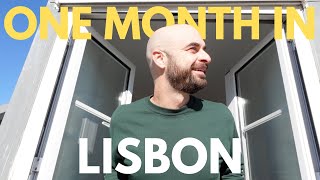 24 min

A first month in Lisbon on camera: the apartment, the hills, the coworking and the food.
 11 min

A quick tour of the central neighbourhoods, useful alongside our where-to-live page.
 14 min
Rent, groceries, transport and nights out priced item by item.
 20 min

A local agent's view of six residential areas, including some beyond the tourist centre.
Lisbon Digital Nomad FAQs#
Is Lisbon good for digital nomads?
Yes. It has a great time zone for Europe and the US East Coast, fast internet, excellent coworking, a large community, a safe and beautiful city and a dedicated nomad visa. The main drawbacks are high rents, cold and damp homes in winter, and summer crowds.
How much does it cost to live in Lisbon as a digital nomad?
Plan on about $2,900 a month for a comfortable life in a furnished central flat, eating out often and using a coworking space. A lean month is about $2,000 with a room in a shared flat, and $4,200 or more buys a nicer one-bed and plenty of dining out. These are ballpark figures; see what it costs.
Does Portugal have a digital nomad visa?
Yes, the D8 visa. It needs remote income of at least €3,680 a month from outside Portugal and comes as a one-year temporary-stay visa or a residence visa leading to a two-year residence permit. See visas for remote workers.
How long can I stay in Lisbon without a visa?
Visitors from visa-exempt countries such as the US, UK, Canada and Australia can stay 90 days in any 180-day period across the whole Schengen Area. EU citizens can stay as long as they like and register their residence.
Which area of Lisbon is best for digital nomads?
Cais do Sodré, Estrela and Santos, Príncipe Real and Arroios are the most popular, with the most cafes and coworking spaces. Arroios and Anjos are the best value close to the centre. Compare them on our where to live in Lisbon page.
Do I pay tax in Portugal as a digital nomad?
You become tax resident after more than 183 days in a 12-month period or if Portugal becomes your habitual residence, and residents pay tax on worldwide income. The old NHR regime is closed to new applicants. See taxes and get professional advice.
Is Lisbon or Madeira better for digital nomads?
Lisbon has big-city life, more coworking, culture and flights. Madeira is cheaper, greener, more outdoorsy and has a close-knit nomad community, but is smaller and quieter.
Last reviewed October 2026. Prices and venues change: check before you commit to a month.