

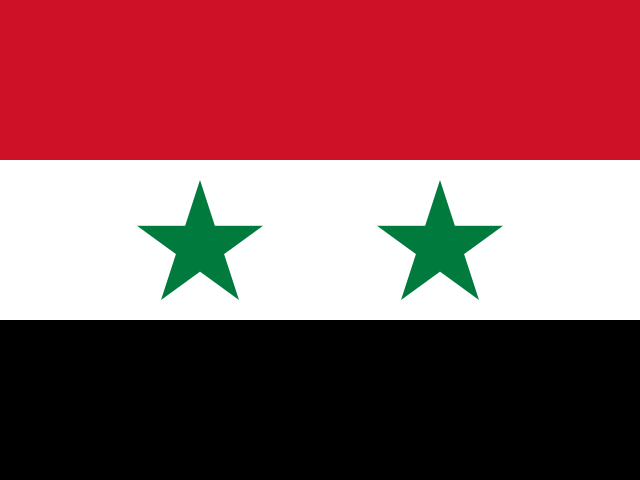
 Syria
Syria


Regions and Cities of Syria
- Damascus & GhoutaAncient capital, dense old‑city streets, souks and historic monuments.
- Aleppo & NorthMercantile cities, citadels, agricultural plains and historic market life.
- Aleppo: Historic citadel and souqs, long a Syrian trade and craft centre.
- Hama: Known for its medieval norias (waterwheels) on the Orontes.
- Maarat al-Numan: Ottoman‑era buildings and a working regional market town.
- Desert, Palmyra & InteriorDesert archaeology, Roman ruins and caravan-city remains across arid plains.
- Palmyra: Ruined caravan city and monumental colonnaded streets in the Syrian desert.
- Krak des Chevaliers: Crusader castle (often referenced in guides) and regional medieval sites.
- Deir ez-Zor: Euphrates valley city and gateway to eastern desert sites.
- Coast and Western CitiesMediterranean coast, relaxed towns, olive country and port cities.
- Northeast and Kurdish AreasFrontier zones, mixed administration, and towns with distinct communities.
- Al-Hasakah: Regional administrative centre in the northeast with diverse communities.
- Qamishli: Border town near Turkey with a significant Kurdish population.
- Kobani: Town known internationally for recent conflict and local rebuilding.
Top Cities in Syria
- Known for: Damascus and Aleppo’s old cities, Palmyra and Krak des Chevaliers.
- First trip: Damascus, Krak des Chevaliers, Hama and Aleppo, with Palmyra or Bosra as day trips if security allows. Allow 10-14 days.
- Best time: March-May and September-November.
- Daily budget: $50-120.
- Visas: a visa is required and entry rules have been changing since 2024. Most Western governments still advise against all travel.
- Getting in: fly into Damascus, or travel overland from Beirut or Amman when the crossings are open to foreigners.
- Safety: most governments still advise against all travel; the security situation is unpredictable.
Currently it is the shoulder season, with temperatures ranging from 20-33°C (68-91°F).
September
September brings more comfortable temperatures again, with the heat easing and humidity falling. Days still feel warm, evenings milder; a great window for visiting archaeological sites like Palmyra and Bosra before the cooler, wetter season. Cities such as Damascus and Aleppo are pleasant and less crowded; expect lower prices and easier road travel. Coastal Latakia remains mild, while mountain trips can cool noticeably later in the month.
Next 3 Months
October becomes milder and drier with comfortable days for sightseeing; November cools and brings rising rain on the western coast. December turns noticeably colder, with coastal wet weather and possible mountain snow, so check rural road conditions.
Syria in the News
Official guidance is Do Not Travel to Syria because of terrorism, civil unrest, kidnapping, hostage taking, crime and armed conflict, so travelers should not go to the country. U.S. Embassy operations are suspended and the Czech Republic serves as the protecting power for U.S. interests, which affects consular assistance for U.S. citizens in Syria. Updated 19 Oct.
Active alerts: 1 travel advisory. See all Syria alerts
Why Visit Syria
Walk the alleys of Old Damascus to taste real shawarma, visit the Umayyad Mosque and haggle in the Al-Hamidiyah Souq. The layers of Roman, Ottoman and Arabic history are obvious in the architecture and food stalls. Do your homework on current security; parts of the country remain unsafe for travelers.
The Aleppo Citadel and nearby souks show why the city was a commercial heavyweight for centuries. Much of the old market was damaged in recent years, but the citadel and restored buildings still give a strong sense of the city’s past importance and craftsmanship.
Krak des Chevaliers is one of the best-preserved Crusader castles in the world and a photographer’s dream for masonry and battlements. Visiting requires planning due to its location, but the scale and state of preservation make it a primary reason many consider a trip to Syria.
Palmyra’s colonnaded streets and the Temple of Bel are among the most significant Roman-era sites in the Middle East, even after wartime damage. Expect a sobering visit: conservation work continues and some monuments are partially ruined, yet the site’s historical importance is unmistakable.
Eat through mezze, kibbeh and damascene sweets in family-run restaurants and street stalls - food here is central to the experience. Try mansaf-style lamb, fresh flatbreads and arak; meals are where locals still meet, and they’ll often direct you to the best neighborhood kitchen.
Who's Syria For?
Couples
Old Damascus’ narrow lanes and historic courtyards can be incredibly atmospheric for intimate strolls, but ongoing security problems restrict safe romantic travel and many charming riads or restaurants remain closed or inaccessible.
Families
Traveling in Syria with children is currently inadvisable: active conflict, damaged infrastructure and restricted access to many urban sites make family itineraries unsafe and unpredictable across wide regions.
Backpackers
Independent budget overland travel is largely impractical across much of Syria. Checkpoints, disrupted transport and limited hostel options make classic backpacker circuits unreliable and potentially dangerous right now.
Digital Nomads
Stable broadband, coworking spaces and reliable power are scarce outside limited government centers. Internet restrictions and sanctions complicate remote work setups, so Syria is a very poor long‑term base for nomads.
Foodies
Syrian cuisine is rich: Damascus mezze, kibbeh and street shawarma showcase deep Levantine flavors. Local bakeries and family restaurants offer standout dishes, though access depends heavily on region and safety.
Adventure Seekers
The Syrian desert and archaeological landscapes once drew desert treks and exploration around sites like Palmyra, but many of these areas remain unstable and require official clearance and careful risk assessment.
Party Animals
Nightlife is extremely limited in most Syrian cities; curfews, instability and closures mean few reliable clubs or bars. Any surviving nightspots are sporadic and primarily local rather than tourist-focused.
Nature Buffs
Syria has coastal hills, river valleys and some scenic Mediterranean shoreline, but environmental degradation and restricted access due to conflict have curtailed nature tourism and park visits for now.
- Damascus & Ghouta: Wander the Old City and covered souks, visit the Umayyad Mosque, explore small museums, day trips to nearby monasteries like Maaloula.
- Aleppo & North: Climb the Citadel of Aleppo, watch the norias in Hama, explore traditional markets and regional food specialities.
- Desert, Palmyra & Interior: Walk ancient colonnaded streets at Palmyra, visit Crusader castles such as Krak des Chevaliers, and see Roman ruins and desert caravan sites.
- Coast and Western Cities: Relax in Latakia and Tartus harbours, explore coastal villages, and visit nearby antiquities and seaside markets.
- Northeast and Kurdish Areas: Visit regional towns like Al-Hasakah and Qamishli, learn about local communities, and observe post‑conflict rebuilding efforts.
Best Things to Do in Syria
 Castle
Palmyra Castle
Ancient fortified citadel overlooking Palmyra's archaeological ruins
Castle
Palmyra Castle
Ancient fortified citadel overlooking Palmyra's archaeological ruins
 Castle
Krak des Chevaliers
Crusader castle with extensive medieval military architecture
Castle
Krak des Chevaliers
Crusader castle with extensive medieval military architecture
 Mosque
Umayyad Mosque
Historic mosque and early Islamic architectural masterpiece
Mosque
Umayyad Mosque
Historic mosque and early Islamic architectural masterpiece
 Castle
Citadel of Aleppo
Medieval hilltop fortress dominating Aleppo's old city
Castle
Citadel of Aleppo
Medieval hilltop fortress dominating Aleppo's old city
 Historical Site
Ancient City of Bosra
Roman-era city with well-preserved theatre ruins
Historical Site
Ancient City of Bosra
Roman-era city with well-preserved theatre ruins
 Archaeological Site
Ugarit
Ancient port city and origin of Ugaritic script
Archaeological Site
Ugarit
Ancient port city and origin of Ugaritic script
 Mountain
Mount Hermon
Mountain range with snow-capped peaks and springs
Mountain
Mount Hermon
Mountain range with snow-capped peaks and springs
 Monument
Mari
Ancient Bronze Age city ruins on the Euphrates
Monument
Mari
Ancient Bronze Age city ruins on the Euphrates
Syria Bucket List
Don't Miss
Damascus Old City - Ancient urban core containing the Umayyad Mosque, bustling souks, and layered architectural history.
Aleppo Citadel - Massive medieval fortress dominating Aleppo with fortified ramparts, vaulted halls, and millennia of occupation.
Krak des Chevaliers - Crusader-era castle on a hilltop renowned for concentric fortifications and dramatic coastal approaches.
Palmyra - Ancient oasis city with colonnaded avenues, temple ruins, and centuries of caravan history.
Bosra - Roman-era theatre and layered archaeological site built from local black basalt in the southern plains.
Hidden Gems
Maaloula - Mountain village where Western Aramaic survives, with cliffside monasteries and traditional stone houses.
Saladin’s Castle (Qal’at Salah ad-Din) - Strategic medieval fortress north of Latakia with stepped walls and panoramic coastal vistas.
Apamea ruins - Expansive Hellenistic-Roman ruins featuring a long colonnaded street and vast archaeological remains.
Dead Cities (Bara and Serjilla) - Cluster of well-preserved late antique villages offering stone houses, churches, and rural mosaics.
Ugarit (Ras Shamra) - Ancient port city where Ugaritic texts were found, with temple ruins along the Mediterranean coast.
Road Trips
Crusader Castles circuit - Route linking Krak des Chevaliers, Saladin’s Castle and coastal fortresses; roughly 200-300 kilometres depending on itinerary.
Damascus to Palmyra (M20 desert route) - Historic desert drive from Damascus to Palmyra across the Syrian steppe, approximately 270-320 kilometres.
Coastal Latakia-Tartus route - Mediterranean coastal route connecting Latakia, Saladin’s Castle, and ancient Ugarit, offering seaside ruins and fishing towns.
Southern Antiquities loop (Bosra-Palmyra-Daraa) - Multi-site itinerary through southern antiquities linking Bosra and desert ruins with regional historical highlights.
Best Time to Visit Syria
High Season
Spring offers mild to warm temperatures and declining rainfall-ideal for visiting historic sites and cities. Crowds are moderate and prices are generally lower than peak summer coastal tourism.
Shoulder Season
Autumn and winter months are cooler with more rain on the coast and cold spells inland; visitor numbers are lower and accommodation prices tend to drop. This period suits travelers who prefer cooler weather and quieter sites.
Low Season
Summer brings very high temperatures, especially in inland and desert areas, making daytime sightseeing uncomfortable. Coastal resorts see more local tourism and higher prices while many travelers avoid the interior heat.
Bar height shows how good the month is; numbers are the average daytime high. Tap a month for its guide.
Coastal Plain
Latakia & Tartus
The narrow Mediterranean plain running from Latakia to Tartus has a classic Mediterranean climate: mild, rainy winters and hot, humid summers tempered by sea breezes. Best months for visiting are late spring (April-June) and early autumn (September-October) when temperatures and humidity are comfortable and visitor numbers are moderate. Winter storms can bring heavy rain and rough seas, while summers are busy with domestic beach traffic and occasional short thunderstorms.
Coastal Mountains
Jabal al-Nusayriyah / Slinfah & resorts
The coastal mountains that rise above Latakia and Tartus bring cooler temperatures and heavy winter snow at higher elevations, with verdant springs and comfortable summers. These highlands are a summer refuge from the lowland heat and see regular winter road impacts from snow and ice. Best visiting windows are late spring through early autumn, while winter demands caution and warm gear.
Northwest & Aleppo Region
Aleppo, Idlib, Afrin
Aleppo, Idlib and the northwest plains have a continental Mediterranean climate: hot, dry summers and cold, wetter winters with occasional snow on higher ground. Spring and autumn are the most pleasant times for visiting - spring flowers and autumn harvests offer agreeable temperatures and fewer extremes. Watch for spring khamsin dust storms and very high summer temperatures that make mid-day outdoor activity uncomfortable.
Damascus & Anti-Lebanon Foothills
Damascus, Ghouta, Qasioun, Mount Hermon foothills
Damascus and the Anti-Lebanon foothills have hot, dry summers and cool, wet winters with occasional snow on nearby high peaks (Mount Qasioun and Mount Hermon). Spring (March-May) and autumn (September-October) are the most comfortable times for walking the old city and nearby orchards. Khamsin dust storms in late spring can reduce air quality, and winter mountain snow can affect higher roads.
Euphrates Valley & Plains
Raqqa, Deir ez-Zor, Euphrates corridor
The Euphrates valley is a hot, dry plain with low humidity in summer and milder, wetter winters; it experiences the country’s most extreme summer heat and considerable diurnal temperature swings. Spring and autumn are the best travel windows when temperatures are comfortable for ruins and river trips. Travelers should prepare for intense summer heat, limited shade, and occasional dusty winds.
Syrian Desert / Palmyra and the Badia
Tadmor, Palmyra, eastern steppe
The Syrian Desert (Badia) and Palmyra region are arid with extreme summer heat, cold desert nights in winter, and strong spring dust events (khamsin). Best times to visit are spring (March-April) and autumn (September-October) when days are warm and nights cool; summer is harsh and winter nights can be freezing. Travelers should plan remote logistics carefully - water, fuel and sun protection are essential.
Ramadan
Movable (month; Islamic lunar calendar) · Month of fasting observed by Muslims throughout Syria with daytime fasts and nightly iftar meals and gatherings.
Eid al‑Fitr
Movable (immediately after Ramadan) · Three‑day festival of breaking the fast with family visits, prayers and festive meals across communities.
Eid al‑Adha
Movable (Dhul‑Hijjah, Islamic lunar calendar) · Major religious holiday marked by prayer, family feasts and traditional animal sacrifice in many households.
Damascus International Fair
Historically September (dates have varied) · Longstanding trade and exhibition fair in Damascus; scheduling and scope have varied in recent years.
Damascus International Film Festival
Historically autumn (dates irregular) · Film festival that has showcased Arab and international cinema; it has been held irregularly and scheduling can change.
Visas are required for most visitors and are difficult to obtain; travel is strongly advised against by most governments. Budget options exist but services are limited; basic guesthouses from low tens of dollars, and book ahead only if travel is authorised and accessible because many areas require permits.
Syria Itineraries
1 Week Syria Itinerary
Spend a compact week exploring Damascus' Old City, the Crusader Krak des Chevaliers, ancient Palmyra ruins, and Maaloula's Christian monasteries, with relaxed evenings in local souks and cafes.
- Day 1 - Arrive Damascus; wander Old City, Umayyad Mosque, and Al-Hamidiyah Souq.
- Day 2 - Explore Azem Palace, Straight Street, and local cafés.
- Day 3 - Day-trip to Maaloula; visit preserved Christian monasteries and hilltop views.
- Day 4 - Drive to Krak des Chevaliers; tour the Crusader castle.
- Day 5 - Travel east to Palmyra ruins; walk the colonnaded street.
- Day 6 - Return to Damascus; relax in old souks and try local cuisine.
- Day 7 - Last morning in Damascus; depart.
2 Weeks Syria Itinerary
Combine Damascus and Aleppo with trips to Hama's norias, the Dead Cities, Krak des Chevaliers, Palmyra and Bosra to experience Syria's layered Roman and Crusader heritage.
- Day 1 - Arrive Damascus; settle into Old City.
- Day 2 - Damascus museums, Umayyad Mosque, and evening souk stroll.
- Day 3 - Drive north to Hama; see the Norias and riverfront.
- Day 4 - Continue to Aleppo; explore Citadel and Al-Madina souq.
- Day 5 - Day-trip to the nearby Dead Cities ruins.
- Day 6 - Return south; visit Krak des Chevaliers en route to Homs.
- Day 7 - Explore Homs' old center and markets.
- Day 8 - Travel to Palmyra; afternoon at the Roman theatre.
- Day 9 - Head to Bosra; tour the Roman amphitheatre.
- Day 10 - Relax in a Syrian town; sample regional dishes.
- Day 11 - Return to Damascus; last shopping and cafés.
- Day 12 - Depart from Damascus.
3-4 Weeks Syria Itinerary
Take three to four weeks to follow Syria's archaeological and coastal routes-Damascus, Aleppo, Hama, Palmyra, Bosra and Mediterranean Latakia-sampling regional cuisines and historic sites along the way.
- Day 1-3 - Arrive Damascus; deepen Old City visits and nearby Umayyad sites.
- Day 4-6 - Travel north to Aleppo; explore citadel and surrounding markets.
- Day 7-9 - Circuit through Hama, Apamea ruins and the Dead Cities.
- Day 10-12 - Head east to Palmyra and surrounding desert archaeology.
- Day 13-16 - Coastal stretch: Latakia and Tartus, seaside towns and Crusader monasteries.
- Day 17-20 - Southern loop to Bosra and Daraa region sites.
- Day 21 - Return to Damascus for departure preparations.
Where to Stay in Syria
Hotels & Resorts
$25-70 mid-range · $90+ luxury
Most visitors use hotels in Damascus (Old City, Bab Touma) and larger coastal cities such as Latakia and Tartus. Expect full-service city hotels with on-site dining; check current safety and entry restrictions before booking. Good options near Umayyad Square.
Guesthouses & Family Inns
$10-40 / night
Guesthouses around Damascus Old City and Aleppo’s historic districts offer simple, locally run rooms and family hospitality. These are practical for short stays and for arranging local guides and transport. Facilities vary widely, so read recent reviews.
Homestays
$15-50 / night
Homestays in Damascus and surrounding towns give cultural insight and meals with host families. Best for travellers wanting language practice and local connections; hosts often help with permits and logistics. Arrange through reputable local contacts or established platforms.
Camping & Desert Camps
$20-60 / night
Desert and semi‑rural camps near Palmyra and the Syrian steppe are run by local guides for short excursions. These are basic, often seasonal stays focused on desert experience; bring warm gear for nights and confirm security and guide credentials in advance.
- Most nationalities require a visa to enter Syria; visa-free entry is very limited and generally restricted to some neighboring countries under bilateral arrangements.
- Apply in advance through the official e-visa site, evisa.sy, which usually takes about a week, or through a Syrian embassy. Evidence of a visit to Israel in your passport can get you refused, and Israeli citizens are barred.
- A valid passport is required; many states recommend at least six months’ validity. Visa issuance is handled by Syrian embassies and consulates - check the nearest Syrian diplomatic mission before travel.
- Security checks, restrictions on movement, and temporary border closures can affect travel. Travelers should consult up-to-date government travel advisories and the relevant embassy for entry rules and documentary requirements.
How to Get to Syria
Most international travel to Syria is through Damascus International (DAM); Aleppo (ALP) and Latakia (LTK) are the other principal airports though international services are limited. A significant number of travelers also enter overland from Lebanon, Turkey or Jordan where border crossings and security conditions vary by route.
Border Crossings
Crossing into Turkey is the most common route for people moving between Syria and the outside world, but availability depends strongly on local control and security. The main crossing used in recent years by humanitarian traffic and some overland travelers is Bab al‑Hawa on the M5/M4 corridor; entry into Turkey requires a valid Turkish visa or e‑visa (fees and eligibility depend on nationality). Airlines such as Turkish Airlines and Pegasus serve Gaziantep and Hatay (from which ground transfers to the border are arranged), while land travel should be planned with up‑to‑date local security information.
Crossings
- Bab al‑Hawa (Syrian side) - Reyhanlı (Turkish side) -
- Bab al‑Salam / Bab al‑Salameh -
Lebanon is a short overland route away from western Syria; the main legal crossing for civilian traffic is the Masnaa/Al‑Masnaʿa corridor on the Beirut-Damascus road. Travel between Lebanon and Syria is subject to both countries’ entry rules - Lebanon and Syria each require visas for many nationalities - and local checkpoints can add delays. Regular commercial flights into Beirut and road transfers are commonly used to reach the border area.
Crossings
- Masnaa (Lebanese side) - al‑Masnaʿa / Dabousieh (Syrian side) -
- Arida / al‑Aarida (local crossings) -
Jordan is a common southern gateway to Syria. The Nasib (Jordanian name: Jaber/Nasib) crossing on the Amman-Damascus highway is the principal commercial and passenger border; it has reopened at times but can be closed for security or diplomatic reasons. Visitors should arrange Syrian entry visas in advance where possible; Amman is the regional hub with flights from major carriers (Royal Jordanian, Emirates, etc.) to plan onward road transfers.
Crossings
- Nasib (Syrian side) - Jaber (Jordanian side) -
Syria-Iraq crossings have seen intermittent closures and reopenings; the eastern frontier is primarily used for limited commercial traffic when conditions permit. Travelers should expect strict document checks and should secure any required Iraqi and Syrian visas in advance. Overland connections with Iraqi Kurdistan are sometimes reported via Kurdish authorities’ corridors, but routes and permissions vary.
Crossings
- al‑Yarubiyah / Rabia (Syrian side) - Rabia / al‑Yarubiyah (Iraqi side) -
- Abu Kamal / Al Qaim (historical crossing) -
- Al‑Tanf / Al‑Walid - inside a military deconfliction zone; not usable by travellers
The line in the Golan Heights is not a routine civilian crossing. Movement between Syria and Israel is extremely restricted - crossings are controlled by military authorities, generally closed to ordinary travelers, and may be possible only for very specific cases (e.g., family reunification, special diplomatic or UN arrangements). Do not plan cross‑border travel here as a normal route.
Crossings
- Quneitra / UN‑buffer crossings (non‑civilian) -
How to Get Around Syria
Commercial international flight options are limited and schedules can be irregular; Damascus International (DAM) is the primary gateway for international air arrivals. Domestic air services are not widely available outside the main airports and can be suspended or limited depending on security and infrastructure.
If flying, monitor flight status closely and coordinate arrival with local contacts or accommodation providers, as onward domestic travel options may be constrained.
Intercity buses and shared minibuses remain a common way to travel between major population centers when services operate. Routes and timetables can change rapidly; ticket offices at major bus stations typically handle sales and seat allocation.
Expect basic comfort levels and longer journey times compared with regional norms; always confirm schedules locally and allow flexibility for delays.
Taxis and private car hire are widely used within and between cities; fares are often negotiable if metered taxis are not in use. For safety and predictability, hire through reputable local companies or prearranged hotel transfers where possible.
Driving conditions and checkpoints may affect travel times; foreign drivers should verify insurance and permit requirements before hiring a vehicle.
Movement in some areas may require permits or prior coordination with local authorities or hosts. NGOs, local guides or diplomatic missions can provide current information about safe corridors and restricted zones.
Always check the latest travel advice from your government and ensure you have contingency plans; communications and transport availability can change quickly.
Sea and coastal freight/ferry connections exist around Latakia and Tartus, mostly for commercial or limited passenger movements. Schedules and services are irregular; arrangements are often made locally through port authorities or local operators.
If planning any island or coastal travel, confirm availability in advance and avoid assuming services run to a fixed timetable.
Daily spending can be low but cash is king; carry US dollars or euros to exchange locally, ATMs and card acceptance are unreliable and SYP values fluctuate dramatically.
How Much Does Syria Cost?
Typical daily spend for a visiting traveller is about $30-100/day; prices are low but tourism services and options are limited and vary by region.
Daily budgets
Typical prices
- Dorm bed: $5-15
- Basic private room: $10-35
- Mid-range hotel: $40-90
- Upscale hotel: from $100
- Street-stall meal: $1-4
- Bottle of local beer: $2-6
- Organised tour or activity: $5-80+
- Local bus or shared transport: $0.50-3
For current prices on hundreds of everyday items, see Numbeo’s Syria cost of living, a crowd-sourced database that is updated often.
Ways to save
- Carry cash: Bring US dollars or euros in small denominations because cards and ATMs are unreliable and unofficial exchange is common.
- Use local guides: Hire vetted local guides or organisations for security, access and up‑to‑date route advice rather than travelling independently.
- Avoid front lines: Stick to well‑known populated routes and confirmed cleared sites to reduce the risk from landmines and unexploded ordnance.
Full trip budgets are in Syria Itineraries.
Cash, Cards & Tipping in Syria
Cash is dominant across the country; electronic payments and card acceptance are very limited outside a few larger or government-linked establishments. ATMs are scarce or unreliable in many areas and official exchange controls mean many travelers use cash (USD/EUR) and unofficial exchange points - plan accordingly.
- Tipping: Tipping is appreciated; round up small bills or leave ~5-10% in restaurants and small amounts for porters/hosts.
- Cards & Cash: Do not rely on international cards - most Visa/Mastercard/AMEX issued abroad will not work reliably; bring euros or US dollars to exchange into SYP. Small vendors and markets are cash-only.
- ATMs & Mobile Payments: ATMs are limited and often only accept local bank cards; foreign-card ATM access is unreliable. Mobile payment infrastructure is minimal for foreign visitors.
Respect checkpoints and local authorities if travel is authorised.
Customs & Etiquette in Syria
Conservative social norms shaped by Islamic and local traditions influence dress, gender interaction and public behaviour; modest dress is expected in many places. Locals are often tolerant of visitors who show respect, but in the current security context any unfamiliar behaviour may attract scrutiny, so be cautious and deferent.
Arabic Language Basics
Arabic (العربية) is the primary language; Levantine dialects are commonly spoken in daily life, while Modern Standard Arabic appears in formal contexts. French and English may be encountered in some urban or older-educated circles.
Useful Phrases
- Hello - مرحبا marhaba
- Peace be upon you (formal greeting) - السلام عليكم assalamu ʿalaykum
- Thank you - شكراً shukran
- Please / Excuse me - من فضلك min faDlak (m) / min faDlik (f)
- Where is…? - وين…؟ ween…?
- How much is it? - بكم؟ bikam?
- One ticket, please - تذكرة لو سمحت tazkira law samaHt
- Right / Left - يمين / يسار yamin / yasar
- Delicious - لذيذ laDHidh / laziz
- I’m vegetarian - أنا نباتي ana nabaati (m) / ana nabaatiyya (f)
- The bill, please - الحساب لو سمحت al-Hisab law samaHt
- Water, please - ماء من فضلك mayy min faDlak
- Help me! - ساعدني saʿidni
- Call the police - اتصل بالشرطة ittasil bil‑shurTa
- I need a doctor - أحتاج إلى طبيب aHtaaj ila tabiib
- I’m lost - أنا ضائع ana ḍaaʾiʿ
Staying Connected in Syria
Internet infrastructure has been heavily affected by years of conflict; connectivity is uneven with slow to moderate mobile speeds in government-held urban areas and poor service elsewhere. Home broadband and public Wi‑Fi are limited outside major cities. Mobile providers primarily focus on urban coverage and essential services.
Tourist SIM Cards
Mobile Providers
Wi-Fi & Coworking
Public Wi‑Fi is available at some hotels and cafes in Damascus and Aleppo, but speeds and reliability vary. Dedicated coworking spaces are scarce and often informal; plan to rely on mobile data or hotel connections for steady work and use a backup battery or portable hotspot for reliability.
Useful Apps for Syria
- Google Maps - Offline maps, driving directions and local business info for navigating Syria.
- WhatsApp Messenger - Widely used for messaging and local coordination where SMS may be costly.
Emergency Numbers & Electricity
- Electricity: 230V, 50 Hz; plug types C, E, F, L.
Active conflict and unexploded ordnance are the main risks; medical facilities are limited, water safety varies and emergency evacuation is often the only option for serious incidents.
Is Syria Safe?
No - Syria is an active conflict zone and travel is unsafe except for narrowly authorised, security‑managed movements.
Crime & Scams
Kidnapping, targeted criminality and violent incidents occur across the country; foreigners are at elevated risk, especially outside government‑controlled areas. Maintain a very low profile, avoid travel alone and follow embassy and local security guidance.
Road Safety
Roads are damaged, checkpoints common and night travel is especially hazardous due to armed groups and poor lighting. Use only cleared routes, avoid driving after dark and get up‑to‑date local security briefings before any movement.
Natural Hazards & UXO
Large areas contain landmines and unexploded ordnance, especially rural and former front lines; ruins and roadside debris are high risk. Stay on marked roads and in populated, cleared areas and follow demining agency warnings.
Beaches & Water
Public water and sanitation are unreliable in many places; bottled or properly treated water is essential and supply interruptions are common. Carry purification options and avoid tap water and ice unless confirmed safe.
Laws to Know
Same-sex relations are illegal, with up to 3 years in prison. LGBT travellers should avoid public displays of affection and be careful with dating apps, which police have used to entrap people.
Don’t photograph checkpoints, soldiers, military sites or government buildings, and ask before photographing people. Carry your passport at all times, as you’ll be asked for it at checkpoints and hotels. Most Western governments, including the UK, advise against all travel and have no consular service inside Syria, so your travel insurance is likely to be void.
Staying Healthy in Syria
Staying healthy is difficult because health services are severely degraded; main risks are trauma from conflict, lack of medical care, and waterborne illness.
Food & Water
Food safety is variable; avoid street food in unstable areas and eat only at trusted, operational facilities. Expect supply disruptions and carry bottled water or reliable purification tablets.
Mosquito‑Borne Illness
Mosquitoes and other vectors can transmit disease in parts of Syria; bring insect repellent and use bed nets where available. Protective clothing and repellents reduce risk, especially at dusk and dawn.
Vaccinations & Rabies
Ensure routine vaccinations are up to date; consider hepatitis A and typhoid depending on conditions. Rabies risk exists from stray animals; seek prompt post‑exposure treatment and know evacuation options.
Medical Care & Insurance
Healthcare capacity is limited, with many hospitals lacking supplies and staff; serious illness often requires evacuation to another country. Carry comprehensive insurance that includes medical evacuation and check current facility reports before travel.
A long urban and agricultural civilisation shaped by Islamic, Christian and older traditions; social life centres on family, hospitality and markets, and dress and behaviour are generally conservative.
History & Culture of Syria
Syria is characterized by a long history as a crossroads of civilizations and a dense urban culture centered on cities like Damascus and Aleppo. Its cuisine, crafts, and layered architecture reflect millennia of interaction between communities and empires.
History of Syria
Syria’s history stretches from ancient city‑states and empires through Roman and Byzantine periods to the Umayyad Caliphate, which made Damascus a major early Islamic capital. The country’s strategic location made it a crossroads of civilizations-visible today in archaeological sites, layered urban neighborhoods, and diverse cultural influences.
In modern times Syria was part of the Ottoman Empire until World War I, then a French mandate, and gained independence in 1946; the 20th and 21st centuries have seen rapid social and political change, including civil unrest beginning in 2011 that has had profound humanitarian and cultural impacts.
Notable Figures
- Salah ad‑Din (Saladin) - A 12th‑century military and political leader associated with campaigns across the Levant and often linked to Damascus and Aleppo in regional histories.
- Nizar Qabbani - A 20th‑century Syrian poet whose modern, lyrical verse remains widely read and quoted across the Arab world.
- Khaled al‑Asaad - Longtime chief archaeologist of Palmyra who devoted decades to preserving the site and was killed in 2015 while trying to protect its heritage.
Key Dates
- c. 3rd millennium BCEEarly city‑states and urban settlements develop in the Levant, including sites that later become Damascus and Aleppo.
- 661Umayyad Caliphate establishes Damascus as its capital, making the city a major political and cultural center.
- 12th centurySalah ad‑Din (Saladin) and regional leaders resist Crusader states and reshape power in the region.
- 1516Syria becomes part of the Ottoman Empire, a status that continues for four centuries.
- 1920Following World War I, Syria comes under French mandate (League of Nations mandate).
- 1946Syria gains independence from French control.
- 1963The Ba’ath Party comes to power, beginning a period of one‑party dominance in Syrian politics.
- 2011Large-scale uprisings and an ensuing civil war begin, causing major displacement and damage to cultural sites.
Syrian cuisine is a cornerstone of Levantine food-rich in mezze, fresh herbs, olive oil, and grilled meats, with regional specialties tied to cities like Damascus and Aleppo.
Responsible Travel in Syria
Security and heritage protection make responsible travel to Syria particularly sensitive; where travel is possible, prioritize safety, heritage conservation and supporting local livelihoods rather than sightseeing in unstable areas.
- Safety & travel advisories: Syria has active conflict in parts of the country; check your government’s travel advice and avoid areas with ongoing fighting. If you must travel for humanitarian or reporting work, coordinate with established organizations and obtain local clearance.
- Respect for cultural and religious sites: Many heritage sites such as the Ancient City of Aleppo and Palmyra are fragile or damaged; follow caretakers’ instructions, avoid climbing unstable ruins, and support conservation by consulting UNESCO World Heritage in Syria.
- Support local communities and artisans: When possible, buy food, textiles and handicrafts from local markets in Damascus or Homs to help households rebuilding livelihoods; prefer cash payments to small, trusted vendors and co‑operatives rather than middlemen.
- Humanitarian & ethical giving: If you want to donate time or money, work through reputable organizations operating in Syria or neighboring countries rather than informal groups; avoid ad-hoc volunteering in insecure areas and prioritize vetted humanitarian NGOs and the Syrian Arab Red Crescent.
Most foreigners present are aid workers, journalists with accreditation or returnees; no practical remote-worker or digital-nomad scene and long‑stay options are limited and variable.
Living in Syria
Long-term living in Syria is constrained by ongoing security, damaged infrastructure and limited services; most foreigners present are aid workers, journalists with clearance, or families returning to specific areas.
Long-Term Visas: Visas are required and issued by Syrian diplomatic missions, but processes vary and are often restricted.
Working There: Formal employment opportunities are limited; many foreigners present are humanitarian workers or returnees.
Cost of Living: Nominal living costs can be low, but inflation, shortages, and sanctions cause sharp price instability.
Health & Wellness: Healthcare capacity is reduced in many areas; functioning hospitals and aid clinics concentrate in safer zones.
Banking & Finance: International banking access is limited by sanctions; cash and regional transfers are commonly used instead.
Taxes: Tax and regulatory systems exist but are inconsistent due to disrupted administration in many areas.
Popular Places to Live in Syria
Choices of where to stay depend on security, access to services and organisational presence. Damascus and coastal cities host most government and aid activity, while other areas remain unstable.
- Damascus - Capital with administrative services and NGOs, tradeoff is tight security and limited international access
- Latakia - Coastal port city with more stable supply lines, quieter but fewer expatriate amenities
- Aleppo - Historically major city undergoing reconstruction, safety and services vary significantly by neighbourhood
- Homs - Mixed recovery, some functioning markets and services, security and infrastructure remain inconsistent
Entry and long-term residency processes are complex and inconsistent due to security concerns and varying diplomatic relations.
- Visas required - Foreign visitors generally need a visa issued by Syrian diplomatic missions, requirements vary
- Restricted consular access - Many countries limit consular services and advise caution when dealing with Syrian bureaucracy
- Humanitarian permits - Aid organisations require specific approvals and clearances to operate inside the country
- Documentation - Passports, invite letters or sponsor documentation often required, process can be slow
While local prices may appear low, economic instability, inflation and sanctions create an unpredictable cost environment.
- Price volatility - Nominal prices can be low, but inflation, shortages and sanctions make costs unpredictable
- Housing - Availability varies widely, many properties damaged or uninhabitable in former conflict zones
- Food & basics - Local markets supply essentials, but imported goods are limited and expensive
- Cash economy - Cash is widely used due to limited international banking access
Healthcare and housing are heavily affected by years of conflict; rely on international organisations and local authorities for updates.
- Healthcare capacity - Many hospitals damaged, functioning facilities concentrated in safer areas, aid clinics provide some services
- Medical evacuation - Evacuation and international medevac often necessary for serious cases due to limited local capacity
- Housing conditions - Quality varies; rebuilt areas have better services, conflict-affected zones remain risky
- International aid - NGOs provide critical services in many areas, coordination required for access
Digital Nomads in Syria
There is no meaningful digital-nomad scene due to ongoing conflict, limited services and security constraints; remote work is effectively impractical for most independent nomads.
Nomad Visa: None - no dedicated remote-worker visa; long stays rely on standard visas or organisational accreditation.
Long Term Rentals: Long-term rentals limited and uneven; many properties damaged, availability depends on location and reconstruction status.
Internet: Internet availability varies widely, outages common; some organisations use satellite for reliable links.
Monthly Cost: Monthly cost unpredictable; local prices may be low but inflation and shortages make budgeting difficult.
Coworking: No formal coworking spaces for internationals; NGOs and offices provide most professional facilities in controlled areas.
Fitness & Wellness: Fitness and wellness facilities limited outside major cities; many clinics rely on NGO support.
Community: No active digital-nomad community; isolated humanitarian and diplomatic networks serve foreigners.
Time Zone: Eastern European Time (EET), typically UTC+2 (may observe DST/UTC+3 depending on government decisions).
Popular Nomad Hubs in Syria
There is no established digital-nomad scene; a few international staff base in government-controlled cities, balancing access against safety concerns.
- Damascus - Administrative center, government services present, tradeoff is security checkpoints and restricted movement
- Latakia - Coastal city with some functioning infrastructure, quieter than Damascus, limited international amenities
- Aleppo - Parts rebuilt and repopulated, significant reconstruction challenges, safety and services vary by neighbourhood
- Homs - Mixed recovery, some services restored, risk and accessibility differ across districts
No dedicated remote-worker program exists; long stays rely on traditional visas or organisational accreditation.
- No nomad visa - There is no digital-nomad visa; long-term stays require standard entry visas and local approvals
- Humanitarian accreditation - Aid workers must obtain accreditation and security clearances via UN or NGOs
- Sponsor letters - Business or family sponsorship often necessary for residency permissions
Connectivity is uneven and often unreliable; NGOs and businesses may use satellite or dedicated links for stability.
- Variable infrastructure - Internet availability and speeds differ widely by location, outages and slow speeds common
- State control - Telecoms operate under state regulation, censorship and restrictions can apply in some areas
- Satellite options - Some organisations use VSAT or satellite for reliable communications in remote or damaged areas
There is effectively no public coworking ecosystem for nomads; international organisations form the main professional networks.
- None established - No organised digital-nomad coworking scene; professional hubs limited to government or NGO offices
- NGO networks - Humanitarian staff connect through organisation networks rather than public coworking spaces
- Local contacts - Expats and returnees rely on personal contacts and embassy/organisation support for logistics
Syria Travel News
- Scammers selling fake ETIAS waivers after Europe travel authorisation delay(thepointsguy.com)
- EU signals flexibility to ease Entry/Exit System border friction(skift.com)
- Airlines accepting new A321neos despite planned short-term groundings(simpleflying.com)
- United Airlines cancels all flights to six destinations(simpleflying.com)
- Princess Cruises launches ChatGPT app for cruise planning(ttgasia.com)
- Tour operators adapt to climate risks after deadly Himalayan disasters(skift.com)
- EASA 7,800-cycle inspection order forces Boeing 787 maintenance changes(simpleflying.com)
- Flight cancellations rise to four-year high, increasing disruption risk(thepointsguy.com)
- Al-Tabiyah gas plant restart causes foul smells in Deir ez-Zor(syriadirect.org)
Travel Resources for Syria
Official
- Syrian Arab Republic - Ministry of Foreign Affairs Government
- SANA - Syrian Arab News Agency (official news) Government
Travel Advisories
News & Media
- SANA (Syrian Arab News Agency) State Media
- BBC News - Middle East (coverage including Syria) English
- Al Jazeera English - Syria coverage English
- Syria Direct English
Syria FAQs
Do I need a visa for Syria?
Yes, most travellers need a visa to enter Syria, and visas can be difficult to obtain. Entry rules have been changing since 2024, and security checks and movement restrictions can affect travel. Apply in advance through the official e-visa site or a Syrian embassy.
What is the best time to visit Syria?
March to May and September to November are the best times to visit Syria. Spring is mild to warm with declining rainfall, and autumn is cooler after summer heat. Winter is cooler with more rain on the coast and cold spells inland, with possible mountain snow. Best time
How many days do you need in Syria?
Allow 10 to 14 days for a first trip to Syria, if travel is authorised and routes are accessible. This timeframe fits Damascus, Krak des Chevaliers, Hama and Aleppo, with Palmyra or Bosra as day trips if security allows. Itineraries
How much does a trip to Syria cost per day?
About $30 to $100 a day is a typical daily spend for a visiting traveller in Syria, depending on style and region. Prices can be low, but tourism services and options are limited. Budgeting can be difficult because SYP values fluctuate dramatically. Daily costs
Is Syria expensive for tourists?
No, Syria can be low-cost day to day, but the experience is not reliably cheap because services are limited and conditions vary by region. Price instability is common, and travel may require guides, permits, and careful planning, which can change your overall spend. Costs
Should I use cash or card in Syria?
Cash is the main way to pay in Syria, and you should not rely on international cards. Card acceptance is very limited, and ATMs are scarce or unreliable, often only working with local bank cards. Bring euros or US dollars to exchange into SYP. Cash vs card
Do you tip in Syria?
Yes, tipping is appreciated in Syria. In restaurants, people commonly round up small bills or leave about 5 to 10 percent. Small tips are also used for porters and hosts. Carry small cash notes because many places are cash-only. Tipping
Is Syria safe for tourists right now?
No, Syria is an active conflict zone and travel is unsafe except for narrowly authorised, security-managed movements. Risks include kidnapping, targeted attacks on foreigners, landmines and unexploded ordnance, and dangerous road conditions. Many governments advise against all travel and consular help can be unavailable. Safety
Can you drink the tap water in Syria?
No, you should not drink tap water in Syria unless it is confirmed safe locally. Public water and sanitation are unreliable in many places, and supply interruptions are common. Use bottled or properly treated water, and avoid ice unless you know it is made from safe water. Water safety
What is the main airport in Syria?
Damascus International Airport (DAM) is Syria’s primary gateway for international arrivals. Aleppo (ALP) and Latakia (LTK) are other principal airports, but international services can be limited. Some travellers also enter overland from neighbouring countries when crossings are open to foreigners. Airports
How do you get around Syria?
Getting around Syria is typically by intercity buses and shared minibuses between major centres when services operate, and by taxis or prearranged private cars within and between cities. Routes and timetables can change rapidly, checkpoints can delay travel, and some areas may require permits or coordination. Getting around
Can you enter Syria overland from Lebanon or Jordan?
Yes, overland entry can be possible from Lebanon or Jordan, but it depends on border openings and security conditions. The Masnaa to al-Masnaʿa corridor links Beirut and Damascus, and the Nasib to Jaber crossing is the main route from Amman. Arrange Syrian visas in advance where possible. Borders
What plug type does Syria use?
Syria uses plug types C, E, F and L, with electricity at 230V and 50 Hz. Bring a compatible travel adapter for your devices, and plan for uneven infrastructure in some areas. Keep key electronics charged when you can, especially if you rely on mobile data for navigation. Electricity
What is the best SIM card for Syria?
Syriatel and MTN Syria are the main mobile providers in Syria, and most visitors use prepaid tourist SIMs bought at kiosks or operator shops. You should expect to show ID. Coverage is strongest in government-held urban corridors, with slowdowns and poor service elsewhere. SIM cards
Is English widely spoken in Syria?
No, Arabic is the main language in Syria, and English is not widely spoken everywhere. English and French may be encountered in some urban or older-educated circles, especially in major cities. Learning a few Arabic basics helps with transport, shopping, and day-to-day courtesy. Language
What should I wear in Syria as a tourist?
Dress modestly in Syria, especially in religious areas and conservative neighbourhoods. Covering shoulders and knees is a good general rule for visitors of any gender. Conservative social norms shape public behaviour, and in the current security context, standing out can attract unwanted scrutiny. Dress codes
Where should I go in Syria for the first time?
What is Syria famous for?
Syria is famous for the old cities of Damascus and Aleppo, the desert ruins of Palmyra, and the Crusader fortress Krak des Chevaliers. It is also known for souks, layered Roman and Ottoman heritage, and a strong food culture built around mezze and shawarma. Highlights