

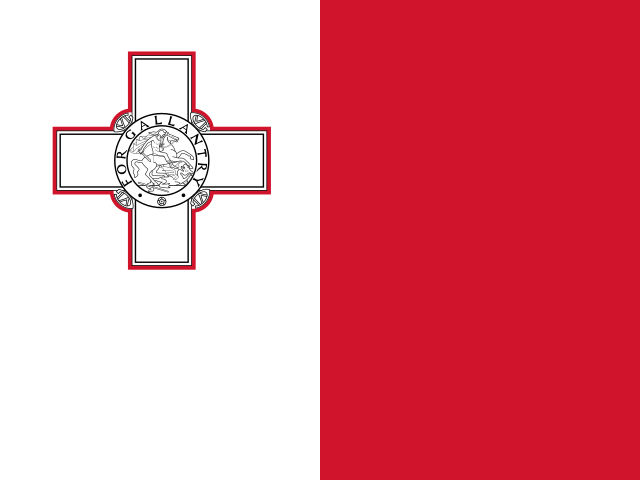
 Malta
About Malta (island)
Malta is the largest and most populated of the Maltese islands and serves as the country’s political, economic and cultural centre. The island contains major historic cities, prehistoric temple sites, and varied coastal landscapes.
Historic urban centres such as Valletta and Mdina offer dense streets, churches, museums and fortifications from the medieval and early-modern periods. Coastal areas include popular bays, cliffs, and archaeological sites such as Ħaġar Qim and the Blue Grotto, which are accessible on day trips from main towns.
Rural interiors and limestone countryside provide shorter walks and views across terraced fields and small villages, while the coastline supports swimming, diving and boat excursions. Cultural tourism and archaeological sites are frequently combined with seaside activities.
Malta has a long continuous human presence from the Neolithic through Phoenician, Roman, medieval and Knights-period rule to modern independence in the 20th century. This layered history produces an unusually dense concentration of monuments for a small island.
Situated in the central Mediterranean between Sicily and North Africa, Malta’s central island is compact and well connected by road and ports to other islands and to international transport hubs.
- Rich heritage: The island contains a high concentration of prehistoric and historical monuments including Neolithic temples and Knights-period fortifications, many accessible from main towns.
What to See#
- Valletta: Valletta, the national capital with dense historic streets, fortifications and major state buildings dating from the 16th century.
- Mdina: Mdina, the old fortified capital inland with narrow streets and medieval architecture preserved within its walls.
- Ħaġar Qim and Blue Grotto: A southern coastal cluster including the Ħaġar Qim and Mnajdra temple sites and the sea-facing Blue Grotto area known for boat trips and coastal views.
Nearby Attractions to Malta (island)


Best Time to Visit Malta (island)
Malta is best explored in spring or autumn for mild temperatures and manageable crowds.
Weather & Climate near Malta (island)
Malta's climate is classified as Hot-Summer Mediterranean - Hot-Summer Mediterranean climate with hot summers (peaking in August) and cool winters (coldest in February). Temperatures range from 9°C to 31°C. Moderate rainfall (552 mm/year) with a pronounced dry season.
| Month | Comfort | Temp | Feels | Rain | Sky | Humidity | Wind | UV | Daylight |
|---|---|---|---|---|---|---|---|---|---|
| January | Good | 9° - 16° | 13° | 90 mm | partly cloudy | 74% | 3.8 m/s | 0.4 low | 9.9h |
| February | Very Good | 9° - 16° | 13° | 60 mm | partly cloudy | 76% | 4.2 m/s | 0.6 moderate | 10.8h |
| March | Very Good | 10° - 17° | 14° | 40 mm | partly cloudy | 80% | 3.8 m/s | 1.0 high | 11.8h |
| April | Excellent | 12° - 19° | 16° | 24 mm | some cloud | 83% | 3.9 m/s | 1.5 high | 13.0h |
| May | Ideal | 15° - 24° | 19° | 10 mm | mostly sunny | 82% | 3.7 m/s | 1.9 very high | 13.9h |
| June | Ideal | 19° - 28° | 23° | 2 mm | clear | 80% | 3.4 m/s | 2.3 extreme | 14.4h |
| July | Ideal | 21° - 31° | 26° | 0 mm | clear | 77% | 3.4 m/s | 2.4 extreme | 14.1h |
| August | Ideal | 22° - 31° | 27° | 6 mm | clear | 75% | 3.3 m/s | 2.0 extreme | 13.3h |
| September | Ideal | 20° - 28° | 24° | 47 mm | mostly sunny | 75% | 3.3 m/s | 1.5 high | 12.3h |
| October | Excellent | 17° - 25° | 21° | 82 mm | some cloud | 76% | 3.1 m/s | 0.9 moderate | 11.2h |
| November | Very Good | 14° - 20° | 17° | 87 mm | partly cloudy | 74% | 3.2 m/s | 0.5 moderate | 10.2h |
| December | Good | 11° - 17° | 14° | 104 mm | partly cloudy | 73% | 3.8 m/s | 0.3 low | 9.7h |
How to Get to Malta (island)
Malta International Airport (MLA) near Luqa is the main entry point. From the airport, buses and taxis run to Valletta (approx. 20-30 minutes). The island is compact and drivable; public buses connect major towns and sites.