

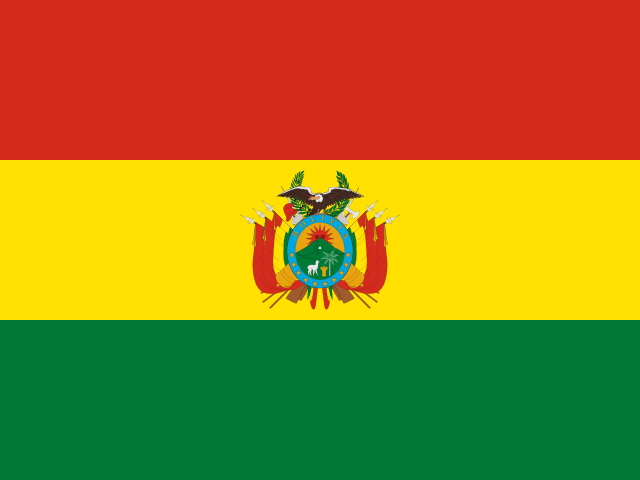
 Bolivia


 Explore
La Paz
The dramatic high-altitude city in a canyon, ringed by peaks.
Explore
La Paz
The dramatic high-altitude city in a canyon, ringed by peaks.
 Explore
Uyuni
Gateway to the surreal, mirror-like Salar de Uyuni salt flats.
Explore
Uyuni
Gateway to the surreal, mirror-like Salar de Uyuni salt flats.
 Explore
Sucre
The white-washed constitutional capital of colonial elegance.
Explore
Sucre
The white-washed constitutional capital of colonial elegance.
 Explore
Copacabana
A pilgrimage town on the shores of Lake Titicaca.
Explore
Copacabana
A pilgrimage town on the shores of Lake Titicaca.
 Explore
Potosí
A silver-mining city of colonial churches at dizzying altitude.
Explore
Potosí
A silver-mining city of colonial churches at dizzying altitude.
 Explore
Santa Cruz de la Sierra
Bolivia’s tropical lowland business hub.
Explore
Santa Cruz de la Sierra
Bolivia’s tropical lowland business hub.
Regions and Cities of Bolivia
- La Paz & AltiplanoHigh Andean capital, markets, cable cars and access to high‑altitude sites.
- La Paz: World’s highest administrative capital, markets and Mi Teleférico cable cars.
- Tiwanaku: Pre‑Columbian archaeological site west of La Paz.
- Lake Titicaca: High plateau lake with islands and Indigenous communities.
- Copacabana: Gateway town for Isla del Sol and Titicaca boat trips.
- Yungas Road: Famous mountain bike descent, dramatic cloud‑forest scenery.
- Salar de Uyuni & SouthwestOtherworldly salt flats, altiplano lagoons, geysers and desert scenery.
- Salar de Uyuni: World’s largest salt flat, mirror reflections after rains.
- Uyuni: Small town and gateway for multi‑day jeep tours.
- Laguna Colorada: Red lagoon famed for flamingos and dramatic colour.
- Tupiza: Red canyon landscapes and alternative base for southwest tours.
- Cerro Rico: Historic silver mine near Potosí, symbol of colonial extraction.
- Colonial South: Sucre & PotosíWhitewashed colonial streets, museums and mining history.
- Sucre: Colonial capital with pleasant plazas, museums and markets.
- Potosí: Historic silver‑mining city dominated by Cerro Rico.
- Historic City of Sucre: UNESCO area of Sucre with colonial architecture.
- Toro Toro National Park: Fossils, canyons and off‑the‑beaten‑track hiking.
- Lowlands & AmazonTropical Amazon, wildlife lodges and river towns in the east.
- Rurrenabaque: Main gateway for Madidi and pampas wildlife tours.
- Madidi National Park: Biodiversity hotspot ideal for jungle lodges and wildlife spotting.
- Trinidad, Beni: Regional hub for river travel and Llanos excursions.
- Santa Cruz de la Sierra: Bolivia’s largest city, gateway to the lowlands and missions.
- Eastern Valleys & MissionsSubtropical valleys, Jesuit missions and scenic colonial towns.
- Samaipata: Archaeological site and laid‑back mountain town.
- Jesuit Missions of the Chiquitos: UNESCO colonial mission towns with music festivals.
- Tarija: Wine region with pleasant climate and vineyards.
- Vallegrande: Historic valley town with rebel history and hiking.
Top Cities in Bolivia
- Known for: the Uyuni salt flat, Lake Titicaca, La Paz’s cable cars and the Amazon lowlands.
- First trip: La Paz, the north around Rurrenabaque and Madidi or the southwest Uyuni circuit. Allow 2-3 weeks.
- Best time: May-October (dry season, cold nights at altitude). November-March is rainy.
- Daily budget: $30-70.
- Visas: EU, UK, Canadian and Australian passports get 90 days visa-free a year; US citizens have also been visa-free since December 2025, when the visa requirement was dropped.
- Getting in: fly into La Paz or Santa Cruz de la Sierra.
- Safety: petty theft and express-kidnapping risk with unlicensed taxis; road blockades and altitude are the main hazards.
Currently it is the high season, with temperatures ranging from Altiplano: -2 to 16°C (28 to 61°F); Lowlands: 18 to 29°C (64 to 84°F).
September
September brings warming days and dry weather, with steady tourist numbers. Days warm across both the Altiplano and lowlands, but nights stay chilly at altitude so bring warm layers. Dry conditions mean clear skies, and popular highland sites like Uyuni and La Paz remain busy and rooms can fill, so expect higher rates and book ahead. Lowland wildlife trips, especially around Rurrenabaque, are comfortable now, and rural tracks are still widely passable.
Next 3 Months
October brings the first late-month rains; November turns wetter and more humid in the lowlands with increasing highland showers. By December the rainy season is underway across much of Bolivia, so build flexibility into overland plans.
Bolivia in the News
The U.S. warns Do Not Travel to Chapare Province in Bolivia because of crime and civil unrest, so travellers should avoid that area (A1). The advisory also says U.S. government employees need special authorization to travel to Bolivia and that petty crime is common in the country (A1). Updated 19 Oct.
Active alerts: 1 travel advisory. See all Bolivia alerts
Why Visit Bolivia
The salt flats outside Uyuni are a photographer’s playground: mirror reflections after rain, endless hexagonal crusts in dry season and the eerie cacti-dotted Incahuasi Island. Expect altitude, plan for cold nights, and consider a multi-day jeep circuit that includes coloured lagoons and flamingos.
Ride La Paz’s cable-car network for dramatic urban perspectives across the canyon city; it’s both transport and sightseeing. Combine a market visit and the Witches’ Market with a high neighbourhood like El Alto to understand Bolivian urban contrasts and get local street food.
Visit Copacabana and Isla del Sol on Titicaca to walk pre-Inca terraces, try local trout and follow coastal footpaths. The light and altitude give the lake a remote feel; boat trips and homestays on small islands make the landscape intimate rather than touristy.
From the Rurrenabaque gateway you can reach Madidi National Park for rainforest lodges, wildlife spotting and river excursions into true Amazon habitat. Choose a reputable guide - biodiversity is high and responsible operators make the difference between noisy tourist routes and real jungle discovery.
A visit to Potosí and Cerro Rico offers a stark window into colonial mining history and the contemporary lives of miners. Tours into the upper workings can be unsettling and basic; go with a local operator, ask questions, and be mindful of the health and safety realities miners face.
Who's Bolivia For?
Couples
Uyuni’s salt-flat sunsets and star reflections create surreal romantic moments for couples, with cozy boutique hotels on the altiplano for private nights.
Families
High altitude, long journeys and limited tourist infrastructure make Bolivia a challenging family destination; older kids might enjoy Uyuni or wildlife tours.
Backpackers
Classic backpacker appeal: cheap overland travel, vibrant mercados in La Paz and adventure circuits through Sucre and Uyuni attract nomadic explorers.
Digital Nomads
Reliable wifi is mostly limited to cities; La Paz and Santa Cruz have cafes, but remote-work options and conveniences lag behind digital hubs.
Foodies
Bolivian cuisine is hearty and local: salteñas, anticuchos and quinoa dishes are regional highlights best sampled in markets and family kitchens.
Adventure Seekers
From mountain-bike descents on Death Road to trekking Huayna Potosí and exploring Amazonian fringes, Bolivia is a top destination for serious adventurers.
Party Animals
La Paz and some university towns offer lively nightlife and DJ nights, but Bolivia isn’t a major party hotspot compared with regional rivals.
Nature Buffs
Madidi National Park, high Andean plateaus and Uyuni’s salt flats deliver dramatic, varied landscapes and exceptional wildlife possibilities.
- La Paz & Altiplano: Ride Mi Teleférico cable cars, wander Witches’ Market, day trips to Tiwanaku, and visit Isla del Sol on Lake Titicaca.
- Salar de Uyuni & Southwest: Take a multi‑day 4x4 tour across the Salar de Uyuni, see flamingos at Laguna Colorada, and photograph mirror reflections.
- Colonial South: Sucre & Potosí: Explore the Historic City of Sucre, tour Cerro Rico and mining museums in Potosí, and hike around Toro Toro National Park.
- Lowlands & Amazon: Base in Rurrenabaque for jungle lodges in Madidi National Park, boat the Beni river, and wildlife spotting in the pampas.
- Eastern Valleys & Missions: Visit the Jesuit Missions of the Chiquitos, stroll colonial streets in Samaipata and sample wines in Tarija.
Best Things to Do in Bolivia
 Area
Salar de Uyuni
World's largest salt flat in Bolivia
Area
Salar de Uyuni
World's largest salt flat in Bolivia
 Lake
Lake Titicaca
High-altitude lake straddling Bolivia and Peru
Lake
Lake Titicaca
High-altitude lake straddling Bolivia and Peru
 Area
Mi Teleférico
Urban cable-car transit network linking La Paz neighborhoods
Area
Mi Teleférico
Urban cable-car transit network linking La Paz neighborhoods
 Island
Isla del Sol
Island on Lake Titicaca with Inca archaeological sites
Island
Isla del Sol
Island on Lake Titicaca with Inca archaeological sites
 Historical Site
Historic City of Sucre
Colonial-era capital with whitewashed architecture and squares
Historical Site
Historic City of Sucre
Colonial-era capital with whitewashed architecture and squares
 Mountain
Cerro Rico
Historic Potosí mountain famed for silver mining
Mountain
Cerro Rico
Historic Potosí mountain famed for silver mining
 Park
Madidi National Park
Amazon park with exceptional biodiversity and indigenous communities
Park
Madidi National Park
Amazon park with exceptional biodiversity and indigenous communities
 Park
Noel Kempff Mercado National Park
Bolivian park protecting Amazon and cerrado ecosystems
Park
Noel Kempff Mercado National Park
Bolivian park protecting Amazon and cerrado ecosystems
Bolivia Bucket List
Don't Miss
Salar de Uyuni - Salar de Uyuni’s vast salt flat offers mirror reflections after rains and surreal desert landscapes.
Eduardo Avaroa Andean Fauna National Reserve - Eduardo Avaroa Reserve features neon Laguna Colorada, geysers, and high-altitude flamingo populations on the altiplano.
La Paz - La Paz’s precipitous cityscape, Witches’ Market, and nearby Valle de la Luna reveal Bolivia’s urban-altiplano contrasts.
Lake Titicaca (Copacabana and Isla del Sol) - Visit Copacabana and Isla del Sol on Lake Titicaca for indigenous shrines, terraced landscapes, and boat rides.
Sucre - Sucre’s whitewashed colonial streets, museums, and temperate climate make it Bolivia’s architectural and cultural heart.
Potosí and Cerro Rico - Potosí’s Cerro Rico and its silver-mine history offer harsh historical insight through mine tours.
Hidden Gems
Toro Toro National Park - Toro Toro hides dinosaur footprints, deep canyons, and remote caves away from typical tourist tracks.
Sajama National Park - Sajama National Park features Bolivia’s highest peak, hot springs, and Aymara villages under vast skies.
Samaipata and El Fuerte - Samaipata’s pre-Columbian El Fuerte sits among laid-back mountain town life and surrounding cloud forests.
Jesuit Missions of Chiquitos - The UNESCO Baroque Jesuit missions in Chiquitos combine ornate churches with seasonal cultural festivals in small towns.
Rurrenabaque and the Pampas - Rurrenabaque serves as the gateway to Madidi and Beni Pampas wildlife river safaris and jungle lodges.
Amboró National Park - Amboró National Park merges Amazon and Andean ecosystems, excellent for biodiversity and birding off Santa Cruz.
Road Trips
Southwest Altiplano Circuit (Uyuni-Eduardo Avaroa) - Southwest Altiplano Circuit (Uyuni-Eduardo Avaroa) - multi-day 4x4 route across salt flats, deserts, lagoons; roughly 300-500 kilometers.
Yungas Road (La Paz-Coroico) - Yungas Road (La Paz-Coroico) - approximately 64 kilometers of steep descent, famous for mountain-biking adventures.
Altiplano loop (La Paz-Copacabana-Isla del Sol-Uyuni) - Altiplano loop (La Paz-Copacabana-Isla del Sol-Uyuni) - high-altitude cultural and scenic route over several days.
Santa Cruz-Samaipata road - Santa Cruz-Samaipata road - ascending from tropical plains into cooler mountain town and archaeological El Fuerte.
Best Time to Visit Bolivia
High Season
Altiplano: -8 to 16°C / 18 to 61°F; Lowlands: 15 to 29°C / 59 to 84°F
Dry months ideal for visiting high-altitude destinations like La Paz, Uyuni and Lake Titicaca - clear skies and good trail conditions prevail. This is the busiest period for highland tourism and accommodations can fill up for popular routes.
Shoulder Season
Altiplano: -2 to 17°C / 28 to 63°F; Lowlands: 18 to 30°C / 64 to 86°F
Transition months with improving or tapering rainfall; landscapes are green after rains and travel conditions are generally good. These months offer a balance of lower crowds and favorable weather for a range of activities.
Low Season
Altiplano: -2 to 15°C / 28 to 59°F; Lowlands: 20 to 31°C / 68 to 88°F
Wet season for much of the country with heavy afternoon rains in the Amazon and lowlands and disrupted access to some remote highland roads. The rainy window can bring spectacular jungle growth and, in some areas like the Salar de Uyuni, seasonal flooding that creates mirror-like reflections.
Bar height shows how good the month is; numbers are the average daytime high. Tap a month for its guide.
Altiplano & Lake Titicaca
La Paz, El Alto, Uyuni, Potosí
High, wind-swept plateau and cold Andean altitudes dominated by La Paz, El Alto, Potosí and the Salar de Uyuni. Strong seasonal contrast: a dry, sunny winter (May-September) with very cold nights and a wet, thunderstorm‑prone summer (November-March) that can flood roads and create the famed Uyuni mirror. Altitude sickness is a year‑round concern and warm layers plus sun protection are essential.
Inter‑Andean Valleys
Cochabamba, Sucre, Tarija
Lower-elevation, milder valleys that run between Bolivia’s high ridges-home to Cochabamba’s springlike climate, the colonial streets of Sucre, and Tarija’s wine country. These areas have a clear wet summer (November-March) with afternoon storms and a long, dry, comfortable winter (May-September). Valleys are generally more forgiving for altitude than the Altiplano, but late-day rains and muddy secondary roads can affect plans in the wet season.
Yungas & Cloud Forest Slopes
Coroico, La Cumbre, Caranavi
The steep, biodiverse eastern flanks of the Andes where forest and cloud meet-famous for dramatic rivers, birdlife, coffee farms and the old Yungas Road. A strong wet season runs November-March with heavy tropical rain and landslide risk; the June-September dry spell is the most reliable period for hiking and road travel. Conditions change quickly with elevation; waterproofs and insect repellent are musts in the wet months.
Amazon Basin & Beni Pampas
Rurrenabaque, Trinidad, Guayaramerín
Lowland Amazonian basin and seasonally flooded Beni pampas with a classic tropical schedule: a marked wet season (December-March) with widespread inundation and a long dry season (May-October) when rivers fall and walking safaris or hides are possible. Boat logistics dominate in the wet months; dry months are best for overland access and concentrated wildlife viewing.
Santa Cruz Lowlands & Gran Chaco
Santa Cruz de la Sierra, Sama Valley, Yacuíba
Warm tropical plains and seasonally wet lowlands around Santa Cruz, extending south into the dry, hot Gran Chaco. Heavy summer rains (November-March) bring flooding and boat‑based wildlife viewing; a long, pleasant dry season (May-September) makes overland travel easy. Expect very hot pre‑monsoon months (September-October) and bring sun protection, insect repellent and flexible travel plans in the rainy season.

Many Western nationalities travel visa free for around 60-90 days; check your embassy. Hostels and budget guesthouses are widespread in La Paz, Sucre and Santa Cruz; basic salt‑hotel and lodge options exist around Uyuni and the Amazon, so book Uyuni and Madidi lodges well ahead for May-September high season.
Bolivia Itineraries
1 Week Bolivia Itinerary
Acclimatize in La Paz, experience cable car views, take a multi-day Uyuni salt-flats tour, then visit Potosí and Sucre for colonial architecture and mining history within a compact week.
- Day 1 - Arrive La Paz; acclimatize and explore Plaza Murillo.
- Day 2 - Valley of the Moon and cable car panoramas.
- Day 3-5 - Uyuni 3-day salt flats tour from Uyuni town.
- Day 6 - Travel to Potosí; visit Cerro Rico and mint house.
- Day 7 - Bus to Sucre; colonial city strolls and markets.
2 Weeks Bolivia Itinerary
Combine La Paz, a multi-day Uyuni salt flats expedition, Potosí's mining history, Sucre's colonial charm, and Lake Titicaca islands over two weeks for highland landscapes and cultural depth.
- Day 1-2 - Arrive La Paz and explore city highlights.
- Day 3-5 - Uyuni salt flats 3-day tour including Isla Incahuasi.
- Day 6-7 - Potosí: Cerro Rico and colonial sites.
- Day 8-9 - Sucre colonial center and local museums.
- Day 10-11 - Lake Titicaca: Copacabana and Isla del Sol visit.
- Day 12-14 - Return to La Paz for markets and departure.
3-4 Weeks Bolivia Itinerary
Travel from La Paz to Sucre and Potosí, spend extra days on an extended Uyuni circuit, explore Titicaca islands, and add lowland jungle or Santa Cruz region highlights across several weeks.
- Day 1-3 - La Paz acclimatization, markets, and cable car rides.
- Day 4-6 - Fly or bus to Sucre for colonial exploration.
- Day 7-9 - Potosí mining tours and historical sites.
- Day 10-13 - Uyuni extended salt-flat circuit including remote geysers and hot springs.
- Day 14-17 - Lake Titicaca longer stay with Isla del Sol homestays.
- Day 18-21 - Head to Santa Cruz region for lowland contrast.
- Day 22-25 - Optional Amazon/Rurrenabaque jungle excursions and wildlife tours.
- Day 26-28 - Return to La Paz for final shopping and departure.
Where to Stay in Bolivia
Hotels & Resorts
$30-100 mid-range · $80-200 Uyuni salt hotels
La Paz and Sucre have a range of comfortable hotels suitable for altitude acclimatization; Uyuni has specialized salt‑hotel options near the Salar. Book Uyuni stays well before high season salt-flats tours.
Hostels & Guesthouses
$5-25 / night
Hostels are prevalent in La Paz, Sucre and Potosí, popular with backpackers and tour groups. Many include tour desks for Uyuni salt-flat trips and Amazon lodge transfers from Rurrenabaque.
Eco-Lodges & Amazon Stays
$80-220 / night
Madidi and lowland jungle lodges operate from Rurrenabaque with guided wildlife and river excursions. These lodges usually include full-board and boat transfers; book with reputable operators for safety and logistics.
Homestays & Rural Lodgings
$20-70 / night
Andean villages around Sajama and Lake Titicaca offer homestays and campesino lodging for cultural exchange and high-altitude treks. Hosts provide meals and local guiding, but expect basic facilities.
Long-Stay Rentals
$200-700 / month
Longer stays in Cochabamba, Santa Cruz or Sucre are practical and affordable for remote work. Furnished monthly rentals are available; utilities and internet quality vary by building and city.
- Citizens of the EU, UK, US, Canada, Australia and most of South America can stay up to 90 days a year without a visa. Officers often stamp only 30 days, but you may stay the full 90 without a new stamp.
- A minority of nationalities must get a visa before travel; check the Bolivian consulate for yours.
- Passports need 6 months’ validity from arrival and two blank pages, and immigration may ask for an onward ticket and a booking for your first night. Make sure you get an entry stamp: leaving without one means a fine. At the Argentine border Bolivia no longer stamps passports, so register with Argentine immigration as instructed.
- Yellow fever vaccination is often required for travelers coming from or through yellow fever areas (Brazil, Peru). Permit and entry rules can change-confirm with the nearest Bolivian consulate before travel.
How to Get to Bolivia
Bolivia’s principal international gateways are El Alto / La Paz (LPB) and Viru Viru, Santa Cruz (VVI); many international itineraries connect via Lima (LIM), São Paulo (GRU) or Santiago (SCL). Overland entry from neighbouring countries is common for regional travel but can be slow at some borders.
Border Crossings
Peru-Bolivia land crossings are heavily used by locals and tourists, especially around Lake Titicaca and the Altiplano. Formalities are standard international immigration and customs checks; many South American nationals can cross with national ID under regional agreements but other visitors must present a passport and, if applicable, a visa. Overland buses are frequent on main routes (e.g., Puno-La Paz) and small boat services operate across Lake Titicaca.
Crossings
- Desaguadero (Peru) - Desaguadero (Bolivia) -
- Kasani (Bolivia) - Yunguyo / Copacabana access (Peru) -
Bolivia-Argentina crossings span the high Andean plateau and lowland southeastern plains and are used by large volumes of bus and truck traffic. Citizens of Mercosur/associated states often cross with national ID, while other nationalities will need passports and may require visas - check embassy guidance. Common crossings have immigration and customs offices with infrastructure for long‑distance buses.
Crossings
- Villazón (Bolivia) - La Quiaca (Argentina) -
- Yacuiba (Bolivia) - Salvador Mazza / Profesor Salvador Mazza (Argentina) -
Bolivia-Chile crossings are high‑altitude passes linking Bolivia’s Altiplano with northern Chile. The main international checkpoints are on major trans‑Andean highways serving freight and tourist traffic to Arica and Iquique. Chilean immigration is strict; many travelers require passports and, for some nationalities, visas. Weather can affect high‑mountain passes-plan for delays.
Crossings
- Tambo Quemado (Bolivia) - Chungará / route to Arica (Chile) -
Bolivia-Brazil borders are long and include river crossings in the north and road checkpoints in the east. Crossings are used by commerce and local passenger ferries; Brazilian and Bolivian immigration authorities operate formal control points. Visa requirements vary by nationality - many South American nationals have simplified entry rules, but others will need passports and possibly visas.
Crossings
- Guayaramerín (Bolivia) - Guajará‑Mirim (Brazil) -
How to Get Around Bolivia
Domestic air travel is the fastest way to cover Bolivia’s large distances. Major local carriers include Boliviana de Aviación (BOA) and EcoJet, linking La Paz, Santa Cruz, Cochabamba, Sucre, Uyuni, Rurrenabaque and other destinations. Flying La Paz-Rurrenabaque (about 40 minutes) replaces a long, rough road trip, but flights are cut in heavy rain.
Typical one‑way fares within Bolivia range from USD $60-$250 depending on route and booking time.
Long‑distance buses are the backbone of land travel; they serve routes like La Paz-Uyuni, La Paz-Potosí and Santa Cruz-Sucre. Tickets can be booked via platforms such as Busbud or at local terminals.
Fares vary widely: expect USD $8-$50 for most intercity journeys based on distance and service class. Buy tickets at the terminal office of the company itself, not from touts, and pay a little more for a bus cama (fully reclining seat) on overnight routes. Road blockades and recurring fuel shortages can cancel or strand buses for days, so keep spare days in your plan and check news before long trips.
Bolivia has limited passenger rail services; some scenic or regional rail links exist but are not a comprehensive transport network. Rail is more useful for specific routes or tourist excursions than for routine travel between major cities.
If planning rail travel, check current seasonal schedules and tourist operators in advance.
Taxis and informal minibuses (‘trufis’ or combis) are common in cities. In La Paz and Santa Cruz, negotiate fares or use radio taxis recommended by hotels; ride‑hailing apps have limited availability compared with larger countries.
Short city trips are inexpensive (a few USD); always agree a price for longer journeys outside metropolitan areas. Do not flag down unmarked taxis at night or at bus terminals and border towns, where express kidnappings of tourists happen; call a radio taxi or use an app such as Uber or inDrive in La Paz and Santa Cruz. In La Paz the Mi Teleférico cable cars are the cheapest and safest way to cross the city by day.
Lake Titicaca boat services run from Copacabana to Isla del Sol and nearby islands; local boat operators and tour companies operate scheduled and charter services.
Expect short boat fares roughly USD $5-$25 depending on distance and whether you join a group tour or charter a private boat.
Self‑drive is feasible in parts of Bolivia but road conditions vary; high‑altitude passes and unpaved roads are common in rural areas. For remote destinations like Uyuni, many travelers join guided 4x4 tours that include transport, driver and accommodation.
Car rentals start around USD $40-$80 per day for basic vehicles; guided multi‑day tours to places such as the Uyuni salt flats typically cost more but include logistics and local knowledge.
Expect to spend $20-50/day in small towns and $30-80/day for comfortable travel; cash rules outside major cities, cards work in larger hotels and restaurants, and ATMs are concentrated in urban centres.
How Much Does Bolivia Cost?
Typical daily spend $20-50 in small towns, $30-80 for a comfortable trip; La Paz, Uyuni tours and Rurrenabaque lodges are the priciest, rural lowlands and bus travel are cheapest.
Daily budgets
Typical prices
- Hostel dorm bed: 30-80 BOB
- Basic guesthouse room: 80-200 BOB
- Mid-range hotel: 220-500 BOB
- Upscale hotel: 700-1,400 BOB
- Market or street-stall meal: 10-25 BOB
- Bottle of local beer: 12-20 BOB
- Organised tour or activity: 600-2,200 BOB
- Local bus ride: 2-6 BOB
For current prices on hundreds of everyday items, see Numbeo’s Bolivia cost of living, a crowd-sourced database that is updated often.
Ways to save
- **Use buses for long distances**: Long‑distance buses are slow but vastly cheaper than flights; night buses save on accommodation.
- **Carry cash outside cities**: Many towns and rural operators are cash only, so withdraw in major centres before heading out.
- **Combine services**: Book Uyuni tours and jungle lodges through hostel desks or local operators for group discounts.
Full trip budgets are in Bolivia Itineraries.
Cash, Cards & Tipping in Bolivia
Bolivia’s currency is the boliviano (BOB, Bs). From 2023 a dollar shortage created a street rate far better than the fixed official one, so visitors were told to bring cash dollars and avoid cards. On 29 June 2026 the official rate was scrapped and the boliviano now floats close to the market rate (about Bs 9.7 to the dollar at launch), so card payments and ATM withdrawals no longer carry that penalty; compare rates at a casa de cambio before changing large sums. Cash is still king outside major hotels and restaurants; in cities cards are increasingly accepted but many markets, buses and remote areas are cash-only and ATMs are concentrated in larger towns.
- Tipping: Tipping isn't obligatory; 10% service can be added in restaurants-otherwise a small tip for guides, drivers and porters is appreciated.
- Cards & Cash: Visa and Mastercard are commonly accepted at hotels, larger restaurants and shops in major cities; many smaller businesses and markets require cash.
- ATMs & Mobile Payments: ATMs are available in cities like La Paz, Sucre and Santa Cruz but scarce in rural areas; expect ATM fees from local banks and your issuer. Carry sufficient small bills when traveling off the beaten path; Bs 100 and 200 notes are hard to break in shops and taxis. Bring some clean, undamaged US dollar notes as a backup, as ATMs in small towns can run dry.
Respect Indigenous customs and dress modestly in rural highland communities. Carry a small gift or polite greeting when visiting traditional markets.
Customs & Etiquette in Bolivia
Respect for Indigenous traditions is central to daily life, from market bargaining to festival dress. Most Bolivians are forgiving if visitors show polite interest and follow basic courtesies like greeting with a handshake and using formal titles where appropriate.
Spanish Language Basics
Spanish is the dominant language in urban and official settings, while Quechua, Aymara and other Indigenous languages remain widely spoken and constitutionally recognized across regions.
Useful Phrases
- Hello - Hola OH-lah
- Good morning - Buenos días BWEH-nos DEE-as
- How are you? (informal) - ¿Cómo estás? KOH-moh ehs-TAHS
- Where is the bathroom? - ¿Dónde está el baño? DOHN-deh ehs-TAH el BAH-nyoh
- How much does it cost? - ¿Cuánto cuesta? KWAHN-toh KWEHS-tah
- One ticket, please - Una entrada, por favor OO-nah ehn-TRAH-dah por fah-VOHR
- The bill, please - La cuenta, por favor lah KWEHN-tah por fah-VOHR
- Enjoy your meal - Buen provecho bwen pro-VEH-cho
- Do you have vegetarian food? - ¿Tiene comida vegetariana? TYEH-neh koh-MEE-dah veh-heh-tah-REE-ah-nah
- Help! - ¡Auxilio! owk-SEE-lyoh
- Call an ambulance - Llame a una ambulancia YAH-meh ah OO-nah ahm-bu-LAHN-syah
- I need a doctor - Necesito un médico neh-seh-SEE-toh oon MEH-dee-koh
Staying Connected in Bolivia
Bolivia’s connectivity is strongest in major cities, with mobile networks expanding into rural regions but variable broadband quality in remote highlands and jungle. Mobile data is the most reliable way to stay connected outside urban centers.
Tourist SIM Cards
Mobile Providers
Wi‑Fi & Coworking
La Paz, Cochabamba and Santa Cruz have coworking spaces and hotel Wi‑Fi, but speeds can be inconsistent. For remote regions (altiplano and Amazon basin), mobile data is usually the most reliable option.
Useful Apps for Bolivia
- Google Maps - Navigation and place information across Bolivia.
- Google Translate - Translate Spanish and indigenous-language words.
- Waze - Helpful for driving routes and traffic in Bolivian cities.
Emergency Numbers & Electricity
- Electricity: 230V, 50 Hz; plug types A, B, C.
Altitude illness is the main health risk in Bolivia - acclimatize, ascend slowly and consider acetazolamide after medical advice; also avoid untreated water, watch for traveller’s diarrhea and carry insect repellent for lowland trips.
Is Bolivia Safe?
Mostly safe for travellers who take basic precautions; the main risks are high-altitude travel, mountain roads and periodic protests that can disrupt movement.
Crime & Scams
Petty crime such as pickpocketing and bag-snatching is common in cities, markets and on buses; use a money belt, split cash and watch belongings in crowded places. Scams target tourists around transport hubs and attractions; book tours with reputable operators and confirm fares in advance. Thieves posing as plain-clothes police may ask to check your passport or money, often with an accomplice posing as a fellow tourist; real police will not search you in the street or put you in an unmarked car, so offer to go to a police station instead.
Road Safety
Mountain roads are narrow, winding and can be unpaved with landslide or rockfall risk; long-distance buses may be overcrowded and safety standards vary. Avoid travel at night on rural routes, choose reputable bus companies or fly between distant cities, and expect slow journeys in poor weather. On multi-day Salar de Uyuni jeep tours, crashes and drunk drivers have killed visitors: pick an operator with recent reviews, check that the vehicle has seat belts and that the driver will not drink, and carry warm clothes for nights at 4,000 m and above. For mountain biking the Yungas Road (Death Road), choose a company with well-maintained bikes, guides with first-aid kits and a support vehicle.
Natural Hazards & Protests
Heavy rain can cause flooding and landslides in the rainy season; additionally Bolivia frequently has strikes, roadblocks and political protests that can block roads and halt services. In 2026, roadblocks over fuel subsidies and prices paralysed parts of the country for weeks, and the government declared a state of emergency in June that gives police and the army extra powers, including detaining people for up to 8 hours without charge. Never try to cross a blockade by car or motorbike. Monitor local news, avoid demonstrations, and have contingency plans for delays or alternate routes.
Drinking Water
Tap water is unsafe outside major hotels and some city systems; drink bottled or boiled water, avoid ice and raw salads in lower-standard eateries, and use hand sanitizer to reduce diarrheal illness risk.
Laws to Know
Bolivia has strict drug laws: trafficking carries a minimum of 8 years in harsh prisons, and departing passengers’ bags are searched, often with sniffer dogs. Coca leaves and coca tea are legal in Bolivia but illegal to take into most other countries. Carry ID and respect local customs, especially in Indigenous communities. Police procedures differ from home - cooperate calmly and contact your embassy if detained.
Nightlife & Personal Safety
Stick to well-lit busy areas, avoid unlicensed taxis late at night and do not accept drinks from strangers; petty robbery and occasional muggings can occur after dark.
Areas to Avoid
The UK advises against all but essential travel to the Chapare region of Cochabamba department, including Villa Tunari and highways 4 and 24 through it, and the US says do not travel there; also heed local State of Emergency updates that may affect mobility. If an official advisory is in place, avoid affected departments and follow embassy instructions.
Staying Healthy in Bolivia
Staying healthy is straightforward with basic precautions; altitude sickness, traveler’s diarrhea and limited rural medical services are the main concerns.
Food & Water
Traveller’s diarrhea is common - drink bottled or boiled water and avoid uncooked salads and unpeeled fruit from street vendors. Use hand sanitizer, eat at busy reputable places and carry oral rehydration salts for mild dehydration.
Mosquito-Borne Illness
Dengue and other mosquito-borne diseases occur in lowland and tropical areas; use insect repellent, long sleeves, and a treated mosquito net when sleeping in rural Amazon or Pampas regions.
Vaccinations & Rabies
Ensure routine vaccines are up to date and consider hepatitis A and typhoid for longer stays; rabies is present - seek preexposure vaccination if you will have prolonged animal contact or remote travel. Carry vaccination records and know where regional travel clinics are.
Heat, Sun & Altitude
Most attractions are high altitude - ascend gradually, rest 48 hours, hydrate and consider acetazolamide after medical advice to prevent altitude sickness; lowland areas can be hot and humid with strong sun, so drink fluids and use sun protection.
Air Quality
Air pollution can be an issue in some cities, especially during dry season; people with respiratory conditions should carry medication and check local air-quality alerts.
Medical Care & Insurance
Medical facilities are limited outside La Paz and Santa Cruz - carry a basic first-aid kit, any regular medicines and evacuation-capable travel insurance. In serious cases air evacuation to larger cities or neighboring countries may be necessary.
Daily life is shaped by Aymara and Quechua traditions, Catholic festivals, busy markets and layered colonial history; public displays of respect for elders and traditional dress are common in the highlands.
History & Culture of Bolivia
Bolivia is a highland-centered country with deep Indigenous roots, dramatic Andean landscapes and a strong tradition of weaving, music and ritual. Travelers will find distinct regional cultures from the Altiplano to the Amazon lowlands and a public life shaped by festivals and markets.
History of Bolivia
Bolivia’s cultural landscape was shaped by ancient Andean civilizations, Spanish colonial exploitation centered on silver mining, and a long trajectory of social and political movements. Travelers will encounter archaeological remains (Tiwanaku), colonial cities (Potosí, Sucre), and living Indigenous traditions in markets and festivals. The 20th century brought major social change - the 1952 National Revolution reformed land and suffrage, while the early 21st century saw increased political representation for Indigenous peoples, culminating in a 2009 constitution that recognizes Bolivia as a plurinational state.
Notable Figures
- Simón Bolívar - Military and political leader whose name the country bears for his role in independence movements across South America.
- Juana Azurduy - A mestiza military leader who fought in the independence wars and is commemorated for her role in the struggles against Spanish rule.
- Túpac Katari - An 18th‑century Indigenous rebel leader remembered for his resistance against colonial authorities in the Andean highlands.
- Evo Morales - A trade-union leader and politician who served as Bolivia’s president and emphasized Indigenous rights and resource nationalization.
Key Dates
- c. 500-1000Tiwanaku civilization flourishes near Lake Titicaca and leaves monumental stone architecture still visible today.
- c. 1470sInca expansion incorporates the highland regions into Tawantinsuyu (the Inca Empire).
- 1530sSpanish conquest leads to colonial exploitation and the founding of important mining centers, notably Potosí.
- 1825Bolivia declares independence and is named after Simón Bolívar.
- 1952The National Revolution introduces land reform, nationalizes mines and expands voting rights.
- 2006Evo Morales becomes the country’s first president of Indigenous origin, marking a major political shift.
- 2009A new constitution recognizes Bolivia as a plurinational state and expands Indigenous rights.
Bolivian cuisine varies by altitude and region, with hearty, starchy dishes in the highlands and more tropical ingredients in lowland areas; indigenous ingredients like quinoa and potatoes are central.
Eating Out in Bolivia
The main meal is lunch, and the cheapest way to eat well is the set lunch (almuerzo) of soup, a main with rice and potatoes, and a drink, served from about 12:00 to 14:00 for a few dollars in small restaurants and market food halls. Evenings are quieter; many local places close by 21:00 and on Sundays.
- Mid-morning snack: salteñas, baked pastries filled with juicy meat stew, are sold until about 11:00 and gone by lunch. Bite the top off and drink the juice first, or it ends up on your shirt.
- Markets: the upstairs comedores in city markets serve hearty plates and fresh juices all day. In La Paz and Sucre try api, a hot purple-corn drink, with a cheese-filled pastel at breakfast.
- Regional food: Cochabamba calls itself the food capital: look for silpancho (thin breaded beef on rice with a fried egg) and pique macho (a mountain of beef, sausage and chips to share). Around Lake Titicaca and Copacabana, trout is the dish. In Santa Cruz de la Sierra lowland food takes over, such as majadito (rice with dried beef and fried egg) and cassava-cheese bread. Sucre is known for chocolate.
- Altitude: eat lightly and go easy on alcohol for the first days above 3,500 m; many people swear by mate de coca, the coca-leaf tea offered in most hotels.
- Water and salads: drink bottled or boiled water and be wary of salads and juices made with tap water in cheap places.
- Paying: ask for la cuenta. Service is not usually added in local places; leaving small change is normal, and about 10% in tourist restaurants.
- Vegetarians: La Paz, Sucre and Samaipata have vegetarian cafés; elsewhere ask for the set lunch sin carne, though soups usually contain meat stock.
Responsible Travel in Bolivia
Bolivia’s mix of high‑Andean and Amazon ecosystems plus strong indigenous cultures requires respectful, low‑impact travel-acclimatise, use licensed operators, and support community enterprises.
- Acclimatize to Altitude Safely: If visiting La Paz, Potosí or the Uyuni region, spend 24-48 hours acclimatising, drink plenty of fluids and avoid heavy exertion on your first day to reduce altitude sickness risks.
- Respect Indigenous Customs: Bolivia is home to Aymara, Quechua and Guarani communities-ask before photographing people and ceremonies, accept local gift‑exchange protocols, and consider community‑run tours on Isla del Sol or rural villages.
- Low‑Impact Salar de Uyuni Visits: Choose experienced, licensed operators for the Salt Flats and avoid driving onto wet crust or fragile fringes; pack out all waste and follow operator guidance to protect the flat’s surface and local fauna.
- Protect Amazon & High‑Andean Parks: When visiting Madidi and other protected areas use licensed guides and lodges to benefit conservation; check rules and permits via Bolivia’s protected areas authority SERNAP.
- Buy Ethical Handicrafts: Purchase textiles and crafts directly from community cooperatives and reject items made from protected wildlife or cultural patrimony to ensure fair returns and legal trade.
Expats are often NGO workers, teachers or retirees drawn by low costs and culture; temporary and permanent residence options exist through Migración Bolivia and work permits are required for formal employment.
Living in Bolivia
Long-term life in Bolivia suits people looking for low living costs, distinct cultures, and outdoor access. Expats are often volunteers, NGO staff, teachers, or retirees seeking affordable living and cultural immersion. Prepare for high-altitude living in the Andean cities and variability in public services outside main urban centers.
Long-Term Visas: Temporary and permanent residence available for work, study, family, and investment through Migración Bolivia.
Working There: Work permits required for formal employment, Spanish language skills often essential for job opportunities.
Cost of Living: One of South America’s cheapest countries; expect lower rents, food, and transport costs than neighbors.
Health & Wellness: Private healthcare quality good in main cities; public system limited outside urban centers, travel insurance advised.
Banking & Finance: Currency is the Boliviano (BOB); cash common, international banking access more limited than in bigger economies.
Taxes: Residents pay Bolivian income tax on local-sourced income; VAT applies to many goods and services.
Popular Places to Live in Bolivia
Choosing where to live in Bolivia means balancing altitude, climate, and access to services. For jobs and flights pick Santa Cruz, for colonial charm and student life choose Sucre, and for Andean culture and markets consider La Paz. Lakeside Copacabana suits those wanting slower, scenic living by Lake Titicaca.
- Santa Cruz de la Sierra - Economic hub with better flights and services, suits nomads wanting lower altitude and business amenities.
- Sucre - Colonial capital, students and expats, relaxed pace, tradeoff fewer international connections and smaller job market.
- La Paz - High-altitude metropolis with vibrant markets and culture, tradeoff altitude-related health considerations and colder climate.
- Copacabana - Lake Titicaca town, scenic and spiritual vibe, ideal for slow stays, tradeoff limited connectivity and seasonal tourism.
Bolivia offers standard temporary and permanent residence routes (work, study, family), with local immigration offices handling applications.
- Temporary residence permits - Available for work, study, or family reunification, processing through Dirección General de Migración.
- Permanent residency routes - Available after meeting residency requirements, often following temporary residency periods or marriage.
- Student visas & volunteer programs - Common routes for longer stays, used by language students and NGO workers.
- Local immigration advisers - Useful for paperwork and translations, commonly used by foreigners navigating residency processes.
Bolivia is one of South America’s cheapest countries to live in; cities are affordable and smaller towns much cheaper.
- La Paz - Higher altitude city, more services, modest budgets common, monthly costs often $700-1,200.
- Sucre - Colonial city popular with long‑stay foreigners, affordable housing and lower day‑to‑day costs.
- Santa Cruz de la Sierra - Economic hub, warmer climate, slightly higher prices but still inexpensive by global standards.
- Small towns & rural areas - Very low costs, basic services, popular for voluntourism and low-budget travelers.
Private clinics in big cities provide reliable care; public services are limited in rural Bolivia, so insurance and evacuation plans are prudent.
- Private clinics in major cities - Good-quality private care available in La Paz, Santa Cruz and Sucre, lower cost than North America.
- Public healthcare system - Available but limited in coverage and facilities outside major cities, travel insurance recommended.
- Rental market & local agents - Long‑term rentals common through local agents and classifieds, furnished options vary by city.
- Medical evacuation options - Consider medevac insurance for serious emergencies from high-altitude or remote regions.
Digital Nomads in Bolivia
Bolivia’s remote‑work scene is small and dispersed; nomads who choose Bolivia value low costs, culture, and access to nature over large-scale infrastructure. Most remote workers base in Santa Cruz, Sucre, or La Paz where connectivity and coworking options exist, while rural and high-altitude areas are best for short stays and adventure travel.
Nomad Visa: No dedicated nomad visa - common workaround is tourist visa or apply for temporary residence for work/study.
Long Term Rentals: Long-term rentals are cheap: 1BR city apartments often $250-500/month depending on city and neighbourhood.
Internet: Internet varies; Entel, Tigo and Viva provide 4G in cities, fixed broadband available in urban centres.
Monthly Cost: Monthly cost: budget nomads can live on $600-900/month in many cities; more comfort raises costs modestly.
Coworking: Coworking exists in Santa Cruz and La Paz, smaller spaces and day passes common, not a large commercial scene.
Fitness & Wellness: Gyms and yoga studios available in main cities, wellness options limited in rural or high-altitude areas.
Community: Small international nomad community, concentrated in Santa Cruz and Sucre, active online groups for meetups.
Time Zone: Bolivia Time (BOT) is UTC−4 year-round, no daylight saving time, useful overlap with North and South America mornings.
Popular Nomad Hubs in Bolivia
Nomads and long‑stayers in Bolivia split between the cooler Andean cities and the warmer lowland economic hub. Santa Cruz offers lower altitude, business services and better air connections; Sucre attracts students and a small expat community; La Paz is for those who can handle altitude and want city infrastructure.
- Santa Cruz de la Sierra - Lowland economic hub, business and better flights, suits nomads craving services and warmer climate.
- Sucre - Colonial city, students and long-term foreigners, relaxed pace, tradeoff fewer international connections.
- La Paz - High-altitude administrative centre, vibrant culture and markets, tradeoff altitude effects and colder weather.
- Copacabana (Lake Titicaca) - Lakeside town, spiritual and tourist scene, ideal for slow-living nomads, tradeoff limited connectivity and services.
Bolivia has no dedicated digital‑nomad visa; nomads generally rely on tourist stays or formal temporary residency routes.
- Tourist visas and extensions - Many nationalities enter on tourist status, durations vary, extensions possible through Migración.
- Temporary residence - Used for work, study or family reunification; requires local paperwork and sometimes employer sponsorship.
- Local immigration office (Migración Bolivia) - Primary authority for visa processing, applications and renewals occur here.
- Legal advisers and gestoría - Local lawyers assist with documentation, translations, and navigating residency procedures.
Connectivity is adequate in major cities, with mobile 4G and city broadband; expect slower or unreliable internet in rural areas.
- Mobile providers (Entel, Tigo, Viva) - 4G mobile coverage good in cities, data packages affordable, rural coverage limited.
- Fixed broadband in cities - Fiber and ADSL available in La Paz, Santa Cruz, and Sucre, speeds adequate for remote work in urban areas.
- Local cafés and co‑working spots - City cafés offer Wi‑Fi; small coworking spaces exist in Santa Cruz and La Paz.
- Back‑up options - Mobile hotspots and redundant SIMs recommended when working from rural or high-altitude zones.
Small but growing coworking scene in Bolivia’s main cities, supported by university communities, cafés, and online groups.
- Coworking spaces in Santa Cruz and La Paz - Smaller, locally run spaces aimed at entrepreneurs and freelancers, limited membership sizes.
- University and language school meetups - Useful hubs for cultural exchange, networking, and language practice with locals and internationals.
- Cafés with Wi‑Fi - Common informal work spots in city centres, often used by freelancers and students.
- Online expat and local Facebook groups - Primary places to find housing, jobs, meetups, and local nomad peers.
Bolivia Travel News
- Scammers selling fake ETIAS waivers after Europe travel authorisation delay(thepointsguy.com)
- EU signals flexibility to ease Entry/Exit System border friction(skift.com)
- Airlines accepting new A321neos despite planned short-term groundings(simpleflying.com)
- United Airlines cancels all flights to six destinations(simpleflying.com)
- Princess Cruises launches ChatGPT app for cruise planning(ttgasia.com)
- Tour operators adapt to climate risks after deadly Himalayan disasters(skift.com)
- EASA 7,800-cycle inspection order forces Boeing 787 maintenance changes(simpleflying.com)
- Flight cancellations rise to four-year high, increasing disruption risk(thepointsguy.com)
Travel Resources for Bolivia
Official
- Plurinational State of Bolivia (official government portal) Government
- Ministry of Foreign Affairs of Bolivia (RREE) Government
Travel Advisories
News & Media
Bolivia FAQs
Do I need a visa for Bolivia?
EU, UK, US, Canadian and Australian passport holders can enter Bolivia without a visa. A minority of nationalities must get a visa before travel, so check the Bolivian consulate for your passport. Entry rules can change, so confirm before you go. Entry rules
How long can I stay in Bolivia without a visa?
90 days a year, for citizens of the EU, UK, US, Canada and Australia. Immigration officers often stamp only 30 days on arrival, but you may still stay the full 90 without getting a new stamp. Always check what you are given at the border. Visa-free stay
What entry requirements do you need to meet for Bolivia?
Passports need 6 months validity from arrival and two blank pages. Immigration may ask for an onward ticket and a booking for your first night. Make sure you get an entry stamp, leaving without one can mean a fine. Entry rules
What is the best time to visit Bolivia?
May to October is the best time to visit Bolivia, it is the dry season with cold nights at altitude. November to March is rainy, with heavy afternoon rain in the Amazon and lowlands and disrupted access to some remote highland roads, but Uyuni can get mirror reflections. Best time
How many days do you need in Bolivia?
Allow 2 to 3 weeks for a first trip to Bolivia. That gives time for La Paz, either the southwest Uyuni circuit or the north around Rurrenabaque and Madidi, and some acclimatisation for high altitude travel. Itineraries
How much does a trip to Bolivia cost per day?
$20 to $50 a day is typical in small towns, and $30 to $80 a day for comfortable travel in Bolivia. La Paz, Uyuni tours and Rurrenabaque lodges tend to be the priciest, while rural lowlands and bus travel are cheapest. Daily costs
Is Bolivia expensive to visit?
No, Bolivia is generally one of the cheaper South American destinations, with typical daily spend often staying in the $20 to $80 range depending on style. Costs climb most for Salar de Uyuni circuits, domestic flights, and Amazon lodge stays from Rurrenabaque. Cost levels
Should I use cash or card in Bolivia?
Both, but plan on cash for much of Bolivia. Cards work at larger hotels, restaurants and shops in major cities, while markets, buses and remote areas are often cash-only and ATMs are concentrated in bigger towns. Compare rates at a casa de cambio before changing large sums. Cash and cards
Do you tip in Bolivia?
No, tipping is not obligatory in Bolivia. Some restaurants add 10% service, otherwise small tips are appreciated for guides, drivers and porters. In many local places service is not added, and leaving small change is normal, with about 10% more common in tourist restaurants. Tipping
Is Bolivia safe for tourists?
Yes, Bolivia is mostly safe for travellers who take basic precautions, but risks are real. Petty theft is common in cities, markets and on buses, and unlicensed taxis are linked to express-kidnapping. High altitude, dangerous mountain roads, and protests or roadblocks can disrupt travel. Safety
Can you drink the tap water in Bolivia?
No, tap water is unsafe outside major hotels and some city systems. Drink bottled or boiled water, avoid ice, and be wary of raw salads and juices made with tap water in cheaper places. Traveller’s diarrhoea is common, so use hand sanitiser and choose busy reputable eateries. Water safety
How do you avoid altitude sickness in Bolivia?
Ascend gradually and give yourself time to acclimatise, because altitude illness is the main health risk in Bolivia. Spend 24 to 48 hours acclimatising in places like La Paz before pushing higher, rest, hydrate, and consider acetazolamide only after medical advice. Altitude health
What is the main airport in Bolivia for international flights?
Bolivia’s principal international gateways are El Alto, La Paz (LPB) and Viru Viru, Santa Cruz de la Sierra (VVI). Many international itineraries connect via Lima, São Paulo or Santiago. Overland entry is also common but can be slow at some borders. Airports
How do you get around Bolivia?
Long-distance buses are the backbone of land travel in Bolivia, but domestic flights are the fastest way to cover large distances. In cities, use radio taxis or apps rather than unmarked taxis at night, and in La Paz the Mi Teleférico cable cars are a cheap, safe daytime option. Transport options
What plug type does Bolivia use?
Bolivia uses plug types A, B and C. Electricity supply is 230V at 50 Hz. If you are travelling with devices from a different plug standard, bring an adapter that fits these types to avoid hunting for one after you arrive. Electricity
What is the best SIM card for Bolivia?
Entel, Tigo and Viva all sell prepaid tourist SIMs in Bolivia, including at airports and in shops. Entel has the widest national reach, including highland and some rural coverage. Connectivity is strongest in major cities, and mobile data is usually the most reliable option outside urban centres. SIM cards
Is English widely spoken in Bolivia?
No, English is not widely spoken across Bolivia, especially outside cities. Spanish is the dominant language in urban and official settings, and Quechua, Aymara and other Indigenous languages are also widely spoken across regions. Learning a few Spanish basics helps with transport, markets and meals. Language
What should I wear in Bolivia as a tourist?
Dress rules can matter in rural highland communities in Bolivia. Dress modestly and follow local cues, especially around Indigenous towns and traditional markets. Respectful behaviour matters too: greet people politely, and ask before photographing individuals, with a small payment sometimes expected in markets. Etiquette
Where should I go in Bolivia for the first time?
Start with La Paz to acclimatise and use the city as a base, then add either the southwest Uyuni circuit to Salar de Uyuni or the north via Rurrenabaque to Madidi National Park. Many first trips also include Copacabana on Lake Titicaca. First trip
What is Bolivia famous for?
Bolivia is famous for the vast Salar de Uyuni salt flats and seasonal mirror reflections, Lake Titicaca and its islands, and La Paz with the Mi Teleférico cable cars. It is also known for Amazon lowlands trips via Rurrenabaque. Top highlights