

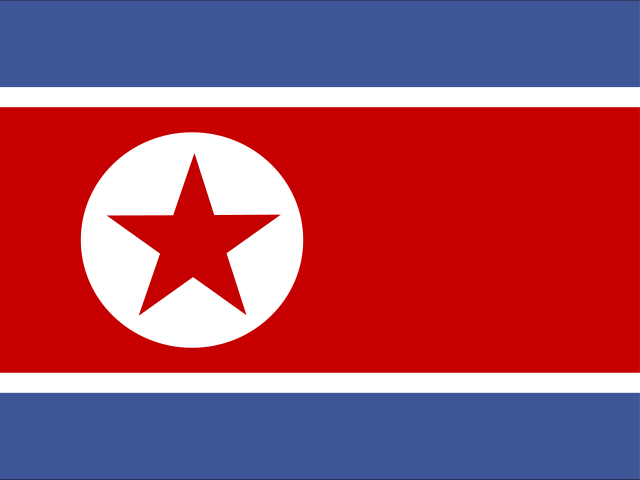
 North Korea


Regions and Cities of North Korea
- Pyongyang & CentralThe showcase capital of grand monuments, museums and state‑run attractions.
- Pyongyang: Wide boulevards, monumental squares and curated museum complexes.
- Kumsusan Palace of the Sun: Mausoleum complex and focal point of the leaders’ cult.
- Mansu Hill Grand Monument: Enormous bronze statues and state rituals of homage.
- Ryugyong Hotel: Futuristic, unfinished pyramid tower dominating the skyline.
- Pyongyang TV Tower: City views where public access is permitted by tours.
- DMZ, Kaesong & WestBorder history and older Korean heritage, visited on tightly managed day trips.
- Historic Monuments and Sites in Kaesong: Gates, tombs and a preserved medieval townscape.
- Panmunjom: The Joint Security Area at the Demilitarized Zone (tour dependent).
- Kaesong: Traditional town with royal relics and artisanal workshops.
- Nampo: Coastal port and viewpoints on organised itineraries.
- Mountains & Cultural SitesForested uplands, temples and curated scenic zones on selected routes.
- Mount Myohyang: Temple complexes and museum exhibits, part of many tours.
- Mount Kumgang: Scenic coastal mountain region, access varies with politics.
- International Friendship Exhibition: Huge display of gifts presented to the leaders.
- Korean Revolution Museum: State narrative of modern history and the Korean War.
- Northeast & PortsIndustrial cities and limited coastal stops, visited on specific programs.
- Known for: total isolation, monumental Pyongyang, the ruling personality cult and the DMZ.
- First trip: Pyongyang, a day trip to Kaesong and a mountain site such as Mount Myohyang. Allow 1 week.
- Best time: April-May and September-October (spring and early autumn are most temperate).
- Daily budget: $150-300.
- Visas: There is no independent tourist visa, entry is only via approved tour operators.
- Getting in: Fly into Pyongyang (FNJ) or enter by rail from China via Sinuiju on arranged crossings.
- Safety: Restricted / High risk - legal and diplomatic hazards, limited consular help; follow guides at all times.
Currently it is the high season, with temperatures ranging from 12 to 22°C (54 to 72°F).
September
September brings mild, improving weather and clearer skies. Days are comfortably cool and visibility is good, so organized tours move easily and roads are reliable. This is high season, so expect firmer prices and to book ahead for Pyongyang. Coastal Wonsan and historic Kaesong are especially pleasant now; very remote northern towns may already have reduced services.
Next 3 Months
October brings crisp, dry weather and peak autumn colours, making it the best month for outdoors and sightseeing. In November temperatures fall fast and the first snows are possible. December brings cold, short days and increasing travel difficulties.
North Korea in the News
The US has a Do Not Travel advisory for North Korea because of a serious risk of arrest and long‑term or wrongful detention; US passports generally cannot be used for travel to the DPRK except in very limited, specially validated cases, which effectively bars routine US travel to the country. North Korea and China have opened the New Yalu River Bridge, restoring a direct road link that could allow overland crossings for trade and specially arranged travel between China and the DPRK. (NK News) Recent reports of DPRK-planted mines and explosions near the Demilitarized Zone, alongside multiple ballistic and hypersonic missile tests and a suspected mine washing ashore on a South Korean island, mean the border and nearby coastal areas carry heightened security and safety risks for travellers and tour operations near the DMZ. (NK News) Updated 19 Oct.
Active alerts: 1 travel advisory. See all North Korea alerts
Why Visit North Korea
The Pyongyang Metro is one of the world’s deepest systems and doubles as an underground museum with socialist-realist mosaics and chandeliers in each station. A ride offers a rare urban snapshot and surprisingly ornate public art - best visited as part of an organized city tour.
The Kumsusan Palace of the Sun, the mausoleum for Kim Il-sung and Kim Jong-il, is a carefully choreographed state site and one of North Korea’s most visited attractions on guided itineraries. Dress and behave formally; the experience is tightly controlled and rich in state symbolism.
Mount Myohyang blends temple scenery with the International Friendship Exhibition, a vast collection of state gifts. The mountain has accessible walking trails and quiet monastery complexes, and makes a practical day trip from Pyongyang with a licensed guide.
Kaesong preserves Koryo-era remains, traditional hanok-style houses and the Koryo Museum, offering a different, low-rise historic feel than Pyongyang. The city’s proximity to the Demilitarized Zone gives historical context and a less urban glimpse of North Korean life.
Across cities you’ll find tightly planned, Soviet-influenced public architecture, grand monuments and wide boulevards that speak to postwar reconstruction and state aesthetics. Guided walks explain the symbolism and provide nuance most guidebooks skip.
Who's North Korea For?
Couples
Organised tours to Pyongyang and Mount Myohyang can be unique shared experiences, but personal freedom is strictly controlled and movement off-route is not permitted.
Families
Not suited for family travel: tours are tightly controlled, with limited facilities for children and strict supervision of visited sites and behavior.
Backpackers
Independent backpacking is essentially impossible; travel is possible only on guided, pre-approved tours with set itineraries and compulsory guides.
Digital Nomads
No infrastructure for remote work: internet access is restricted and monitored, and long-term stays for work-related travel are impractical.
Foodies
Local dishes like Pyongyang naengmyeon are interesting, but culinary variety and open food markets are limited compared with neighbouring countries.
Adventure Seekers
There are scenic mountains such as Paektu and limited coastal areas, but access is regulated and adventurous independent activities are not offered to tourists.
Party Animals
There is effectively no nightlife for foreign tourists; social venues are tightly controlled and inaccessible to independent party-going.
Nature Buffs
Remote mountain scenery exists, but visiting requires joining state-sanctioned trips. Natural landscapes are present yet access and interpretation are highly limited.
- Pyongyang & Central: Monument visits such as Mansu Hill Grand Monument, museum tours including the Korean Revolution Museum, a guided Pyongyang Metro ride and staged public performances.
- DMZ, Kaesong & West: Guided visits to Panmunjom (when open), exploring Kaesong’s heritage, and coastal viewpoints at Nampo.
- Mountains & Cultural Sites: Hikes and temple visits around Mount Myohyang and Mount Kumgang where permitted, and the International Friendship Exhibition.
- Northeast & Ports: Industrial city drives to places like Hamhung and Chongjin, port views in Rason and rail transfers at Sinuiju.
Best Things to Do in North Korea
 Monument
Kumsusan Palace of the Sun
North Korean mausoleum housing leaders' preserved remains
Monument
Kumsusan Palace of the Sun
North Korean mausoleum housing leaders' preserved remains
 Monument
Juche Tower
Tall Pyongyang monument symbolizing Juche political ideology
Monument
Juche Tower
Tall Pyongyang monument symbolizing Juche political ideology
 Monument
Arch of Triumph
Triumphal arch in Pyongyang commemorating Korean resistance
Monument
Arch of Triumph
Triumphal arch in Pyongyang commemorating Korean resistance
 Mountains
Mount Kumgang
Scenic North Korean mountain range famed for cliffs
Mountains
Mount Kumgang
Scenic North Korean mountain range famed for cliffs
 Building
Ryugyong Hotel
Tall pyramidal skyscraper, long-unfinished landmark in Pyongyang
Building
Ryugyong Hotel
Tall pyramidal skyscraper, long-unfinished landmark in Pyongyang
 Building
Goguryeo tombs
Ancient Goguryeo royal tombs with wall paintings
Building
Goguryeo tombs
Ancient Goguryeo royal tombs with wall paintings
 Plaza
Kim Il-sung Square
Pyongyang's central square used for mass rallies and parades.
Plaza
Kim Il-sung Square
Pyongyang's central square used for mass rallies and parades.
 Monument
Arch of Reunification
Concrete monument near Pyongyang symbolizing Korean reunification
Monument
Arch of Reunification
Concrete monument near Pyongyang symbolizing Korean reunification
North Korea Bucket List
Don't Miss
Pyongyang - Central capital with Kim Il-sung Square, Mansu Hill monuments, and state museums; organized guided tours only.
Kumsusan Palace of the Sun - Mausoleum housing preserved bodies of Kim Il-sung and Kim Jong-il, highly ceremonial and restricted.
Panmunjom (Joint Security Area) - Tour to the DMZ’s Joint Security Area offers tense cross-border diplomacy and soldier-lined conference huts.
Mount Paektu (Baekdu) - Volcanic crater lake on the North Korean-Chinese border, sacred Korean mountain reached on multi-day excursions.
Kaesong and the Koryo royal tombs - Historic Kaesong features medieval walls, Koryo royal tombs, and preserved traditional hanok neighborhoods near the DMZ.
Hidden Gems
Mount Myohyang and Pohyon Temple - Remote mountain with Buddhist temples and the International Friendship Exhibition’s room full of leader gifts.
Rason Special Economic Zone - Northeast port region offering different architecture, seaside markets, and broader foreign trade influences.
Songdowon coastal camp (near Wonsan) - Songdowon camp and coastal area near Wonsan with Soviet-era architecture and seaside pavilions.
Chilbosan (northeast coast) - Chilbosan in the northeast features rugged coastal cliffs, fishing villages, and seldom-visited hiking routes.
Sariwon traditional district - Provincial town with preserved traditional neighborhoods, folk craft displays, and quieter local atmosphere.
Road Trips
Pyongyang-Mount Myohyang-Kaesong loop - Multi-day circuit from Pyongyang to Mt. Myohyang and Kaesong, typically three to five days.
Pyongyang-Panmunjom day trip - Guided day trip from Pyongyang to the DMZ’s Joint Security Area, tightly scheduled and controlled.
Pyongyang-Mount Paektu expedition - Extended guided expedition reaching sacred Mount Paektu on the border, often five to eight days.
East coast Chilbo excursion - Coastal drive and hikes around the Chilbo area with rugged cliffs, fishing villages, and local scenery.
More North Korea Guides
Best Time to Visit North Korea
High Season
Early autumn offers the most pleasant, dry weather and clearer skies, making it the best time for organized visits and outdoor observation.
Shoulder Season
Spring brings milder temperatures and improving travel conditions after winter; a suitable time for visits before the summer rainy period.
Low Season
Winter months are very cold with snow inland and shorter daylight; travel is more difficult and some services may be restricted.
Bar height shows how good the month is; numbers are the average daytime high. Tap a month for its guide.
Pyongyang & West Coast Lowlands: The flat western corridor around Pyongyang and the Yellow Sea coast is the country’s political and transport heart. It has a strongly continental rhythm-hot, humid summers with a monsoon-driven rainy season and long, dry, very cold winters-so the best travel windows are clear autumn and late spring. Watch for summer floods and spring dust; winter needs full cold-weather gear.
Southwest & Kaesong/DMZ Borderlands: The southwestern borderlands around Kaesong and the DMZ have milder springs and earlier harvests than the north, but otherwise follow the peninsula’s continental rhythm. Summers are humid with monsoon rains and occasional storm impacts; winters are cold and dry. Travel windows are late spring and autumn when roads are passable and outdoor site visits are most pleasant.
Central Highlands & Kaema Plateau: The central highlands and Kaema Plateau form North Korea’s coldest, most remote interior-long, harsh winters, short cool summers and a brief growing season. Accessibility is highly seasonal: summer allows limited trekking while winter locks the region down. Travelers should expect rough roads, rapidly changing mountain weather, and plan for guided travel and strong cold-weather kit.
Northeast & Mount Paektu (Hamgyong Mountains): The northeastern provinces rise to Mount Paektu and are the coldest, snowiest part of the country with rugged mountains and a short, cool summer. Heavy snow and fierce winds in winter; summer brings monsoon rains and fog at altitude. Best windows for mountain travel are late summer’s shoulder (September) and late spring for lower slopes; winter requires experienced guides and specialist kit.
East Coast & Wonsan / Mount Kumgang: The eastern seaboard from Wonsan to Mount Kumgang enjoys slightly different maritime influence-cooler winters at the immediate coast, fog and sea spray, and dramatic mountain-meets-sea scenery. Summers are humid with monsoon rains and possible typhoon impact; autumn and late spring are the most pleasant times for coastal drives and mountain walks. Winter can be windy and cold with limited services.
New Year's Day
1 January · Official public holiday observed with state events and closures in Pyongyang and other cities.
Army Day (Korean People's Army Day)
8 February · National military holiday marked by ceremonies and displays of respect for the armed forces.
Day of the Shining Star (Kim Jong-il's Birthday)
16 February · State holiday commemorating Kim Jong-il’s birth with official observances and public displays of reverence.
Day of the Sun (Kim Il-sung's Birthday)
15 April · North Korea’s most important public holiday, observed with large state ceremonies, floral tributes and cultural events in Pyongyang.
Liberation Day
15 August · Anniversary of Korea’s liberation from Japanese rule in 1945; marked by official commemorations and public ceremonies.
Workers' Party Foundation Day
10 October · Major political anniversary with parades, performances and official events in the capital and at party institutions.
Mass Games / Arirang Festival (occasionally staged)
Occasionally staged around major state anniversaries (timing varies) · Large-scale mass gymnastics and artistic performances historically presented for significant national anniversaries; staging is intermittent and tied to official schedules.
North Korea has been closed to general tourist entry since early 2020; apart from a month-long reopening of Rason to foreign groups in February-March 2025 and tours for Russian visitors, Western tour programmes have largely been suspended, so check with operators whether any departures are actually running. When tours do operate, you book through an approved operator who arranges the visa. Since 2017 the US has barred use of US passports for travel here without a special State Department validation (the latest extension ran to 31 August 2026, so check whether it has been renewed), and South Koreans need permission from both governments. Expect state hotels and group transport; book 2-6 months ahead if tours are running, and confirm political clearance.
North Korea Itineraries
1 Week North Korea Itinerary
Join an authorized guided tour to Pyongyang to see national monuments, the metro, and Kaesong, with day trips to Mount Myohyang on a tightly organized itinerary.
- Day 1 - Enter Pyongyang via approved tour; city overview.
- Day 2 - Kim Il-sung Square and Mansudae Grand Monument.
- Day 3 - Victorious Fatherland Liberation War Museum and arch.
- Day 4 - Mansu Hill and Pyongyang Metro tour.
- Day 5 - Day trip to Kaesong; Koryo Museum visit.
- Day 6 - Mount Myohyang and Pohyon Temple day trip.
- Day 7 - Return to Pyongyang; depart on scheduled tour.
2 Weeks North Korea Itinerary
On a two-week organized program, combine Pyongyang highlights with Kaesong and Mount Myohyang, and include guided visits to coastal Nampo or the Rason area where permitted.
- Day 1-3 - Pyongyang major sites, monuments and museums.
- Day 4-5 - Kaesong and Panmunjom area visits (tour dependent).
- Day 6-8 - Mount Myohyang and Pohyon Temple exploration.
- Day 9-11 - Travel to Nampo and coastal viewpoints.
- Day 12-14 - Rason or Rajin area in northeast, subject to access.
3-4 Weeks North Korea Itinerary
Book a long escorted tour to cover Pyongyang and permitted provinces, including Kaesong, Mount Myohyang and northeastern Rason region, all arranged through approved operators.
- Day 1-4 - Extended Pyongyang exploration with museums and city neighborhoods.
- Day 5-8 - Multiple day trips: Kaesong, Mount Myohyang, Nampo.
- Day 9-14 - Travel to provincial towns on guided schedule where allowed.
- Day 15-21 - Longer escorted stays in northeast regions such as Rason.
- Day 22-28 - Return to Pyongyang for final organized departures.
Where to Stay in North Korea
State‑Run Hotels (Pyongyang)
$40-150 / night (usually part of tour packages)
Tour groups typically stay in Pyongyang hotels such as the Koryo and Yanggakdo; these are managed by state tourism agencies. Lodging is included in organised tours rather than booked independently.
County & Provincial Guesthouses (arranged)
Basic (included in tour fees)
Outside Pyongyang, overnight stays are in county guesthouses and guest rooms arranged by tour operators. Facilities are basic and bookings are handled by licensed DPRK tour agencies.
Unique / Rural Guesthouses
Included in escorted tour packages
Rural homestays and simple guesthouses are occasionally used on organised cultural and rural tours. These stays are arranged by guides and offer local interaction under supervision.
Tour‑Included Accommodation Only
Varies (tour dependent)
Independent short‑term rentals and private bookings are not available to typical foreign visitors. All accommodation must be arranged through authorised operators as part of a tour itinerary.
- Tourists must travel on organized tours or with an approved guide; independent travel is normally not permitted for foreign visitors. Visas for tourists must be arranged in advance through DPRK embassies or designated tour operators-there is no standard visa-on-arrival for most nationalities.
- All visitors require a visa issued before arrival and must be accompanied by authorized guides while in-country. Citizens of South Korea are not permitted to enter; passport validity and other documentation are checked closely at entry. Special restrictions and reporting requirements apply-work only with experienced, officially recognized tour companies.
How to Get to North Korea
Most foreign tourists arrive in North Korea via Pyongyang Sunan International Airport (FNJ) on scheduled charters or flights operated by Air Koryo and occasional connections from Beijing. Overland entry is possible by rail from Dandong (China) across the Sino-Korean Friendship Bridge into Sinuiju and onward to Pyongyang. Travel is tightly controlled and typically arranged through approved tour operators and embassies. Since the 2020 border closure, not all passenger flights and trains have resumed, and schedules can change with little notice.
Border Crossings
The China-North Korea frontier is the DPRK’s most important and busiest international border. The principal crossing is at Dandong (China) ↔ Sinuiju (North Korea) over the Sino-Korean Friendship Bridge; it carries rail and limited road traffic. Independent crossings for foreign tourists are rare - most visitors enter the DPRK as part of an organized tour arranged through a DPRK-licensed operator and with DPRK visas issued in advance or at an embassy/consulate.
Crossings
- Dandong (China) - Sinuiju (North Korea) -
The land border with South Korea is the heavily fortified Demilitarized Zone (DMZ). Civilian crossings are extremely restricted: the Joint Security Area (Panmunjom) can be visited under tightly controlled guided tours from the South, but actual crossings into DPRK territory are only allowed during special bilateral events or with explicit intergovernmental permission.
Crossings
- Panmunjom / Joint Security Area (JSA) -
North Korea’s border with Russia is short and lies around the Rason/Khasan area. The Khasan (Russia) - Tumangang (DPRK) crossing is primarily a rail and freight link with occasional passenger services; use by foreign visitors is uncommon and requires coordination with authorities on both sides.
Crossings
- Khasan (Russia) - Tumangang (North Korea) -
How to Get Around North Korea
International and some domestic services are operated by Air Koryo; flights link Pyongyang with Beijing and a few other regional airports. Schedules are limited and subject to diplomatic changes, so confirm with your tour operator well in advance.
Domestic air travel is infrequent and usually arranged as part of organized itineraries rather than independent bookings.
Rail travel on the Korean State Railway is a common way to move between cities; overnight trains and slower regional services are typical. International rail access from China via Dandong to Sinuiju (and onward) exists but requires coordination with authorities and your tour operator.
Expect simple carriages and basic amenities; timetables and rolling stock standards differ from Western expectations.
Coaches and tourist buses are the main mode for sightseeing and longer internal transfers; tours normally include bus transport between sites. Public intercity bus services exist but are not commonly used by independent foreign visitors due to access restrictions.
On tours, buses are scheduled by guides and form the backbone of most itineraries.
Within Pyongyang, taxis and hired cars (often arranged by guides) are used for short trips; ride-hailing apps do not operate. The city also has the Pyongyang Metro which is notable for its stations and limited public access.
All movement is generally arranged by travel organizers-independent hailing and navigation is uncommon for foreign visitors.
Most visitor movement is under the supervision of state-appointed guides and arranged transfers. Private vehicle rental, unsupervised excursions and independent sightseeing are typically not permitted for foreign tourists.
Work only with licensed operators (for example, Koryo Tours), who handle visas, permits and in-country logistics.
Tour costs, visas and most services are paid in advance to the operator in euros, US dollars or Chinese yuan; cash is essential and credit cards are not accepted. On tours you will have minimal opportunities for independent spending; bring extra foreign currency for tips or permitted purchases.
How Much Does North Korea Cost?
Typical organised tours cost roughly $150-300 per day, with higher rates for bespoke or multi‑site programs; Pyongyang and organised multi-day circuits are the most expensive.
Daily budgets
Typical prices
- Budget state guesthouse room: $40-80
- Mid-range hotel: $80-150
- Upscale hotel (top Pyongyang): from $150
- Street snack: $2-5
- Bottle of local beer: $2-4
- Organised tour or activity: $150-300 per day
- Tour coach transfer: Included in tour fee
For current prices on hundreds of everyday items, see Numbeo’s North Korea cost of living, a crowd-sourced database that is updated often.
Ways to save
- Book group departures: Join scheduled group tours rather than bespoke trips to lower per‑person cost.
- Pay in advance: Pay tour and visa fees in a single transaction to avoid exchange complications on arrival.
- Travel light: Bring necessary medication and supplies, as replacements can be hard to source locally.
Full trip budgets are in North Korea Itineraries.
Cash, Cards & Tipping in North Korea
North Korea (DPRK) officially uses the North Korean won (KPW), but tourists typically use euros, Chinese yuan or sometimes US dollars for purchases during organized tours. Cash is effectively the only option for most visitors; credit cards are not usable.
- Tipping: Tipping is not a common local custom for most services encountered by tourists, but guides or drivers on organized tours may expect a tip.
- Cards & Cash: International credit/debit cards are not accepted; payments for tours and purchases are handled in cash (often foreign currency) through tour operators or designated locations.
- ATMs & Mobile Payments: There are no accessible international ATMs for foreign visitors; bring sufficient cash in accepted foreign currencies and follow your tour operator's instructions for payments.
Show absolute respect for images and symbols of the leaders and never photograph restricted subjects.
Customs & Etiquette in North Korea
The most important custom is showing explicit respect for the leaders and their images; insulting or defacing portraits is a serious crime. Guides enforce behaviour closely, and visitors are expected to follow directions without debate; enforcement is strict rather than forgiving.
Korean Language Basics
Korean is the language used nationwide; the DPRK uses its own standard forms and vocabulary in public life. Visitors usually travel with guides who speak other languages, but basic Korean phrases are useful for simple interactions.
Useful Phrases
- Hello - 안녕하세요 annyeong-haseyo
- Thank you - 감사합니다 gamsahamnida
- Goodbye (to someone leaving) - 안녕히 가세요 annyeonghi gaseyo
- Where is the bathroom? - 화장실은 어디에요? hwajangsil-eun eodieyo?
- Please take me this way. - 이 쪽으로 가 주세요. i jjogeuro ga juseyo
- It’s delicious - 맛있어요 masisseoyo
- Check, please - 계산서 주세요 gyesanseo juseyo
- Help! - 도와주세요! dowajuseyo!
- Please call the police - 경찰을 불러 주세요 gyeongchareul bulleojuseyo
Staying Connected in North Korea
North Korea has extremely limited and tightly controlled internet and mobile access. Foreign visitors should expect restricted or no general internet connectivity and few practical mobile options outside state-controlled channels.
Tourist SIM Cards
North Korea’s public mobile services for foreigners are extremely limited; standard tourist SIMs are generally not available in the usual international sense. Connectivity options are restricted and typically arranged through tour operators. Expect very limited international internet access.
Mobile Providers
Koryolink has provided mobile services in the country, but access, speeds and allowed services are highly restricted and primarily controlled by state authorities. Foreign visitors should not expect ordinary roaming or unrestricted internet.
Wi-Fi & Coworking
Public Wi‑Fi and coworking facilities are essentially non-existent for independent travelers. Internet access for foreigners is tightly controlled; hotels used by foreign visitors may offer limited, monitored connections. Plan for minimal online availability.
Useful Apps for North Korea
- WhatsApp Messenger - Common communications app for contacts outside the DPRK.
- Google Maps - Useful for planning around accessible border/air routes to DPRK.
- Google Translate - Helps with Korean/English phrase translation for trips organized via agencies.
Emergency Numbers & Electricity
- Emergencies: There are no emergency numbers visitors can practically use; your guides and hotel arrange all medical help, and foreign phones do not work, so make sure your operator has your embassy and insurer contacts.
- Electricity: 230V, 50 Hz; plug types C, F.
Legal and diplomatic risk is the overriding concern - detention for perceived offences is possible and consular support is limited. Medical facilities are basic outside Pyongyang, bottled water is advised, and travel insurance should include emergency evacuation.
Is North Korea Safe?
No - travel to North Korea is highly restricted and carries significant legal and diplomatic risk; follow guides and your government advice.
Crime & Scams
Petty street crime against tourists is rare on authorised tours because movements are controlled. The main threats are scams or theft in unsupervised settings, which are uncommon because free movement is not permitted. Always keep valuables on your person and follow your guides’ instructions.
Road Safety
Tour transport is provided by the state on maintained routes and driven by local drivers arranged by your operator. Road standards and emergency response differ from Western norms. Avoid attempting independent travel or hitching rides.
Natural Hazards & Weather
Weather is seasonal; typhoons can affect the peninsula in late summer and early autumn. Rural infrastructure and emergency services are limited outside major tourist sites. Follow local briefings and guides for weather-related changes to plans.
Beaches & Water
Tap water quality is uncertain and municipal supplies may not meet international standards. Use bottled water provided by your tour or bring your own; avoid ice and uncooked salads unless confirmed safe by the guide. Bring water purification tablets if you cannot reliably obtain sealed bottled water.
Laws to Know
Strict laws govern photography, speech, and behaviour toward state symbols; violations can result in arrest and long detention. Never photograph military, infrastructure, or portraits without explicit permission and always carry ID and travel paperwork. Obey guides and local officials without question. Don’t bring religious texts, South Korean films, music or books, or anything critical of the government; phones, laptops and memory cards may be checked on arrival and departure. Never take, damage or remove propaganda posters or anything bearing the leaders’ images, and don’t hand out leaflets, gifts or money to locals without your guide’s agreement.
Nightlife & Personal Safety
There is no independent nightlife for tourists outside organised events on official tours. Alcohol and mixing with locals are tightly controlled and often discouraged by guides. Stay with your group and follow curfew or return instructions.
Areas to Avoid
Movement off the approved itinerary is prohibited; do not attempt to visit places not on your tour. Sensitive sites include the DMZ/Panmunjom and military installations where photography and approach can lead to severe penalties. Stick to designated sites such as Pyongyang, Kaesong and Mount Myohyang only when on a sanctioned tour.
Staying Healthy in North Korea
Staying healthy is possible but requires preparation: medical facilities are limited, so bring medicines and evacuation-capable insurance.
Food & Water
Food served on official tours is generally safe but choices are limited and special diets may be hard to accommodate. Prefer hot, freshly cooked items and sealed bottled drinks. Bring any specialty foods, supplements or prescription medicines you need.
Mosquito-Borne Illness
Mosquito activity is seasonal, higher in warm, humid months. Use insect repellent and consider a treated bed net if you will stay in rural or undeveloped accommodations. There are no routine traveller-focused vector-control assurances.
Vaccinations & Rabies
Make sure routine vaccinations are up to date before travel. There are no special vaccine requirements, but rabies post-exposure care and advanced medical treatment may be limited. Carry documentation of vaccinations and a basic travel health kit.
Heat & Sun
Best travel seasons are spring and early autumn; summers can be hot and humid and winters very cold. Protect against sun and heat with sunscreen, a hat and hydration on outdoor walks. Expect seasonal extremes and pack layers accordingly.
Air Quality
Air pollution is not typically a primary concern in tourist areas but may be worse in industrial zones. If you have respiratory conditions, bring inhalers and any necessary medication. Follow guides’ advice about outdoor activities on poor-air days.
Medical Care & Insurance
Medical facilities are basic and do not provide the same standard as many Western countries. Bring comprehensive travel insurance that includes emergency evacuation and carry a well-stocked personal medical kit. Notify your embassy or tour operator immediately for serious incidents, though consular support is very limited: many Western countries, including the UK, have no functioning embassy in Pyongyang. Because several governments advise against all but essential travel, check that your insurance remains valid.
Public life is shaped by state ideology and collective displays; visitors encounter carefully curated narratives at museums and monuments. Interactions with locals are supervised and staged, so normal exchange is limited.
History & Culture of North Korea
North Korea’s public culture is shaped by state ideology, historical memory of resistance to colonization and the Korean War, and a strong emphasis on collective displays and monuments. Visitors most commonly encounter curated presentations of history, mass performances, and state-run cultural institutions.
History of North Korea
The Democratic People’s Republic of Korea (DPRK) emerged from the division of the Korean Peninsula after World War II. Following Japanese colonial rule (1910-1945), the peninsula was split along the 38th parallel in 1945; the DPRK was formally established in 1948 and developed under a centralized, one-party system led by Kim Il‑sung.
Notable Figures
- Kim Il‑sung - Founder of the DPRK and leader from its establishment in 1948 until his death in 1994; his image and legacy are central to public memory.
- Kim Jong‑il - Supreme leader from 1994 to 2011 who developed the Songun (military‑first) emphasis and presided over difficult economic periods.
- Kim Jong‑un - Current leader since 2011; his leadership features continued state control with periodic diplomatic engagement.
Key Dates
- 1910-1945Korea was under Japanese colonial rule; the occupation shaped nationalist movements and postwar arrangements.
- 1945Korean Peninsula divided along the 38th parallel after Japan’s defeat in World War II.
- 1948The DPRK was proclaimed on September 9, 1948, establishing a separate northern government.
- 1950-1953The Korean War devastated the peninsula; the 1953 armistice ended large-scale fighting but no formal peace treaty was signed.
- 1994Death of Kim Il‑sung; Kim Jong‑il consolidated leadership, continuing the dynastic succession.
- 2006North Korea conducted its first announced nuclear test, a defining moment in its international relations.
- 2011Kim Jong‑il died and was succeeded by his son Kim Jong‑un, beginning the current leadership period.
North Korean cuisine shares much with Korean food across the peninsula but tends to feature simpler preparations in everyday settings; specialities associated with the north-like Pyongyang naengmyeon-are commonly promoted in tourist sites.
Responsible Travel in North Korea
North Korea (DPRK) permits only organised visits under strict rules; responsible travel here means compliance with local laws, using authorised operators and avoiding activities that could harm hosts or your group.
- Travel Only with Approved Operators: Independent travel is not permitted - arrange visits through authorised tour operators and guides and follow their instructions at all times to respect local laws and norms. Reputable operators such as Koryo Tours organise permitted itineraries.
- Respect Sites & Local Protocols: Observe rules at monuments and museums, do not photograph military installations, and be mindful around portraits and memorials of leaders where strict etiquette applies.
- Buy from Official Outlets: If purchasing souvenirs, use state shops or official museum stores to avoid inadvertently supporting unauthorized channels; small purchases are the appropriate way to support local sellers within the regulations.
- Avoid Political Activities & Unsolicited Giving: Do not engage in political discussions or distribute religious/political materials; unsolicited donations or charity can cause social or legal complications - direct support should be coordinated via your tour operator.
Long-term residence is effectively restricted to diplomats, accredited UN/NGO staff and a handful of authorised personnel; there is no remote-work scene or normal long-stay visa for independent foreigners.
Living in North Korea
Long-term living in North Korea is extremely limited and tightly controlled, generally restricted to diplomats, accredited international organization staff, and a few authorised business personnel. Independent residency or long-term stays for leisure or remote work are effectively impossible.
Long-Term Visas: Long-term visas issued almost exclusively to diplomats, accredited UN/NGO staff, and a few authorised business personnel.
Working There: Employment available only in state-assigned roles, diplomatic posts, or tightly controlled business projects.
Cost of Living: Official domestic prices often low, but foreigners pay in foreign currency and face scarcity of many goods.
Health & Wellness: Healthcare is under-resourced; foreigners rely on embassy clinics or evacuation for serious treatment.
Banking & Finance: No international retail banking for residents, transactions usually handled in cash or via foreign banks and embassies.
Taxes: Taxation and fiscal rules are opaque; most foreign staff operate under diplomatic or employer arrangements.
Popular Places to Live in North Korea
Options for foreigners are extremely limited and state-managed; most foreign residents live and work in Pyongyang under close supervision. Other locations are only accessible under special, authorised circumstances.
- Pyongyang - Capital and center for diplomats and accredited staff, state-managed facilities, limited independent movement and services.
- Rason - Special economic zone with some foreign trade activity, access controlled, best suited to authorised business delegations.
- Kaesong - Historic industrial and inter‑Korean project site, access highly restricted and subject to political changes.
Long-term residency is effectively limited to diplomats, accredited international staff, and a very small number of authorised business personnel.
- Diplomatic Accreditation - Primary long-term route for foreign diplomats, tied to embassy assignments and state agreements.
- International Organization Staff - Select UN/NGO staff receive special accreditation and housing, strict oversight by authorities.
- Business Concessions - Rare, tightly controlled arrangements for approved joint ventures or economic zones.
- Tourist/Short-Term Visas - Available only via organized tours and heavy controls, not suitable for independent living.
For foreigners costs are driven by limited access to goods and services and reliance on hard-currency purchases.
- Foreign-Currency Pricing - Foreigners pay in hard currency or at special exchange rates, everyday goods may be scarce.
- Designated Hotels - Foreigners usually stay in state‑run hotels or embassy compounds, prices set in foreign currency.
- Local Markets - Local staple prices low officially, but access and quality vary widely outside urban elites.
Healthcare and housing for foreigners are tightly managed; serious medical care often requires evacuation.
- Local Hospitals - Basic care available but facilities and medicines are limited compared to international standards.
- Embassy Clinics - Diplomats and some international staff rely on embassy medical support and medevac arrangements.
- State Housing - Foreign residents assigned to official housing compounds or state-managed accommodation.
- Evacuation Reliance - Serious medical cases often require evacuation to China or elsewhere for advanced treatment.
Digital Nomads in North Korea
There is no remote-work scene for independent nomads in North Korea; internet and movement are tightly controlled and long-term stays are limited to accredited personnel.
Nomad Visa: none exists; no workaround - independent nomad stays are not permitted.
Long Term Rentals: Long-term rentals not available to typical foreigners, housing assigned by state for accredited staff.
Internet: No general internet access; foreigners rely on embassy or specially provisioned networks for limited connectivity.
Monthly Cost: Costs for foreigners are high due to hard-currency pricing and limited supply, stays usually funded by employers.
Coworking: No coworking spaces; no public venues for remote work or freelance meetups.
Fitness & Wellness: Limited fitness options in state hotels and embassy compounds, no public wellness scene accessible to foreigners.
Community: No expatriate nomad community; social life confined to diplomatic and accredited organisational circles.
Time Zone: UTC+9 (Pyongyang time now aligned with Korea/Japan).
There is no practical visa or pathway for digital nomads; all long stays require official accreditation.
- No remote-worker visas - No visa pathway exists for independent digital nomads; residency limited to accredited personnel.
- Diplomatic/UN Accreditation - Only accredited staff receive long-term access, with strict state oversight and reporting.
- Business Concessions (rare) - Occasionally authorised for specific joint ventures, subject to heavy restrictions and approvals.
General consumer internet is not available; reliable global internet access is limited to embassies and a few authorised organisations.
- State Intranet - A closed domestic network with highly restricted content, not suitable for remote work.
- Limited Foreign Internet - Some diplomats and authorised staff have controlled internet access via embassy or work networks.
- Mobile Coverage - Domestic mobile services exist but international access and data for foreigners are heavily restricted.
There is no coworking infrastructure or public nomad community; interaction limited to official diplomatic and organisational channels.
- None - No coworking spaces or independent digital-nomad communities exist for foreigners.
- Diplomatic Circles - Social and professional interaction exists only within embassies and accredited international staff networks.
- Organised Tours - Tourist activities tightly controlled, not a substitute for workspaces or community for nomads.
North Korea Travel News
- Chinese travel agents promoting business and border trips to North Korea on social media(nknews.org)
- North Korea and China officially open the long-delayed New Yalu River Bridge(nknews.org)
- China and North Korea open long-unused New Yalu River Bridge(nknews.org)
- Ji'an-Manpho passenger train service between China and North Korea resumed(nknews.org)
- North Korea eases entry restrictions for travelers who visited India and Bangladesh(nknews.org)
- North Korea conducts multiple ballistic missile tests(nknews.org)
- Suspected North Korean land mine washes up on South Korean island(nknews.org)
- South Korean lawmaker says North Korea likely buried hundreds of mines south of border(nknews.org)
- North Korea rejects Seoul probe and warns against DMZ demining efforts(nknews.org)
- South Korea says North Korean mines deliberately buried south of border caused blasts(nknews.org)
- North Korea says hypersonic missile flew about 1,000 km toward East Sea(nknews.org)
- UN Command: North Korean mine blast in DMZ violated armistice(nknews.org)
Travel Resources for North Korea
Official
- Korean Central News Agency (official state news) State Media
- DPRK official information portals (access varies) Government
Travel Advisories
North Korea Embassies Abroad
News & Media
- Korean Central News Agency (KCNA) State Media
- NK News English
- 38 North (analysis) English
North Korea FAQs
Do I need a visa for North Korea?
Yes, all visitors need a visa issued before arrival and travel is only possible via approved tour operators with authorised guides. There is no independent tourist visa and there is no standard visa-on-arrival for most nationalities. Your operator typically arranges the visa as part of the tour. Visa entry
What is the best time to visit North Korea?
September to October is the best time to visit North Korea, with pleasant, drier weather and clearer skies for organised visits and outdoor observation. April to May is a good shoulder season before the summer monsoon-driven rainy period. Late summer can also see typhoon impacts. Best time
How many days do you need in North Korea?
About 1 week is a standard first trip, typically centred on Pyongyang with a day trip to Kaesong and a mountain site such as Mount Myohyang. Itineraries are tightly organised, so your pace and route depend on what your authorised tour program includes. Itineraries
Is North Korea open to tourists right now?
No, North Korea has been closed to general tourist entry since early 2020, and many Western tour programmes have largely been suspended. Apart from a month-long reopening of Rason to foreign groups in February to March 2025 and tours for Russian visitors, you must confirm with operators whether any departures are running. Tour options
Can US citizens travel to North Korea with a US passport?
No, since 2017 the US has barred use of US passports for travel to North Korea unless the passport is specially validated by the Secretary of State. This restriction has been extended repeatedly, so you must check whether it has been renewed. Do not attempt travel without the required validation. Getting in
How much does a trip to North Korea cost per day?
Roughly $150 to $300 per day for a typical organised tour, with higher rates for bespoke or multi-site programs. Costs are usually paid in advance to the operator in euros, US dollars or Chinese yuan. Pyongyang and multi-day circuits are usually the most expensive. Daily costs
Is North Korea expensive?
Yes, it can be expensive because travel is organised and priced as a tour package rather than independent travel. Typical tours run around $150 to $300 per day, and private or bespoke programs can cost more. Most costs are paid in advance to the operator in foreign currency. Costs
Should I use cash or card in North Korea?
Cash is effectively the only option for most visitors in North Korea, and credit cards are not usable. Tour costs, visas and most services are paid in advance to the operator, usually in euros, US dollars or Chinese yuan. There are no accessible international ATMs for foreign visitors. Cash and cards
Do you tip in North Korea?
No, tipping is not a common local custom for most services, but guides or drivers on organised tours may expect a tip. Opportunities for independent spending are minimal on most itineraries, so bring extra foreign currency if you plan to tip or make permitted purchases through official channels. Tipping
Is North Korea safe for tourists?
No, travel to North Korea is highly restricted and carries significant legal and diplomatic risk, including the possibility of detention for perceived offences. Consular support is limited, and you must follow your assigned guides at all times and stay on the approved itinerary. Laws on speech, behaviour and photography are strict. Safety
Can you drink the tap water in North Korea?
No, tap water quality is uncertain and municipal supplies may not meet international standards. Use sealed bottled water provided by your tour or bring your own, and avoid ice and uncooked salads unless your guide confirms they are safe. Bring purification tablets if you cannot reliably obtain bottled water. Water safety
What rules do tourists need to follow in North Korea to avoid trouble?
You must show explicit respect for the leaders and their images, and strict etiquette applies at monuments and memorials. Photography is regulated, so always ask your guides before taking photos and follow signage. Independent exploration is not permitted, so stay with your official guide and follow instructions without debate. Etiquette rules
What is the main airport in North Korea?
Pyongyang Sunan International Airport (FNJ) is the main airport for most foreign tourists arriving in North Korea. Flights are limited and can change with little notice, so travel is normally arranged through approved tour operators. Pyongyang is the usual entry and exit point on tour itineraries. Airports
How do you get around North Korea?
You get around North Korea on organised itineraries with state-appointed guides, using tour coaches for most transfers. Rail travel on the Korean State Railway is also used between cities, and within Pyongyang short trips can be by taxis or hired cars arranged by guides. Independent sightseeing is typically not permitted. Getting around
What plug type does North Korea use?
North Korea uses plug types C and F, with electricity at 230V and 50 Hz. Power access for visitors is typically through state-run hotels and tour-arranged accommodation. Bring an adapter that fits both C and F to cover the sockets you may encounter on organised itineraries. Electricity
What is the best SIM card or eSIM for North Korea?
There is no normal tourist SIM or eSIM setup in North Korea, and mobile access for foreigners is extremely limited. Connectivity is tightly controlled and is typically arranged through tour operators within state-approved channels. Koryolink has provided mobile services, but allowed services and internet access are highly restricted. Connectivity
Where should I go in North Korea for the first time?
Start with Pyongyang on an authorised guided tour, then add a day trip to Kaesong and a mountain site such as Mount Myohyang. This is a common first-week route and fits how most tour programs structure permitted movement and accommodation. First itinerary
What is North Korea famous for?
North Korea is famous for its total isolation, monumental architecture in Pyongyang, a strong ruling personality cult and the tense symbolism of the DMZ. Visitors also associate it with highly curated museums, grand monuments, and large-scale performances such as the Arirang Mass Games when they are staged. Culture