
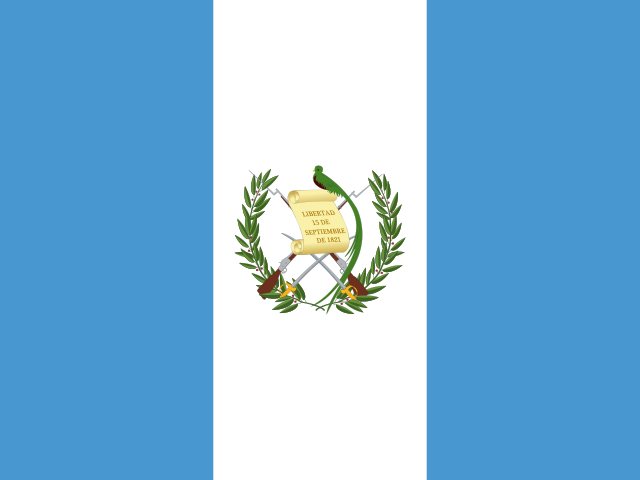
 Guatemala City


Neighbourhoods of Guatemala City
- Zona VivaCluster of hotels, restaurants and nightlife, safe and convenient base for exploring and day trips.
Dining: Diverse Nightlife: Lively Shopping: Malls Stays: Luxury- Oakland Mall: big, modern mall with shops, cinemas and easy food options.
- Plaza Fontabella: open-air plaza for dinners and an afternoon coffee.
- Museo Popol Vuh: outstanding Maya and colonial artifact collection on the UFM campus.
- Museo Ixchel: textile museum with traditional garments and attractive exhibits.
- Historic CenterHistoric colonial core with markets and museums, best for history lovers and bargain-hunters.
Dining: Street Food Nightlife: Quiet Shopping: Markets Stays: Budget- Palacio Nacional de la Cultura: iconic pink palace on the main square.
- Catedral Metropolitana: historic cathedral facing Parque Central.
- Mercado Central: noisy, colourful stalls selling textiles, souvenirs and local eats.
- Plaza de la Constitución (Parque Central): the city’s social and historic heart.
- La AuroraAirport-side area with zoo and museums, handy for flights and family visits.
Dining: Cafés Nightlife: None Shopping: Limited Stays: Mixed- La Aurora International Airport: the city’s main airport and arrival point.
- Zoológico La Aurora: family-friendly zoo next to the airport.
- Museo Nacional de Arqueología y Etnología: national archaeology museum with an extensive Maya collection.
- Zona 4Creative, slightly rough quarter of galleries, craft coffee and a young local crowd.
Dining: Cafés Nightlife: Trendy Shopping: Boutiques Stays: Mid-Range- 4 Grados Norte: pedestrianised blocks of cafés, bars and occasional street events.
- Art-filled side streets: small galleries and murals scattered through the neighbourhood.
- Independent cafés and tapas bars: lots of spots for a long coffee or late drink.
- Miraflores / KaminaljuyúLow-key archaeological area with ancient mounds, small museums, ideal for history fans.
Dining: Cafés Nightlife: None Shopping: Limited Stays: Mixed- Parque Arqueológico Kaminaljuyú: important pre-Columbian ruins inside the city.
- Museo Miraflores: museum showcasing local archaeological finds and exhibits.
- Miraflores archaeological area: green pockets and trails around ancient mounds.
Currently it is the low season, with temperatures ranging from 15-24°C (59-75°F).
September
September brings the wettest weather of the year, and the smallest crowds. Expect sticky, oppressive humidity with cool nights and warm afternoons; rain and low clouds most days. Hotels and attractions are quieter and cheaper. Stay close to the historic centre and indoor museums, and plan open-air sightseeing for brief dry spells - parks and lookout points are often socked in.
Next 3 Months
October stays humid and rainy; November sees humidity ease and rain become more middling. By December the city dries out and enters high season, so book accommodation and tours earlier than in September.
Guatemala City at a Glance
Costs: Budget to midrange: $30-80/day - hostels and street food keep costs low; midrange hotels and taxis raise totals.
Safety: Exercise caution; high crime in parts - violent crime and petty theft occur; avoid risky neighborhoods, use registered taxis and hotel advice.
Best Time: Dry season: November-April - cooler, drier weather ideal for museums and city sightseeing.
Guatemala’s sprawling, high-altitude capital - the country’s chaotic transport and business hub, and for most travellers the gateway to colonial Antigua and the Maya highlands rather than a destination in itself.
The city spreads across a highland plateau, divided into numbered zonas; the historic centre sits in Zona 1, while the airport, upscale hotels and dining cluster south in Zona 10 (the “Zona Viva”).
Why go / don’t miss: the excellent museums (the Popol Vuh and Ixchel), the historic centre’s plaza and cathedral, and its role as the springboard to Antigua, Lake Atitlán and Tikal.
Neighborhoods: Zona 1 for the historic centre and street life; Zona 10 (Zona Viva) for hotels, restaurants and nightlife; and Zona 4 for a revived arts-and-café district.
Getting around: ride-hailing (Uber) is safest and easiest; the Transmetro bus is useful on key routes, but many travellers head straight to Antigua by shuttle.
When to go: the dry season Nov - Apr is best.
Where to stay: Zona 10 or Zona 4 for the safest, most convenient base - many skip the city and stay in Antigua.
Dining: Guatemalan home cooking (pepián, tamales, chiles rellenos) and a good upscale scene in Zona 10.
Local tips: stick to the safer zones (10, 14, 4), use Uber rather than street taxis, avoid Zona 1 after dark, and check current advisories.
Why Visit Guatemala City?
A lively urban crossroads of modern Latin American life and deep Mayan heritage, Guatemala City offers contrasts that intrigue travelers. Explore the colonial streets and churches of Zona 1 and sample hearty pepián at mercados where street-food culture is alive, or head to Zona 10 for contemporary dining and nightlife. Museums such as the Museo Nacional de Arqueología y Etnología and the Museo Popol Vuh showcase Maya artifacts and art. It’s a gateway for coffee-focused scenes and culture-rich experiences that complement the country’s colonial towns.
Who's Guatemala City For?
Couples
Guatemala City has grown romantic pockets in Zona 10 (Zona Viva) and artsy Zona 4 - rooftop restaurants, intimate bars and boutique hotels. It’s better as a quick, modern-date hub before heading to colonial Antigua or lakeside escapes for proper romantic strolls.
Families
Families will find practical attractions: La Aurora Zoo, Museo de los Niños and interactive museums, plus shopping centers like Oakland Mall with safe play areas. Safety varies by neighborhood - use ride-hail or hotel-arranged transport and plan for heavy traffic at peak times.
Backpackers
Guatemala City is mainly a transit hub - a few budget hostels in Zona 1 and Zona 10 but a small backpacker scene. Most travelers overnight here to catch buses or shuttles to Antigua, Lake Atitlán or Tikal; expect limited social nightlife compared with smaller towns.
Digital Nomads
Wi‑Fi is solid in Zona 10 and creative Zona 4 cafés; several coworking spaces, including Impact Hub and independents, offer monthly passes. Cost of living is lower than North America, but power outages, safety concerns and short tourist visas (often 90 days) complicate long-term stays.
Foodies
Food lovers do well-Zona 10 and Zona 4 have inventive restaurants, bakeries and craft coffee shops; try pepián, kak’ik and markets like Mercado Central for street eats. Expect high-end tasting menus alongside cheap antojitos; dinner prices range roughly $5-$25 depending on venue.
Adventure Seekers
Adventure options are limited inside the city but it’s the gateway to Pacaya volcano night hikes and guided lava tours, and onward travel to Lake Atitlán, volcano climbing and Semuc Champey. Day trips are common, though most serious trekking leaves from Antigua or Cobán.
Party Animals
Nightlife centers on Zona Viva (Zona 10) and hip Zona 4 where rooftop bars, salsa clubs and late-night lounges pack locals and expats. Cover charges can be modest, drinks cheaper than US but more expensive than other GU spots; nights can run late on weekends.
Nature Buffs
Guatemala City itself has few wild spaces beyond La Aurora Park and botanical gardens; nature lovers use the city as a jump-off to Petén jungles, Lake Atitlán, and cloud forests. Expect long bus rides - top nature spots are hours away, not walkable.
Plan Your Visit to Guatemala City
Best Things to Do in Guatemala City
 Trail
Acatenango
Historical Site
Antigua Guatemala
Colonial-era city with well-preserved Baroque architecture
Trail
Acatenango
Historical Site
Antigua Guatemala
Colonial-era city with well-preserved Baroque architecture
 Volcano
Pacaya
Active volcano near Guatemala City, frequent eruptions
Volcano
Pacaya
Active volcano near Guatemala City, frequent eruptions
 Volcano
Volcán de Fuego
Highly active stratovolcano frequently producing explosive eruptions
Volcano
Acatenango
Stratovolcano near Antigua, popular for trekking and eruptions
Volcano
Volcán de Fuego
Highly active stratovolcano frequently producing explosive eruptions
Volcano
Acatenango
Stratovolcano near Antigua, popular for trekking and eruptions
 Volcano
Volcán de Agua
Extinct stratovolcano overlooking Antigua Guatemala
Volcano
Volcán de Agua
Extinct stratovolcano overlooking Antigua Guatemala
 Lake
Lake Amatitlán
Volcanic lake near Guatemala City with pollution issues
Lake
Lake Amatitlán
Volcanic lake near Guatemala City with pollution issues
 Archaeological Site
Kaminaljuyu
Pre-Columbian archaeological complex in Guatemala City
Archaeological Site
Kaminaljuyu
Pre-Columbian archaeological complex in Guatemala City
Guatemala City Bucket List
Don't Miss
Plaza de la Constitución (Parque Central) - Historic central square where political life unfolds and colonial landmarks surround visitors.
Palacio Nacional de la Cultura - Early 20th-century government palace housing murals and ceremonial rooms open for tours.
Catedral Metropolitana de Santiago - Neoclassical cathedral facing the main plaza with ornate altars and colonial artwork.
Museo Popol Vuh - Comprehensive pre-Columbian collection including Maya ceramics and stone sculptures from across Guatemala.
Museo Nacional de Arqueología y Etnología - Extensive archaeological displays tracing Guatemala’s Maya history through artifacts and explanatory exhibits.
Museo Miraflores - Archaeological site and museum with reconstructed Maya structures and informative displays.
Hidden Gems
Mercado Central - Bustling market selling local produce, traditional foods, ceramics, and textiles at bargain prices.
Paseo Cayalá - Modern mixed-use development with restaurants, boutiques, and regular live events popular with residents.
Museo Ixchel del Traje Indígena - Specialized collection documenting Guatemalan indigenous textiles, weaving techniques, and ceremonial costumes.
Museo de Arte Moderno Carlos Mérida - Compact modern art museum highlighting 20th-century Guatemalan painters and rotating exhibitions.
Parque Zoológico La Aurora - Well-maintained city zoo near the airport featuring regional fauna and family-friendly facilities.
Day Trips
Antigua Guatemala - Colonial UNESCO city with cobbled streets, ruins, and numerous cafés and artisan shops.
Pacaya Volcano (Volcán Pacaya) - Active volcano offering guided hikes and close-up lava viewing on safe routes.
Iximché Archaeological Site - Late Postclassic Maya ruins set on rugged hills, with panoramic views and informative plaques.
Monterrico (Pacific Coast) - Black-sand beach known for sea turtle conservation and relaxed seaside atmosphere.
Nearby Cities #
Best Time to Visit Guatemala City
Visit Guatemala City in the dry season (November-April) for clearer skies, comfortable daytime temperatures and the best volcano views. The city’s high elevation keeps weather mild year-round, while May-October brings heavy afternoon rains and lush hills.
Cool Dry Season
Crisp mornings, sunny afternoons; best for museums, colonial neighborhoods and volcano views. Nights can be quite cool-bring a light jacket.
Hot Dry Season
Hottest, sunniest stretch before rains; dustier and brighter-good for rooftop bars and day trips, but afternoons get warm so plan morning outings.
Rainy Season
Daily afternoon downpours, humid air and verdant hills; museums and markets stay great, but expect travel delays and fewer tourists.
Guatemala City's climate is classified as Subtropical Highland (Dry Winter) - Subtropical Highland (Dry Winter) climate with consistently warm temperatures year-round. Temperatures range from 12°C to 27°C. Abundant rainfall (1259 mm/year), wettest in June with a pronounced dry season.
| Month | Comfort | Temp | Feels | Rain | Sky | Humidity | Wind | UV | Daylight |
|---|---|---|---|---|---|---|---|---|---|
| January | Ideal | 12° - 24° | 18° | 3 mm | mostly sunny | 73% | 3.1 m/s | 1.8 very high | 11.3h |
| February | Ideal | 13° - 25° | 19° | 5 mm | mostly sunny | 68% | 3.0 m/s | 2.2 extreme | 11.6h |
| March | Ideal | 13° - 26° | 20° | 6 mm | some cloud | 63% | 2.8 m/s | 2.5 extreme | 11.9h |
| April | Excellent | 14° - 27° | 21° | 35 mm | partly cloudy | 66% | 2.2 m/s | 2.3 extreme | 12.3h |
| May | Good | 15° - 26° | 21° | 124 mm | overcast | 76% | 1.7 m/s | 2.1 extreme | 12.7h |
| June | Good | 15° - 25° | 20° | 267 mm | overcast | 84% | 1.5 m/s | 2.2 extreme | 12.8h |
| July | Good | 15° - 25° | 20° | 200 mm | partly cloudy | 83% | 1.9 m/s | 2.4 extreme | 12.8h |
| August | Good | 15° - 25° | 20° | 185 mm | partly cloudy | 85% | 1.7 m/s | 2.4 extreme | 12.5h |
| September | Good | 15° - 24° | 20° | 265 mm | overcast | 87% | 1.4 m/s | 2.1 extreme | 12.1h |
| October | Very Good | 15° - 24° | 19° | 130 mm | partly cloudy | 87% | 1.7 m/s | 1.9 very high | 11.7h |
| November | Excellent | 13° - 24° | 19° | 32 mm | some cloud | 83% | 2.3 m/s | 1.8 very high | 11.3h |
| December | Ideal | 12° - 24° | 18° | 7 mm | mostly sunny | 79% | 2.7 m/s | 1.7 very high | 11.2h |
How to Get to Guatemala City
Most visitors arrive at La Aurora International Airport (GUA), which is the main gateway for international flights into Guatemala City. There is no passenger rail network - overland travel relies on buses, shuttles and road transfers, with services to Antigua, Lake Atitlán and other major destinations.
La Aurora International Airport (GUA): The city’s main airport, La Aurora handles international and domestic flights and sits just west of the central districts. Options into the city centre include airport prepaid taxis (official booths at arrivals) - typical fares to central zones range roughly Q120-Q200 (≈USD 15-26) and take about 15-30 minutes depending on traffic; ride‑hailing apps such as Uber and Cabify operate from the airport with similar travel times and fares typically in the Q70-Q160 range (≈USD 9-21). Shared/private shuttle services run from the airport to Antigua and other tourist destinations - expect about 45-75 minutes to Antigua and fares commonly around USD 8-15 (approx. Q60-Q115); hotel shuttles and arranged transfers are also widely available.
Train: Guatemala does not have an active national passenger rail service, so trains are not an option for arriving into or moving around the country.
Bus: Intercity and local buses are the backbone of overland travel. Shuttle vans and private shuttles connect Guatemala City with Antigua (≈45-75 minutes, roughly USD 8-15) and with Lake Atitlán/Panajachel (typically 3-4 hours by direct shuttle or combined shuttle+boat services). Longer-distance coach companies link the capital with destinations such as Quetzaltenango (Xela) - journey times around 4-5 hours and fares commonly USD 10-20 depending on service level. Within the city, municipal buses and the Transmetro BRT provide very low‑cost options for short trips; fares are small (typically a few quetzales) and times depend heavily on traffic.
How to Get Around Guatemala City
Navigation is easiest by combining Transmetro for key corridors with ride‑hailing or taxis for first/last mile and after‑hours travel. For trips outside the city, book shared shuttles or coach services to Antigua, Lake Atitlán and western highlands; local buses remain the cheapest but are less predictable.
- Transmetro (BRT) (Q1-Q2) - Guatemala City’s Transmetro bus rapid transit serves key corridors and the historic centre with segregated lanes on some routes. It’s one of the fastest and cheapest ways to cross busy parts of the city during peak hours; however routes don’t cover every neighbourhood so you may still need a taxi or local bus for first/last mile. Expect packed vehicles at rush hour and keep an eye on belongings.
- Local buses (“chicken buses”) (Q1-Q10) - Colorful converted school buses run countless routes around the city and to nearby towns; fares are very low but services are informal and can be crowded. These are the cheapest option for short hops and nearby destinations, but timetables are irregular, routes can be confusing for visitors, and comfort/safety standards vary. Pay in cash and ask locals or drivers for the right bus number/destination.
- Intercity shuttles & long‑distance buses (USD 8-20 (approx. Q60-Q160)) - Shared private shuttles (popular with tourists) provide direct, air‑conditioned trips to Antigua, Panajachel and other destinations with seat reservations - they are faster and more comfortable than local buses. Long‑distance coach companies offer scheduled services to major cities like Quetzaltenango; book in advance for holiday periods. Travel times are route‑dependent and traffic can add significant time near the capital.
- Taxis (official / airport) (Q40-Q200) - Metered and prepaid taxis operate across the city; at the airport use the official prepaid booths for a fixed fare to your zone to avoid haggling. Taxis are convenient for short trips or when public transport is impractical, but agree a price or insist on the meter if no prepaid system is present. Keep fares in quetzales and carry small bills for exact change.
- Ride‑hailing (Uber / Cabify) (Q40-Q150) - Uber and Cabify both operate in Guatemala City and are widely used for safety and convenience, especially in zonas with many hotels and restaurants (Zona 10, Zona 1). App fares typically track local taxi prices but provide fare estimates, driver details and cashless payment, making them a reliable choice after dark or for airport transfers. Surge pricing can raise costs during peak demand.
- Walking - On foot is best inside compact areas like Zona 1 (historic centre) and Zona 10 (business/restaurant district) where many attractions and restaurants are close together. Sidewalk quality and crossing infrastructure vary; avoid walking alone at night in unfamiliar neighbourhoods and keep valuables discreet. Walking pairs well with short Transmetro or ride‑hail hops for longer distances.
Where to Stay in Guatemala City
Budget
Zona 1 / Zona 4 - $20-60/night
Cheap guesthouses and basic hotels are common in Zona 1 and Zona 4. Expect small rooms, limited services, and lower nightly rates with safer options around Zona 10.
Grand Tikal Futura Hotel - Often has good deals and basic rooms
Radisson Hotel & Suites Guatemala City - Affordable business hotel with simple comforts
Mid-Range
Zona 10 (Zona Viva) - $70-150/night
Mid-range options cluster in Zona 10 (Zona Viva) with comfortable rooms, onsite restaurants, and business centers - good value for travelers wanting convenience and safety.
Barceló Guatemala City - Modern rooms, business facilities, central location
Radisson Hotel & Suites Guatemala City - Reliable mid-range option, good amenities and location
Luxury
Zona 10 / Zona 14 - $150-300/night
Luxury hotels in Zona 10 and Zona 14 offer spacious rooms, secure neighborhoods, concierge services, and top-tier dining - pricier but comfortable for extended stays.
InterContinental Real Guatemala - High-end rooms and upscale dining options
Hilton Guatemala City - Large luxury property with full services and spa
Best for First-Timers
Zona 10 (Zona Viva) - $60-180/night
First-time visitors should stay in Zona 10 for nightlife, restaurants, and tour access. Hotels here simplify transport and safety concerns with many tourist services available.
Barceló Guatemala City - Central, easy access to attractions and dining
InterContinental Real Guatemala - Familiar chain with helpful tourist services
Best for Families
Zona 10 / Zona 14 - $80-200/night
Families do best in secure, residential Zonas like 10 or 14 with larger rooms, nearby parks and malls, and hotels that provide suites or connecting-room options.
Hilton Guatemala City - Family-friendly rooms and on-site dining
Radisson Hotel & Suites Guatemala City - Spacious suites, practical for families
Digital Nomads
Zona 4 / Zona 10 - $30-120/night
Digital nomads favor Zona 4 and Zona 10 for cafes, coworking spots, and decent connectivity. Expect mixed Wi‑Fi quality; verify speeds before long stays.
Barceló Guatemala City - Good Wi‑Fi and business facilities
Radisson Hotel & Suites Guatemala City - Decent workspaces and stable internet
Unique & Cool Hotels
Guatemala City’s unique stays are a mix of converted urban hotels and upscale business properties near Zona Viva. Boutique guesthouses exist but are fewer than in Antigua; Zona 4 has creative small hotels and guesthouses.
Barceló Guatemala City - Modern hotel with local art touches and business facilities.
Hilton Guatemala City - Large property near parks and shopping centers.
InterContinental Real Guatemala - Upscale hotel with refined dining and concierge services.
Where to Eat in Guatemala City
Guatemala City’s food scene is a mix of no‑frills market cooking and a growing upscale dining scene concentrated around Zona 10 (the Zona Viva) and Avenida La Reforma. For authentic home cooking you’re better off in Zona 1 at Mercado Central or a neighbourhood fonda: here you’ll encounter pepián (a rich chicken or beef stew with toasted seeds and spices), jocon, chuchitos (Guatemalan mini‑tamales) and the seasonal fiambre served around All Saints’ Day.
If you want a night out, Zona Viva has contemporary restaurants that rework local ingredients, plus reliable international chains and specialty kitchens. For quick local comfort, Pollo Campero is everywhere and markets like Mercado La Terminal are perfect for tamales, caldos and other street classics. Walk Avenida La Reforma or poke into side streets in Zones 10 and 4 to find coffee shops, bakeries and small restaurants that make the city feel surprisingly small and familiar.
Local Food
Guatemala City’s soul is in its markets and family kitchens: think pepián, jocon, chuchitos and seasonal fiambre. Hunt for steamy bowls at market stalls in Zona 1 or classic home-style plates at longtime local spots.
- Mercado Central (Zona 1) - Stalls serving pepián, chuchitos and sopas.
- Mercado La Terminal - Big tamales and street-comfort food market.
- Pollo Campero - Guatemalan fried chicken, local fast‑food institution.
- Flor de Lis - Modern takes on pepián and seasonal ingredients.
International Food
Zona Viva (Zone 10) concentrates most international restaurants - Japanese, Argentine grills and global cafés coexist with upscale Guatemalan dining. Good for when you want food from outside the region.
- Sushi Itto (Zona Viva) - Pan‑Latin sushi chain with consistent rolls.
- La Estancia - Argentine parrilladas and grilled meats, good for groups.
- Café Barista / coffee shops - International-style cafés and light bites across Zona 10.
Vegetarian
Vegetarian eating is easiest at cafés, bakeries and market stalls rather than dedicated vegetarian restaurants - many kitchens will adapt classic dishes or put together hearty vegetable plates.
- Flor de Lis - Vegetarian tasting options, seasonal market-focused dishes.
- Panadería San Martín - Fresh breads, salads and vegetarian sandwiches to grab.
- Mercado Central produce stalls - Fresh fruits, cooked vegetable dishes and meatless antojitos.
Breakdown of cuisine types found across Guatemala City’s restaurants and food venues, based on OpenStreetMap data.
Nightlife in Guatemala City
Guatemala City’s nightlife centers on Zona Viva (Zone 10), the modern Paseo Cayalá district and the relaxed 4 Grados Norte corridor. Expect the highest-end cocktail bars and hotel rooftops in Cayalá and Zone 10, while live music and more affordable bars are found in 4 Grados Norte and Plaza areas. Clubs typically get busy after 11pm and often stay open until about 3-4 AM on weekends; many bars close earlier on weekdays.
Dress codes skew smart-casual at hotel rooftops and in Zona Viva clubs (no flip-flops or sleeveless athletic shirts), and casual elsewhere. Safety-wise, avoid walking alone late at night, keep belongings secure, and favor registered taxis or ride-hail services over street hails; stick to well-lit main avenues and hotel zones after dark.
Rooftop & Cocktail Bars
Best rooftop sipping is in Paseo Cayalá, Zone 10 hotels and the Tikal Futura area; expect mid-to-high prices and a smart-casual dress code at most hotel terraces.
- Paseo Cayalá - Upscale terraces and cocktails, pricier than Zona 4.
- Zona Viva hotel rooftops (Zone 10) - Hotel lounges with skyline views; smart-casual dress.
- Tikal Futura hotel bars - High-elevation terraces near mall and conference center.
Live Music & Clubs
Concerts and big shows happen at the Teatro Nacional while smaller live bands and DJs play in Cayalá and Zona Viva; expect cover charges on weekends and louder crowds.
- Teatro Nacional Miguel Ángel Asturias - Major concerts and touring acts in central venue.
- Paseo Cayalá (live music nights) - Outdoor plazas and bars with frequent live sets.
- Zona Viva clubs (Zone 10) - Dance clubs and DJs; cover charges common.
Casual & Local Bars
For casual drinks go to 4 Grados Norte or neighborhood bars in Zones 1 and 10; prices are generally lower than Cayalá and dress is relaxed.
- 4 Grados Norte (Zona 4) - Laid-back bars, microbreweries and late-night eateries.
- Zone 1 (historic center) bars - Local hangouts and low-key spots near plazas.
- Plaza Fontabella / Zona 10 bars - Casual hotel bars and neighborhood pubs, moderate prices.
Late Night & After Dark
Clubs in Zona Viva run latest - often until 3-4 AM on weekend nights; Cayalá and Tikal Futura offer later dining and casino-style options in a safer, well-lit environment.
- Zona Viva nightclubs (Zone 10) - Late-night dancing; closes around 3-4 AM weekends.
- Paseo Cayalá terraces (late service) - Some bars stay open late on weekends.
- Tikal Futura casino and bars - 24/late-hour entertainment options around the complex.
Shopping in Guatemala City
Guatemala City is best known for its textiles, jade and coffee - and you’ll see all three everywhere from shifty downtown stalls to polished mall boutiques. Malls (Oakland Mall, Miraflores, Plaza Fontabella) are safe, air-conditioned and card-friendly, while downtown markets offer the real bargains and the most colourful selection of woven huipiles, scarves and ceramics.
Bargaining is expected at open markets: start low (about 30-50% under the asking price), stay friendly, and walk away if you don’t like the deal. Always inspect jade and higher-value items closely and prefer museum shops or established stores for authenticity. Practical tips: carry small bills and local cash for markets, use taxis or rideshare after dark, leave flashy jewelry at your accommodation, and bring a sturdy bag for textiles and coffee.
Shopping Malls
The city’s malls are the easiest, safest way to shop for electronics, clothing and supermarkets; credit cards work widely and stores open mid-morning. Expect modern food courts, cinemas and air conditioning - handy escape from the traffic and dust.
- Oakland Mall - Upscale mall with international brands and restaurants
- Miraflores Shopping Center - Family-friendly mall near Miraflores museum complex
- Plaza Fontabella - Boutique-lined square with cafés and local designers
- Pradera Concepción - Large suburban mall with supermarkets and cinemas
Markets & Bazaars
Street markets are where you’ll find the best deals on woven textiles, colourful huipiles, coffee and food; they’re lively and chaotic, so keep valuables close. Bargain firmly but politely - start about 30-50% below the asking price at tourist stalls.
- Mercado Central - Downtown market for textiles, food and souvenirs
- Mercado La Terminal - Busy market selling produce, flowers and street food
- Plaza de los Artesanos - Cluster of stalls selling handicrafts and textiles
- Plaza de la Constitución stalls - Souvenir stalls near the historic central square
Local & Artisan Shops
For authentic, well-made pieces head to museum shops or reputable artisan stores rather than street hawkers. Look for sturdy weaving, natural dyes and documented provenance for jade or high-value purchases.
- Museo Ixchel (gift shop) - Excellent selection of authentic indigenous textiles
- Museo Nacional de Arqueología (museum shop) - Pre-Columbian replicas and archaeological souvenirs available
- Artesanías de Guatemala (official shops) - Government-run outlets with certified traditional crafts
- Jade Maya - Specialist jade jewellery sellers with better authenticity
Fashion & Boutiques
If you want modern Guatemalan fashion, focus on Zona 10 and Plaza Fontabella where independent designers sell quality garments. Prices can be firm; smaller designers accept card payments or cash.
- Zona 10 boutiques - Independent designers and contemporary Guatemalan labels
- Plaza Fontabella boutiques - Small designer stores and curated men’s and women’s fashion
- Galerías Miraflores shops - Mid-range fashion and accessory stores in a mall setting
- Local designer pop-ups - Weekend markets spotlighting emerging Guatemalan designers
Living in Guatemala City
Long-term stays in Guatemala typically start with a tourist entry (many nationalities receive 90 days on arrival; check your embassy). For residency there are formal routes through the Dirección General de Migración: temporary residence (residencia temporal) for work, study, or family reasons, and permanent residence (residencia permanente) for long-term settlement. Central American CA-4 agreement permits easy short-term travel between Guatemala, El Salvador, Honduras and Nicaragua for qualifying nationals.
Housing in Guatemala City ranges from basic apartments outside the central zones to modern condos in Zona 10 and Zona 14. Expect one-bedroom apartments in central zones from about $400-900/month and lower prices farther out. Healthcare combines public services (IGSS, Hospital Roosevelt, Hospital General San Juan de Dios) with private hospitals such as Hospital Herrera Llerandi; a private specialist visit often costs in the $20-60 range, and private health insurance plans commonly start around $30-$150/month depending on coverage and age.
- Zona 10 (Zona Viva) - Upscale, restaurants and nightlife, $500-900/mo rents
- Zona 14 - Residential and embassy area, quieter, $600-900/mo
- Zona 1 (Historic Center) - Cultural core, cheaper rents, more hustle and bustle
- Zona 4 - Creative scene, cafes and galleries, $350-650/mo rents
- Hospital Herrera Llerandi - Private hospital, English-friendly staff, higher costs
- Hospital General San Juan de Dios - Major public hospital, broad services, crowded at times
- Hospital Roosevelt - Public referral hospital, emergency and specialist care
- IGSS (social security clinics) - Public social-security network, for insured workers and families
- Rent - 1BR city center $400-900/mo, outside $250-500
- Food & dining - Local meal $2-5, mid-range dinner $8-20
- Utilities & services - Electricity, water, garbage $40-80/mo typical
- Transport - Local bus cheap, taxis/ride-hail $2-8 typical
Digital Nomads in Guatemala City
Guatemala City attracts nomads who want a lower cost base with good urban amenities. Monthly budgets for remote workers typically run $700-1,400 depending on housing and lifestyle; many remote workers find reliable coworking options and cafes in Zona 10 and Zona 4. Coworking memberships commonly range from about $60 to $200 per month.
Internet in central areas is solid for remote work: fixed broadband packages from providers like Tigo and Claro often deliver advertised 50-200 Mbps in serviced neighborhoods, with typical real-world home speeds of roughly 30-60 Mbps. Mobile 4G is widespread and serves as a workable backup for meetings and light uploads.
- Regus (multiple locations) - Flexible desks, professional meeting rooms, membership fees
- Impact Hub Guatemala - Startup community focus, events and shared desks
- Coworking cafes (Zona 4 & Zona 10) - Cafe-style work, good coffee, short-stay friendly
- Business centers at Ciudad Cayalá - Modern offices near amenities, reliable facilities
- Tigo (fiber and cable) - Fiber available in city, plans 50-200 Mbps common
- Claro (ADSL/fiber/mobile) - Nationwide carrier, combination home and mobile packages
- Movistar (mobile data) - Good 4G coverage, useful for backup mobile hotspot
- Public Wi‑Fi in malls and cafes - Convenient short-term access, speeds vary by location
- Expats in Guatemala (Facebook) - Active group for housing, tips, and practical advice
- Digital Nomads Guatemala (Facebook) - Meetups, coworking meet-and-greets, peer support
- GDG Guatemala (Meetup/Google Developers) - Tech talks, developer community, periodic events
- Local startup and entrepreneur events - Regular networking, pitch nights, often in Zona 4
Demographics